
Contents
- 🎬 Overview: The Phantom Menace's Place in the Saga
- 📍 Release & Reception: A Shifting Vibe
- 🌟 Key Characters & Performances: New Faces, Old Debates
- 💡 Plot & Themes: The Seeds of Conflict
- 🚀 Visuals & Sound: A Technological Leap
- ⚖️ The Podrace: A Spectacle of Speed and Controversy
- ⚔️ Lightsaber Duels: Choreography and Criticism
- 📈 Legacy & Influence: Beyond the Box Office
- 🤔 The Jar Jar Binks Debate: A Lingering Controversy
- ✨ Re-releases & Revisions: Evolving the Vibe
- Frequently Asked Questions
- Related Topics
Overview
Star Wars: Episode I – The Phantom Menace (1999) marked the highly anticipated return to a galaxy far, far away after a 16-year hiatus, serving as the first installment of the Star Wars Prequel Trilogy. Directed by George Lucas, the film plunges audiences back into the Republic era, introducing a young Anakin Skywalker and the political machinations that would eventually lead to the rise of the Galactic Empire. Its release was met with a fever pitch of excitement, a cultural moment that saw the Star Wars brand reassert its dominance, though the film itself would become a lightning rod for critical and fan debate, fundamentally altering the Star Wars Vibe Score for a generation.
📍 Release & Reception: A Shifting Vibe
Premiering on May 19, 1999, The Phantom Menace shattered box office records, grossing over $1 billion worldwide during its initial theatrical run and subsequent re-releases, making it the highest-grossing film of that year. However, critical reception was decidedly mixed, with many praising its visual effects and world-building while lamenting its dialogue and pacing. This divergence between commercial success and critical consensus established a pattern for the prequel trilogy, creating a significant Controversy Spectrum around the film's artistic merits and its place within the beloved Star Wars Franchise.
🌟 Key Characters & Performances: New Faces, Old Debates
The film introduced a new generation of characters, most notably Liam Neeson as the stoic Jedi Master Qui-Gon Jinn, Ewan McGregor as the earnest Obi-Wan Kenobi, and Natalie Portman as the young Queen Amidala. While Neeson's performance was widely praised for bringing gravitas to the Jedi Order, the portrayal of Anakin Skywalker by Jake Lloyd proved divisive, with some finding his performance charming and others deeming it wooden. The characters' interactions and the actors' deliveries became central to the ongoing discussions about the film's narrative effectiveness and its Character Arc potential.
💡 Plot & Themes: The Seeds of Conflict
The Phantom Menace delves into themes of prophecy, destiny, and the corruption of political systems. It chronicles the Trade Federation's blockade of Naboo and the subsequent discovery of a young Force-sensitive boy with the potential to bring balance to the Force. The narrative explores the Jedi Council's skepticism, the machinations of the Sith Lords Darth Sidious and Darth Maul, and the nascent stages of Anakin Skywalker's journey. These thematic underpinnings, while ambitious, were often overshadowed by criticisms of the script's execution and the clarity of its Narrative Structure.
🚀 Visuals & Sound: A Technological Leap
Technologically, The Phantom Menace was a groundbreaking achievement for 1999, pushing the boundaries of Computer-Generated Imagery (CGI) and digital filmmaking. The intricate designs of Coruscant, the bustling markets of Mos Espa, and the alien creatures were rendered with unprecedented detail. The film's sound design, including John Williams' iconic score, further immersed audiences in the galaxy. This technical prowess, however, sometimes led to a perception that the visual spectacle outshone the substantive storytelling, a common critique in Film Technology discussions.
⚖️ The Podrace: A Spectacle of Speed and Controversy
The Boonta Eve Classic podrace is arguably the film's most memorable set piece, a high-octane spectacle designed to showcase the film's visual effects and introduce the thrilling world of podracing. While undeniably exciting, the sequence also drew criticism for its length and perceived irrelevance to the main plot by some viewers. For fans, it represented a pure injection of fun and adventure, a hallmark of the Star Wars Experience, but its inclusion remains a point of contention in analyses of the film's Pacing and Structure.
⚔️ Lightsaber Duels: Choreography and Criticism
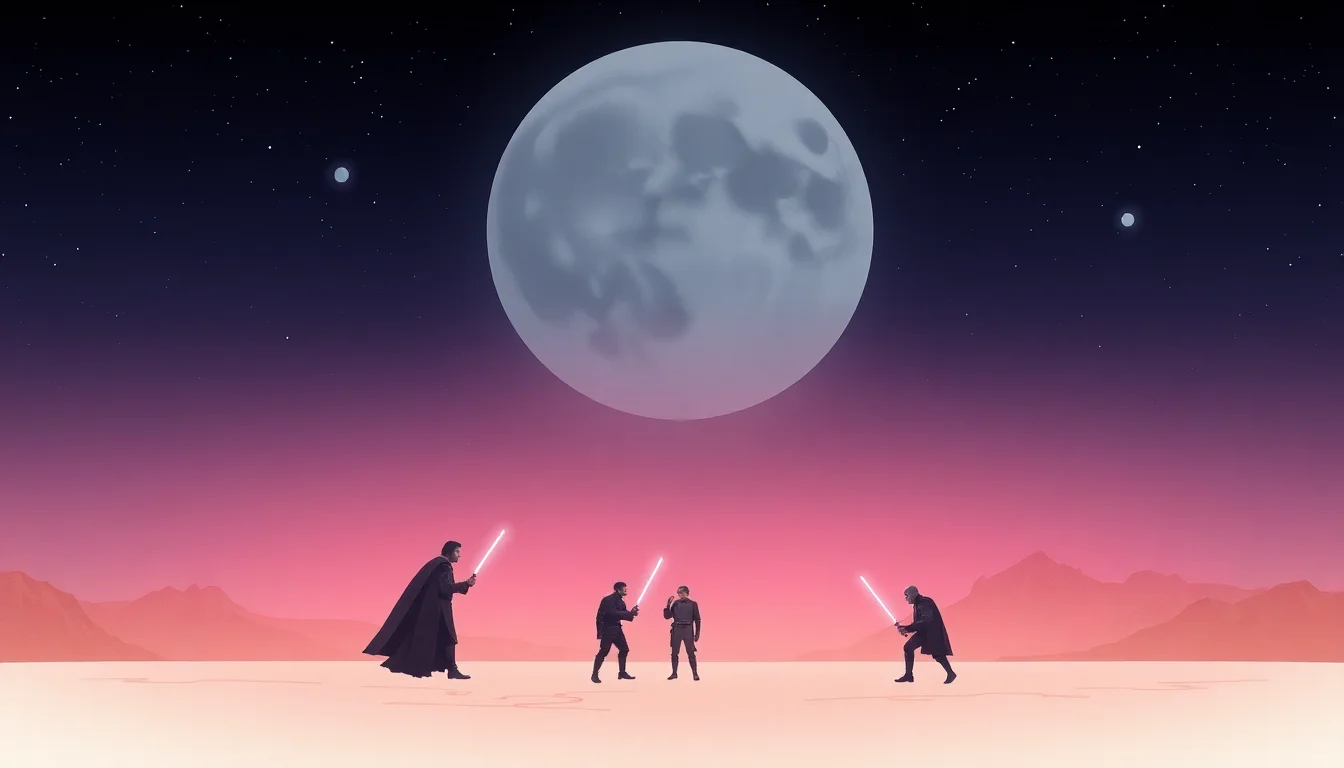
The lightsaber duels in The Phantom Menace, particularly the climactic confrontation between Qui-Gon Jinn, Obi-Wan Kenobi, and Darth Maul, were intended to be a return to the epic Jedi battles of old. Choreographed by Nick Gillard, these sequences were more acrobatic and fast-paced than those in the original trilogy. While visually impressive, some critics and fans felt the duels lacked the emotional weight and clear storytelling of earlier installments, sparking debates about the evolution of Lightsaber Combat choreography and its narrative function.
📈 Legacy & Influence: Beyond the Box Office
Despite its divisive reception, The Phantom Menace undeniably reshaped the Star Wars Universe and influenced a generation of filmmakers and fans. It laid the groundwork for the Prequel Trilogy's overarching narrative, introducing key characters and plot points that would resonate throughout the saga. The film's merchandising success was immense, and its cultural impact is evident in the continued discussions and analyses it inspires, solidifying its place as a pivotal, albeit controversial, entry in the Film Canon.
🤔 The Jar Jar Binks Debate: A Lingering Controversy
The character of Jar Jar Binks, voiced by Ahmed Best, remains one of the most polarizing elements of The Phantom Menace. Intended as a comic relief character for younger audiences, Jar Jar's slapstick humor and distinctive speech patterns were met with widespread derision from many critics and older fans, leading to accusations of racial insensitivity and contributing to a significant negative Audience Reaction. The debate surrounding Jar Jar has become a touchstone for discussions about Character Design and the challenges of appealing to diverse fan bases.
✨ Re-releases & Revisions: Evolving the Vibe
The Phantom Menace has seen multiple theatrical re-releases and home video versions, each accompanied by minor digital alterations and additions. Notably, the 2012 3D re-release and subsequent digital editions featured updated CGI elements and minor scene enhancements. These revisions, while often subtle, have fueled ongoing discussions about the integrity of the original vision versus the desire to modernize or refine the film, a common practice in Film Restoration and a point of contention for purists.
Key Facts
- Year
- 1999
- Origin
- Lucasfilm
- Category
- Film Analysis
- Type
- Film
Frequently Asked Questions
What is the primary plot of The Phantom Menace?
The film follows Jedi Master Qui-Gon Jinn and his apprentice Obi-Wan Kenobi as they protect Queen Amidala of Naboo and discover a young boy named Anakin Skywalker, who they believe is the prophesied Chosen One destined to bring balance to the Force. Their mission becomes entangled with a Trade Federation blockade and the machinations of the Sith.
Who directed The Phantom Menace?
The film was directed by George Lucas, who also wrote the screenplay. Lucas was the creator of the original Star Wars trilogy and returned to helm the prequel series.
What was the critical reception of The Phantom Menace?
Critical reception was mixed. While praised for its visual effects, world-building, and John Williams' score, it was often criticized for its dialogue, pacing, and the performance of Jake Lloyd as Anakin Skywalker. This led to a significant divide between commercial success and critical consensus.
What is the significance of the podrace scene?
The Boonta Eve Classic podrace is a major action sequence in the film, showcasing advanced CGI and the thrilling sport of podracing. It serves to introduce Anakin Skywalker's exceptional piloting skills and his desire for freedom, though its length and narrative necessity have been debated.
Why is Jar Jar Binks such a controversial character?
Jar Jar Binks, intended as comic relief, was widely criticized for his slapstick humor, perceived silliness, and distinctive speech. Many viewers found the character annoying, and accusations of racial insensitivity were also leveled against his portrayal, making him one of the most divisive characters in the franchise.
How did The Phantom Menace impact the Star Wars franchise?
The film revitalized the Star Wars franchise after a long hiatus, proving its immense commercial appeal and introducing a new generation to the saga. It established the prequel trilogy's narrative arc and introduced key characters and lore that would be expanded upon in subsequent films and expanded universe content.