
Contents
- 🏙️ Who is Jane Jacobs and Why Should You Care?
- 📚 Her Landmark Work: The Death and Life of Great American Cities
- 💡 Key Concepts: Eyes on the Street and Mixed-Use Diversity
- 🗣️ The Jacobsian Method: Observation Over Abstraction
- 💥 Her Impact on Urban Planning and Activism
- ⚖️ Criticisms and Counterarguments
- 🌐 Jane Jacobs' Global Resonance
- 🚀 Where to Go Next: Engaging with Jacobs' Ideas Today
- Frequently Asked Questions
- Related Topics
Overview
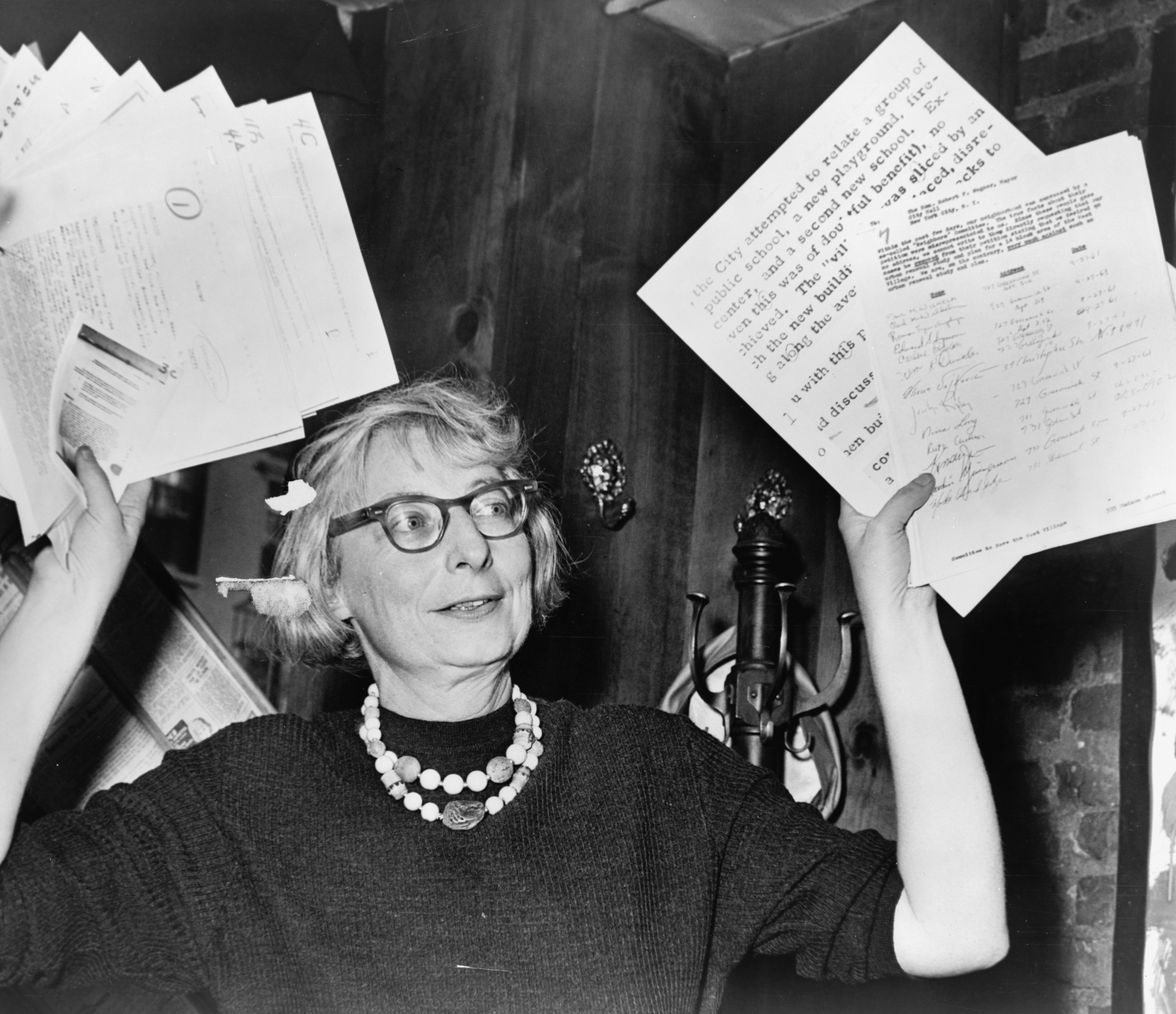
Jane Jacobs (1916-2006) was a fiercely independent thinker who fundamentally reshaped how we understand cities. Rejecting the prevailing modernist urban planning theories of her time, she championed the organic, messy, and vital nature of urban life. Her seminal work, 'The Death and Life of Great American Cities' (1961), argued that diversity, mixed uses, and dense, walkable neighborhoods are the keys to vibrant, safe, and economically successful urban environments. Jacobs's activism, particularly her successful fight against Robert Moses's Cross-Bronx Expressway, demonstrated the power of community organizing against large-scale, top-down development projects. She remains a towering, albeit sometimes controversial, figure in urbanism, inspiring generations of planners, activists, and residents to prioritize human-scale development and the intricate social fabric of cities.
🏙️ Who is Jane Jacobs and Why Should You Care?
Jane Jacobs (1916-2006) wasn't an architect or a planner; she was a writer, an activist, and a fierce observer of urban life. Her work fundamentally challenged the top-down, modernist urban planning that dominated the mid-20th century, arguing instead for the inherent wisdom of the city's own inhabitants. If you care about how cities function, how communities thrive, or how to resist destructive development, understanding Jane Jacobs is non-negotiable. Her insights into the organic vitality of neighborhoods offer a powerful counter-narrative to sterile, car-centric urban design. She reminds us that the most profound urban theories emerge not from ivory towers, but from the sidewalks themselves.
📚 Her Landmark Work: The Death and Life of Great American Cities
Her magnum opus, The Death and Life of Great American Cities (1961), is a searing indictment of urban renewal projects that demolished vibrant neighborhoods in favor of sterile housing projects and wide avenues. Jacobs argued these projects, often driven by architects like Robert Moses, destroyed the very fabric of urban life. She meticulously detailed how the complex, interwoven systems of a healthy city were being systematically dismantled. The book's enduring power lies in its vivid descriptions and its passionate defense of the messy, unpredictable, yet ultimately resilient nature of urban communities.
💡 Key Concepts: Eyes on the Street and Mixed-Use Diversity
Two of Jacobs' most influential concepts are 'eyes on the street' and 'mixed-use diversity.' 'Eyes on the street' refers to the natural surveillance provided by people living and working in a neighborhood, which deters crime and fosters a sense of safety. Mixed-use diversity, conversely, describes the vibrant mix of residential, commercial, and public spaces that keeps a neighborhood alive at different times of the day. This constant activity, she argued, is the lifeblood of a successful urban environment, creating a dynamic ecosystem that supports both businesses and residents. These ideas are central to understanding her critique of zoning laws that often segregated uses and stifled urban dynamism.
🗣️ The Jacobsian Method: Observation Over Abstraction
Jacobs' approach was radically empirical. Instead of relying on abstract theories or grand master plans, she advocated for direct observation and immersion in the urban environment. She famously spent years walking the streets of Greenwich Village, meticulously noting the interactions, the businesses, the flow of people, and the architectural details. This 'sidewalk ballet,' as she termed it, provided the raw data for her theories. Her method prioritized understanding the intricate, often invisible, social and economic forces that shape urban spaces, contrasting sharply with the prevailing modernist planning doctrines of the era.
💥 Her Impact on Urban Planning and Activism
The impact of Jane Jacobs on urban planning and activism is immense, though often contested. Her work inspired a generation of urbanists and community organizers to challenge large-scale, top-down development projects. Activists fighting against highway construction through their neighborhoods, like those in Greenwich Village against the proposed Fifth Avenue Expressway, often drew directly from her arguments. Her ideas provided a theoretical framework for community-based urbanism and continue to inform debates about gentrification, affordable housing, and the preservation of historic neighborhoods. The Community Action Movement of the 1960s, while broader, shared her emphasis on local control and resident empowerment.
⚖️ Criticisms and Counterarguments
Despite her widespread influence, Jacobs' work is not without its critics. Some urban planners argue that her focus on small-scale, organic neighborhoods overlooks the necessity of larger-scale planning for infrastructure, transportation, and housing. Critics like Edward Glaeser have pointed out that while her observations are acute, her prescriptions might not always scale effectively to larger metropolises. Others contend that her romanticization of certain urban forms can inadvertently contribute to gentrification by making desirable neighborhoods even more exclusive. The debate often centers on whether her principles are universally applicable or context-specific to the mid-20th century American city she knew so well.
🌐 Jane Jacobs' Global Resonance
Jane Jacobs' influence extends far beyond the United States. Her writings have been translated into numerous languages, and her ideas resonate with urban dwellers and activists worldwide. From the preservation of historic districts in European Cities to community-led development initiatives in Latin American Cities, her principles of 'eyes on the street' and mixed-use diversity offer a universal language for understanding and advocating for vibrant urbanism. Her work provides a powerful lens for analyzing the impact of globalization and neoliberal urban policies on local communities, highlighting the persistent tension between global capital and neighborhood resilience.
🚀 Where to Go Next: Engaging with Jacobs' Ideas Today
To engage with Jane Jacobs' ideas today, start by reading The Death and Life of Great American Cities. Then, explore her other works like The Economy of Cities (1969) and Cities and the Wealth of Nations (1984). Visit neighborhoods known for their vibrant street life and observe the 'sidewalk ballet' firsthand. Consider attending local community board meetings or urban planning forums to see how Jacobs' legacy plays out in contemporary debates. Many cities now have organizations dedicated to urban preservation and community development that actively employ her principles, offering opportunities for direct engagement and advocacy.
Key Facts
- Year
- 1916
- Origin
- Scranton, Pennsylvania, USA
- Category
- Urban Studies / Social Activism
- Type
- Person
Frequently Asked Questions
What is Jane Jacobs' most famous book?
Jane Jacobs' most famous and influential book is The Death and Life of Great American Cities, published in 1961. It is a foundational text in urban studies and a powerful critique of mid-20th century urban planning practices. The book argues for the importance of diverse, mixed-use neighborhoods and the 'eyes on the street' phenomenon for creating safe and vibrant urban environments. It remains essential reading for anyone interested in how cities work and how they should be designed.
What does 'eyes on the street' mean?
'Eyes on the street' is a key concept introduced by Jane Jacobs in The Death and Life of Great American Cities. It refers to the natural surveillance that occurs when a diverse mix of people are using public spaces at different times of the day. This constant presence of residents and workers, engaging in various activities, creates a sense of safety and discourages crime. Jacobs argued that well-used sidewalks and public areas, populated by people going about their daily lives, are more effective at maintaining order than traditional policing methods alone.
How did Jane Jacobs influence urban planning?
Jane Jacobs profoundly influenced urban planning by challenging the prevailing modernist, top-down approach. She advocated for understanding cities as complex, organic systems that thrive on diversity, density, and mixed uses. Her work inspired a shift towards more community-focused, bottom-up planning, emphasizing the importance of local knowledge and resident participation. Many contemporary urban design movements, such as New Urbanism and Placemaking, owe a significant debt to her insights, promoting walkable neighborhoods and vibrant public spaces.
Was Jane Jacobs an architect or planner?
No, Jane Jacobs was neither an architect nor a trained urban planner. She was a writer and activist whose expertise stemmed from meticulous observation of urban life, particularly in Greenwich Village, New York City. Her lack of formal training is often seen as an advantage, allowing her to approach urban issues with a fresh, critical perspective unburdened by established professional dogma. Her insights were grounded in real-world experience and a deep understanding of human behavior in cities.
What are some criticisms of Jane Jacobs' ideas?
While highly influential, Jane Jacobs' ideas have faced criticism. Some argue that her focus on small-scale, organic neighborhoods might not adequately address the need for large-scale infrastructure and planning in major metropolises. Others suggest her prescriptions can inadvertently contribute to gentrification by idealizing certain urban forms, making them more desirable and thus unaffordable for long-term residents. There's also debate about whether her observations, rooted in mid-20th century American cities, are universally applicable to the vastly different urban contexts of today, particularly in rapidly developing nations.
Where can I learn more about Jane Jacobs' life and work?
To learn more, start with her seminal book, The Death and Life of Great American Cities. Her other books, such as The Economy of Cities and Cities and the Wealth of Nations, offer further insights. Biographies like Robert Kanigel's 'Eyes Wide Open: The Other Jane Jacobs' provide a comprehensive look at her life. Many university urban studies departments and urban advocacy groups offer resources and host discussions related to her legacy. Exploring historical archives of urban planning debates from the 1960s onward will also reveal her impact.