
Contents
Overview
The genesis of wireless communication standards can be traced back to the late 19th and early 20th centuries, with pioneers like Guglielmo Marconi demonstrating long-distance wireless telegraphy. Early radio transmissions were largely unregulated, leading to chaos and interference. The need for order spurred the creation of international bodies like the International Telecommunication Union in 1934, tasked with allocating radio frequencies and establishing global standards. The mid-20th century saw the advent of cellular telephony, with early analog standards like AMPS paving the way for digital systems. The 1980s and 1990s were pivotal, with the GSM standard revolutionizing mobile communication in Europe and beyond, introducing digital voice and early data services. Simultaneously, the Institute of Electrical and Electronics Engineers began developing standards for local area wireless networks, culminating in the IEEE 802.11 family, better known as Wi-Fi, which first emerged in 1997.
⚙️ How It Works
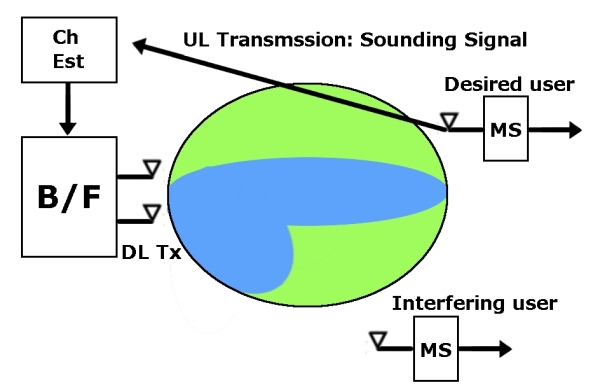
Wireless communication standards define the precise parameters for electromagnetic wave transmission and reception. This involves specifying the radio frequency bands to be used, such as the 2.4 GHz and 5 GHz bands for Wi-Fi or the diverse spectrum allocated for 5G networks. They dictate modulation schemes (e.g., Quadrature Amplitude Modulation) that encode digital data onto analog carrier waves, and channel access methods (e.g., CSMA/CA for Wi-Fi) that prevent multiple devices from transmitting simultaneously. Standards also define protocols for error detection and correction, security (like WPA3 for Wi-Fi), and network management, ensuring interoperability between devices from different manufacturers. Advanced techniques like beamforming and Multiple-Input Multiple-Output (MIMO) are incorporated to enhance signal strength and data throughput.
📊 Key Facts & Numbers
The global wireless market is colossal, with over 8 billion active mobile subscriptions worldwide as of early 2024, according to the International Telecommunication Union. The Wi-Fi Alliance estimates that over 20 billion Wi-Fi devices were in use globally by 2023. The rollout of 5G networks, which began in earnest in 2019, has seen over 300 commercial deployments by early 2024, with projections suggesting over 1 billion 5G connections by the end of the year. The value of the global wireless communication market was estimated to exceed $1.5 trillion in 2023, with significant growth anticipated as 6G research progresses. The average global mobile data traffic per smartphone user reached approximately 12 GB per month in 2023, a figure expected to double by 2026.
👥 Key People & Organizations
The development and standardization of wireless technologies involve a complex ecosystem of organizations and individuals. Key international bodies include the International Telecommunication Union, which manages global spectrum allocation, and the 3rd Generation Partnership Project (3GPP), responsible for cellular standards like LTE and 5G. The Institute of Electrical and Electronics Engineers, particularly its 802.11 Working Group, defines Wi-Fi standards. Major telecommunications companies like Ericsson, Nokia, Qualcomm, and Huawei are heavily involved in research, development, and patenting. Academic institutions and research labs also play a crucial role in pioneering new techniques. Individuals like Tim Berners-Lee, though primarily associated with the World Wide Web, laid foundational concepts for interconnectedness that wireless standards build upon.
🌍 Cultural Impact & Influence
Wireless communication standards have profoundly reshaped society, enabling unprecedented levels of connectivity and mobility. The ubiquity of Wi-Fi has transformed homes, offices, and public spaces into connected environments, facilitating remote work and access to information. Mobile standards like GSM, 3G, 4G, and 5G have put the internet in billions of pockets, driving the growth of mobile apps, social media platforms like Facebook, and the gig economy. The ability to communicate wirelessly has also impacted emergency services, transportation, and entertainment, creating new industries and altering existing ones. The cultural shift towards constant connectivity, while offering immense benefits, has also raised questions about digital divides and the impact of pervasive wireless signals.
⚡ Current State & Latest Developments
The current landscape is dominated by the ongoing global deployment and refinement of 5G networks, which promise higher speeds, lower latency, and the ability to connect a massive number of devices for applications like Internet of Things and augmented reality. Simultaneously, research and development into 6G are accelerating, with initial visions pointing towards terahertz frequencies, AI-integrated networks, and even more immersive experiences. Wi-Fi standards continue to evolve, with Wi-Fi 6/6E (802.11ax) becoming mainstream and the next generation, Wi-Fi 7 (802.11be), poised for wider adoption, offering significant speed and efficiency gains. The push for greater spectrum efficiency and the integration of satellite and terrestrial networks are also key trends.
🤔 Controversies & Debates
The development and implementation of wireless standards are not without controversy. Spectrum allocation remains a contentious issue, with governments and industries vying for valuable radio frequencies, leading to complex auctions and regulatory battles. The security of wireless communications is a perpetual concern, with ongoing debates about encryption strength, potential vulnerabilities in standards like WPA2, and the geopolitical implications of equipment manufacturers like Huawei facing scrutiny in various countries. Furthermore, questions persist regarding the long-term health effects of radiofrequency exposure, despite scientific consensus from bodies like the World Health Organization indicating no established adverse health effects below international guideline limits. The digital divide, where access to advanced wireless technologies is unevenly distributed, is another significant societal debate.
🔮 Future Outlook & Predictions
The future of wireless communication standards points towards even greater integration and intelligence. 6G is expected to move beyond mere connectivity, incorporating artificial intelligence and machine learning directly into network protocols to enable self-optimizing and predictive network management. We may see the rise of integrated sensing and communication, where wireless signals are used not only for data transfer but also for environmental sensing and imaging. The convergence of terrestrial, satellite, and even airborne networks will create a truly ubiquitous connectivity fabric. The challenge will be to develop standards that are not only faster and more efficient but also more secure, sustainable, and equitable, ensuring that the benefits of advanced wireless technology are accessible to all.
💡 Practical Applications
Wireless communication standards are the invisible engines powering a vast array of practical applications. In consumer electronics, they enable smartphones, laptops, and smart home devices to connect to the internet and each other. In industry, they are crucial for Internet of Things deployments, enabling smart factories, automated logistics, and remote monitoring. The automotive sector relies on them for vehicle-to-vehicle (V2V) and vehicle-to-infrastructure (V2I) communication, enhancing safety and traffic management. Healthcare benefits from wireless standards for remote patient monitoring, telemedicine, and connected medical devices. Public safety agencies utilize them for critical communication networks, and they are fundamental to the operation of Global Positioning System and other navigation technologies.
Key Facts
- Category
- technology
- Type
- topic