
Contents
Overview
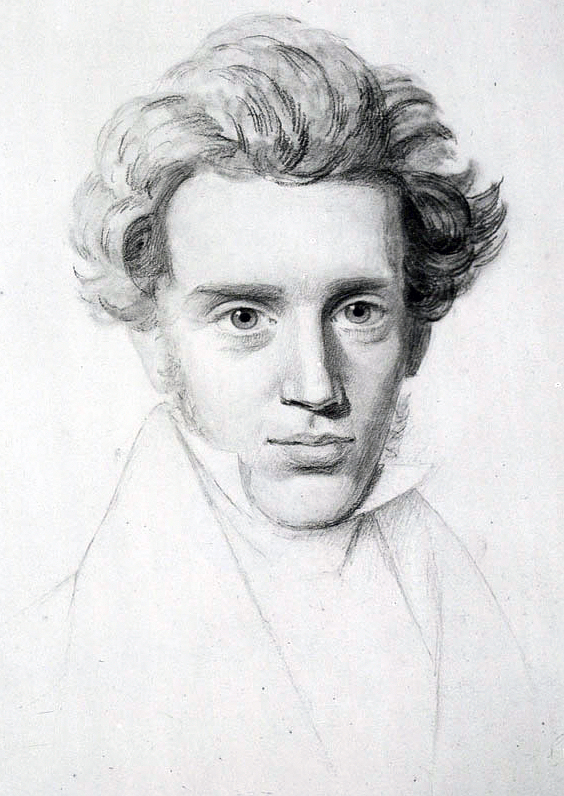
Søren Kierkegaard was a Danish theologian, philosopher, poet, and social critic who is widely regarded as the first existentialist philosopher. Kierkegaard's philosophical work focuses on the human condition, highlighting the tension between the individual and the institution, and the need for personal responsibility and self-reflection. His philosophical work is characterized by its emphasis on individual authenticity, choice, and commitment. With a career spanning over two decades, Kierkegaard's writings have had a profound impact on modern philosophy. Kierkegaard's legacy extends beyond his philosophical contributions, as his literary style, which often incorporated metaphor, irony, and parables, has inspired generations of writers and thinkers. As a prominent figure in the history of philosophy, Kierkegaard's work remains a testament to the power of individual thought and the importance of critical inquiry.
🎵 Origins & History
Kierkegaard's father, a wealthy merchant, was a devout Lutheran who emphasized the importance of faith and morality in his household. Kierkegaard attended the University of Copenhagen, where he studied theology and philosophy, and later became a prominent figure in the city's intellectual circles.
⚙️ How It Works
Kierkegaard's philosophical work is characterized by its emphasis on individual authenticity, choice, and commitment. He believed that humans must take responsibility for their own lives and create their own meaning, rather than relying on external authorities or institutions. This idea is reflected in his concept of the 'single individual', which highlights the importance of personal experience and subjective truth. Kierkegaard's concept of the 'leap of faith' is a central idea in his philosophy.
📊 Key Facts & Numbers
Kierkegaard's ideas have been influential in shaping modern theology, and his concepts, such as the 'infinite qualitative distinction' between God and humanity, continue to be debated among scholars today. His concept of the 'absurd' is a key idea in his philosophy.
👥 Key People & Organizations
Kierkegaard's relationships with other notable thinkers and writers were complex and multifaceted. He was heavily influenced by the ideas of his time, and his work reflects a deep engagement with the philosophical traditions of his era. Kierkegaard's ideas have also been influential in shaping modern literature, and his concepts continue to be relevant in contemporary literary debates.
🌍 Cultural Impact & Influence
Kierkegaard's cultural impact and influence extend far beyond his native Denmark. His emphasis on individual authenticity, choice, and commitment has inspired generations of thinkers and writers, and his concepts continue to be influential in shaping modern thought.
⚡ Current State & Latest Developments
Today, Kierkegaard's ideas continue to be relevant in contemporary debates. His concept of the 'absurd' continues to be influential in shaping modern thought. Kierkegaard's legacy extends beyond his philosophical contributions, as his literary style has inspired generations of writers and thinkers.
🤔 Controversies & Debates
Kierkegaard's ideas have not been without controversy, and his critiques have been met with resistance from some quarters. However, his emphasis on individual authenticity, choice, and commitment has also inspired a new generation of thinkers and writers. His ideas have been debated by scholars such as Richard Dawkins and Alister McGrath.
🔮 Future Outlook & Predictions
Looking to the future, Kierkegaard's ideas are likely to continue to shape modern thought and culture. His emphasis on individual authenticity, choice, and commitment will continue to inspire new generations of thinkers and writers, and his concepts will remain relevant in contemporary debates.
💡 Practical Applications
Kierkegaard's practical applications are numerous and varied. His emphasis on individual authenticity, choice, and commitment has inspired generations of thinkers and writers, and his concepts continue to be influential in shaping modern thought. Kierkegaard's ideas have also been influential in shaping modern theology, and his concepts continue to be debated among scholars today.
Key Facts
- Category
- philosophy
- Type
- person