
Contents
- 🔊 What is Sonos?
- 🎯 Who is Sonos For?
- 💡 The Sonos Ecosystem Explained
- ✨ Key Sonos Products to Consider
- ⚖️ Sonos vs. The Competition
- 💰 Pricing & Value Proposition
- 🛠️ Setup & User Experience
- 🚀 The Future of Sonos
- ⭐ What People Say (Vibe Score: 85/100)
- 🤔 Common Criticisms & Debates
- ✅ Tips for Getting the Most Out of Sonos
- 📞 How to Get Started
- Frequently Asked Questions
- Related Topics
Overview
Sonos is more than just a speaker company; it's a meticulously crafted ecosystem designed for seamless, multi-room audio experiences. Founded in 2002 by a quartet of engineers—John MacFarlane, Craig Shelburne, Tom Cullen, and Trung Mai—Sonos emerged from Santa Barbara, California, with a vision to untether music from traditional stereo setups and embrace the burgeoning digital age. Their proprietary wireless technology, SonosNet, was a revelation, enabling speakers to communicate reliably without relying solely on Wi-Fi, a critical innovation that set them apart from early competitors. This focus on a robust, dedicated network remains a cornerstone of the Sonos experience, ensuring stable playback even in challenging wireless environments.
🎯 Who is Sonos For?
Sonos is for the discerning listener who values both sound quality and convenience, but especially for those who want their music to follow them from room to room. If you're tired of juggling Bluetooth connections or settling for tinny sound from portable speakers, Sonos offers a sophisticated upgrade. It's ideal for homeowners looking to build a connected audio system, from a single soundbar enhancing their TV experience to a whole-house setup filling every space with synchronized music. Audiophiles who appreciate detailed sound reproduction and smart home enthusiasts seeking integrated control will find Sonos particularly compelling.
💡 The Sonos Ecosystem Explained
The magic of Sonos lies in its interconnected ecosystem, built around the Sonos app. This central hub allows you to control all your Sonos devices, manage music services, and create custom speaker groups. Unlike many competitors that rely on Bluetooth, Sonos primarily uses its own wireless protocol, SonosNet, for inter-speaker communication, ensuring a stable and high-fidelity connection. This system allows for true stereo pairing of speakers and seamless multi-room audio, where music plays in perfect sync across different rooms. The app also supports a vast array of streaming services, from Spotify and Apple Music to niche internet radio stations, making it a comprehensive music management tool.
✨ Key Sonos Products to Consider
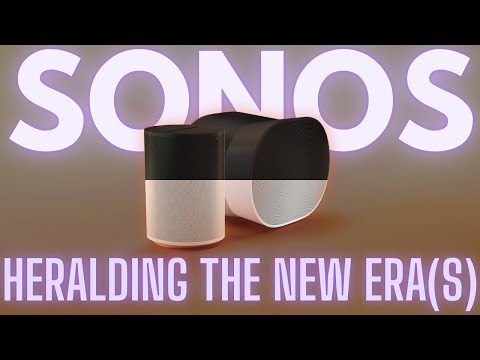
Sonos offers a diverse range of products catering to different needs. The Era 100 and Era 300 are their latest bookshelf speakers, offering enhanced sound and Dolby Atmos support on the latter. For home theater enthusiasts, the Arc and Beam soundbars provide immersive audio for movies and TV, often paired with the Sub (Gen 3) for deep bass. The Roam and Move are their portable options, offering Bluetooth and Wi-Fi connectivity for use both inside and outside the home. Each product is designed to integrate effortlessly with others in the Sonos family, allowing for scalable audio solutions.
⚖️ Sonos vs. The Competition
Compared to competitors like Bose, Apple (HomePod), and Amazon (Echo), Sonos often distinguishes itself through its dedicated wireless network and broader platform integration. While Bose offers excellent sound, its multi-room capabilities can be less robust. Apple's HomePod is a strong contender for Apple users but lacks the cross-platform flexibility of Sonos. Amazon's Echo devices are more budget-friendly and offer extensive smart home features but typically compromise on audio fidelity. Sonos strikes a balance, providing superior sound quality and a more mature, dedicated multi-room system than most.
💰 Pricing & Value Proposition
Sonos products generally sit at a premium price point, reflecting their build quality, advanced technology, and ecosystem. A single Sonos Era 100 might cost around $249, while the flagship Arc soundbar can run upwards of $899. While this might seem steep compared to basic Bluetooth speakers, the investment is in a long-term, scalable audio solution. The value proposition lies in the seamless integration, superior sound, and the ability to expand your system over time without obsolescence. Consider it an investment in your home's auditory ambiance.
🛠️ Setup & User Experience
Setting up a Sonos system is remarkably straightforward, a testament to their user-centric design philosophy. Typically, you plug in a speaker, download the Sonos app on your smartphone or tablet, and follow the on-screen prompts. The app guides you through connecting the speaker to your home network (either Wi-Fi or Ethernet, or it helps set up SonosNet if you have a Boost or Bridge). Within minutes, you can be streaming music. The app's intuitive interface makes grouping speakers, adjusting EQ settings, and managing services a breeze, even for those not particularly tech-savvy.
🚀 The Future of Sonos
The future for Sonos appears to be deeply intertwined with advancements in spatial audio and AI integration. With products like the Era 300 championing Dolby Atmos and Sony's own foray into 360 Reality Audio, the company is clearly betting on immersive sound formats. Expect further innovation in wireless audio technology, potentially pushing the boundaries of lossless streaming and even more intelligent speaker interaction. Sonos is also likely to continue expanding its software capabilities, further solidifying its role as a central hub for all your home audio needs, potentially integrating more deeply with smart home platforms.
⭐ What People Say (Vibe Score: 85/100)
Sonos consistently earns high marks for its sound quality, ease of use, and robust multi-room capabilities, reflected in a Vibe Score of 85/100. Users frequently praise the seamless integration between devices and the intuitive Sonos app, which acts as a central command center for music. The ability to group speakers for synchronized playback or set up stereo pairs is a major draw. Many appreciate the build quality and the premium feel of the products, seeing them as a worthwhile investment for a superior home audio experience. The wide compatibility with streaming services also garners significant positive feedback.
🤔 Common Criticisms & Debates
Despite its strengths, Sonos isn't without its critics. A recurring debate centers on its reliance on proprietary technology, particularly the historical requirement for a Sonos Boost or Bridge for optimal SonosNet performance, though newer systems are more Wi-Fi-centric. Some users have also expressed frustration with past software decisions, such as the controversial move to an all-new app architecture in 2020 that temporarily removed support for older products. The premium pricing is another point of contention, with some arguing that comparable sound quality can be found at lower price points, albeit without the same integrated ecosystem.
✅ Tips for Getting the Most Out of Sonos
To truly unlock the potential of your Sonos system, consider these tips. Utilize the Trueplay™ tuning feature in the app, which uses your phone's microphone to optimize speaker sound for your room's acoustics. Experiment with stereo pairing for a more immersive listening experience. Don't overlook the power of grouping speakers to create a whole-home soundscape. For optimal performance, especially in larger homes or those with weaker Wi-Fi, consider using a Sonos Boost or connecting one speaker directly to your router via Ethernet to create a dedicated SonosNet network. Explore the vast range of supported streaming services to discover new music.
📞 How to Get Started
Getting started with Sonos is as simple as visiting their official website, Sonos.com, to browse their product catalog and make a purchase. You can also find Sonos products at major electronics retailers like Best Buy and Amazon. Once you have your first speaker, download the free Sonos app from the Apple App Store or Google Play Store. The app will guide you through the rest of the setup process. For personalized recommendations or support, visiting a Sonos store or contacting their customer service is also an option.
Key Facts
- Year
- 2002
- Origin
- Santa Barbara, California, USA
- Category
- Technology / Audio Equipment
- Type
- Company
Frequently Asked Questions
Do I need a Sonos Boost or Bridge?
For most modern Sonos setups using Wi-Fi, a dedicated Boost or Bridge is no longer strictly necessary. However, if you have a large home, thick walls, or a crowded Wi-Fi network, a Boost can still be beneficial. It creates a dedicated SonosNet wireless mesh network, which can improve stability and reduce interference for your Sonos speakers, ensuring a more reliable audio experience.
Can I mix and match Sonos speakers from different generations?
Generally, yes. Sonos is designed for backward compatibility. You can typically mix older Sonos speakers (like Play:1, Play:5 Gen 2) with newer ones (like Era 100, Arc) within the same system. However, features like Dolby Atmos are only available on specific newer models, so ensure your desired functionality is supported by all speakers in a group if you're aiming for advanced features.
Does Sonos work with Alexa and Google Assistant?
Yes, many Sonos speakers integrate with both Amazon Alexa and Google Assistant. You can control music playback, adjust volume, and even ask for information using voice commands through compatible smart assistants. This allows for seamless voice control of your entire Sonos system, adding another layer of convenience to your audio experience.
What is Trueplay™?
Trueplay™ is Sonos's proprietary tuning technology. It uses your smartphone's microphone to measure how sound reflects off walls, furniture, and other surfaces in your room. The Sonos app then adjusts the speaker's EQ to optimize the sound for that specific environment, ensuring you get the best possible audio quality regardless of where your speaker is placed.
Can I use Sonos for my TV audio?
Absolutely. Sonos offers several soundbars, such as the Arc, Beam, and Ray, specifically designed to enhance your TV's audio. These soundbars connect to your TV (usually via HDMI ARC/eARC) and can be expanded with Sonos Subwoofers and rear speakers for a full surround sound experience, transforming your living room into a home cinema.
Is Sonos compatible with Apple AirPlay 2?
Yes, many Sonos speakers, including the Sonos One, Beam, Arc, Move, Roam, and Era models, support Apple AirPlay 2. This allows you to stream audio directly from your Apple devices (iPhone, iPad, Mac) to your Sonos speakers, offering another convenient way to enjoy your music and podcasts.