
Contents
Overview
The QLED versus OLED debate is a central tension in modern display technology, pitting two distinct approaches to achieving vibrant, high-contrast images against each other. QLEDs reportedly offer superior brightness and longer lifespans. OLED, on the other hand, utilizes organic light-emitting diodes where each pixel generates its own light, enabling perfect blacks and infinite contrast ratios. While OLEDs have historically dominated in premium picture quality due to their self-emissive nature, QLEDs have rapidly closed the gap, offering superior brightness and longer lifespans, particularly in well-lit environments. The ongoing innovation in both fields, including hybrid technologies like QD-OLED, ensures this technological rivalry will continue to shape the future of televisions and monitors.
🎵 Origins & History
The genesis of the QLED vs. OLED discussion can be traced back to the late 20th and early 21st centuries, with foundational research in both quantum dots and OLEDs laying the groundwork. Early quantum dot research, notably by Paul Alivisatos at UC Berkeley in the early 1990s, demonstrated their unique light-emitting properties. Simultaneously, Ching W. Tang and Steven Van Slyke at Eastman Kodak published seminal work on OLEDs in 1987, showcasing their potential for emissive displays. Samsung Electronics began heavily marketing its quantum dot-enhanced LCD TVs under the 'QLED' banner around 2017, positioning them as a premium alternative to existing LCDs and a direct competitor to OLED.
⚙️ How It Works
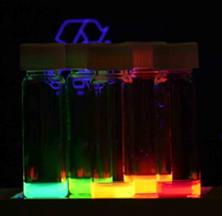
QLED technology, as implemented in most consumer televisions, is essentially an advanced form of LED-backlit LCD. A backlight (typically blue LEDs) shines through a film embedded with quantum dots. These QDs absorb the blue light and re-emit it as highly pure red and green light. This QD layer, placed between the backlight and the LCD panel, acts as a color converter, allowing for a much wider and more saturated color gamut than traditional LCDs. OLED, conversely, is a self-emissive technology. Each individual pixel is composed of organic compounds that emit light when an electric current is applied. This means pixels can be individually turned on, off, or dimmed, leading to perfect blacks (when a pixel is off) and theoretically infinite contrast ratios, as there's no backlight bleed-through. QD-OLED combines elements of both QLED and OLED technologies, using a blue OLED backlight with QD color converters for red and green subpixels.
📊 Key Facts & Numbers
As of mid-2024, the premium TV market is significantly divided. OLED TVs, led by manufacturers like LG Electronics and Sony, command a substantial share of the high-end segment, with prices for flagship models often exceeding $2,000. QLED TVs, predominantly from Samsung, typically offer higher peak brightness levels, with some models reaching over 2,000 nits, compared to OLEDs which generally peak around 1,000-1,500 nits. The global market for TVs is estimated to be worth over $100 billion annually, with the premium segment (>$1,000) showing robust growth. Quantum dot material production is a multi-billion dollar industry, with companies like Nanoco Technologies and Nichia Corporation being key suppliers. OLED panel production, dominated by LG Display and Samsung Display, also represents a significant portion of this market.
👥 Key People & Organizations
Key figures in the QLED vs. OLED narrative include Dr. Nadim Maluf, a pioneer in quantum dot research and co-founder of Nanalux, and Dr. Yevgen Yakushev, whose work at Quantalux advanced QD-LED technology. On the OLED side, Woon-Kyung Kim at LG Display has been instrumental in scaling OLED production for televisions. Major corporate players are Samsung Electronics, which heavily champions QLED (and also produces OLED panels for other applications), and LG Electronics, the primary proponent and manufacturer of OLED televisions. Sony utilizes both OLED and QLED panels in its high-end displays. TCL is another major player in the QLED space, often offering competitive pricing.
🌍 Cultural Impact & Influence
The QLED vs. OLED debate has profoundly influenced consumer perception and purchasing decisions in the home entertainment sector. 'QLED' has become a widely recognized term, often associated with bright, vibrant colors, even if the underlying technology is still LCD. This marketing success, spearheaded by Samsung, has elevated consumer awareness of color gamut and brightness as key performance indicators. OLED, meanwhile, has cultivated an image of ultimate picture quality, particularly among cinephiles and videophiles, for its unparalleled contrast and black levels. This has driven demand for premium viewing experiences, influencing the design and feature sets of high-end televisions across the industry, pushing competitors to adopt similar technologies or marketing strategies. The very existence of QD-OLED represents a cultural fusion, attempting to bridge the perceived strengths of both technologies.
⚡ Current State & Latest Developments
As of 2024, the lines between QLED and OLED are becoming increasingly blurred. Manufacturers are pushing the boundaries of brightness in OLEDs, with new models like LG's G4 series achieving higher peak luminance through advanced processing and panel technology. Simultaneously, QLEDs are incorporating mini-LED backlighting and advanced local dimming zones to improve contrast and black levels, mimicking some OLED benefits. The emergence of QD-OLED displays, first introduced by Samsung Display and adopted by Sony and Dell Technologies for their Alienware monitors, represents a significant development, aiming to combine the color purity of quantum dots with the self-emissive benefits of OLED. Furthermore, research into MicroLED displays continues, posing a potential future challenger to both technologies with its inherent brightness and pixel-level control.
🤔 Controversies & Debates
A central controversy revolves around the term 'QLED' itself. Critics, particularly LG Electronics, argue that 'QLED' is a misleading marketing term because these displays are fundamentally LCDs with a quantum dot enhancement layer, rather than true emissive quantum dot displays (QD-LEDs) which are still largely in the laboratory phase. This distinction is crucial for some consumers who equate 'QLED' with a fundamentally different display architecture than OLED. Another point of contention is the long-term durability and potential for 'burn-in' with OLED displays, although manufacturers have made significant strides in mitigating this risk through pixel-shifting technologies and improved organic materials. Conversely, QLEDs, while less susceptible to burn-in, can suffer from backlight uniformity issues and blooming artifacts, especially in lower-end models.
🔮 Future Outlook & Predictions
The future of display technology is likely to involve further convergence and specialization. We can expect QLEDs to continue improving their contrast ratios through more sophisticated mini-LED and micro-LED backlighting, while OLEDs will push for even greater brightness and color volume. The QD-OLED format is poised for wider adoption across various screen sizes and product categories, potentially becoming a dominant force in the premium market. Beyond these, research into MicroLED displays, which offer the brightness of LEDs with the pixel-level control of OLED, continues, though high manufacturing costs currently limit their consumer availability. The ultimate goal for all these technologies is to deliver the most immersive, accurate, and visually stunning images possible, with the 'winner' likely being the technology that best balances performance, cost, and longevity for specific use cases.
💡 Practical Applications
QLED and OLED technologies are primarily applied in the manufacturing of televisions and computer monitors, aiming to deliver superior visual experiences. High-end QLED TVs are favored for bright living rooms due to their high peak brightness, making them excellent for watching sports or daytime viewing. OLED TVs, with their perfect blacks and infinite contrast, are often the preferred choice for cinephiles and gamers seeking the most immersive cinematic experience, especially in darker viewing environments. QD-OLED technology is finding its way into premium monitors and TVs, promising the best of both worlds. Beyond consumer electronics, the underlying principles of quantum dots
Key Facts
- Category
- technology
- Type
- topic