
Contents
Overview
Plant pathology is the scientific study of diseases in plants, encompassing their causes, symptoms, and management. It's a critical field, as plant diseases can devastate agricultural yields, disrupt ecosystems, and impact global food security. This discipline investigates a range of pathogens, including fungi, bacteria, viruses, and nematodes, as well as environmental factors that contribute to plant ill-health. From historical famines to modern biosecurity threats, plant pathology offers vital insights into protecting plant life and ensuring the sustainability of our planet's resources. Understanding these diseases is not just academic; it's essential for feeding billions and preserving biodiversity.
🔬 What is Plant Pathology?
Plant pathology, or phytopathology, is the rigorous scientific discipline dedicated to understanding why plants get sick. It's not just about spotting a wilting leaf; it's a deep dive into the intricate interactions between plants, the pathogens that attack them (like fungi, bacteria, viruses, and nematodes), and the environmental factors that create fertile ground for disease. This field unravels the mechanisms of infection, the life cycles of these microscopic invaders, and the plant's own defense systems, offering a critical lens on the health of our botanical world. Understanding plant physiology is fundamental to grasping how pathogens exploit vulnerabilities.
🌍 Who Needs to Know About Plant Pathology?
This science is crucial for anyone whose livelihood or passion intersects with plant life. Farmers and agricultural professionals rely on plant pathology to protect crops, ensuring food security and economic stability. Horticulturists, foresters, and landscape managers use its principles to maintain healthy green spaces. Even home gardeners benefit from understanding common plant ailments to keep their prized specimens thriving. Furthermore, researchers in genetics and biotechnology leverage plant pathology to develop disease-resistant varieties, impacting global food systems.
📚 Key Areas of Study
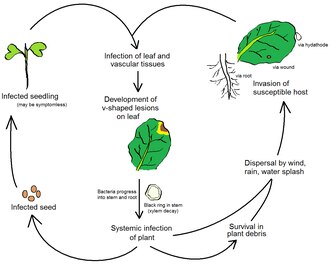
The scope of plant pathology is vast, encompassing pathogen identification, understanding disease etiology (the cause of disease), and mapping out complex disease cycles. It delves into plant disease epidemiology, studying how diseases spread through populations, and investigates plant disease resistance mechanisms. Crucially, it examines how plant diseases can affect human and animal health, often through contaminated food sources or the disruption of ecosystems. The study of pathosystem genetics, the interplay between host and pathogen genes, is also a vital component.
📈 Economic & Societal Impact
The economic ramifications of plant diseases are staggering. Globally, crop losses due to pathogens can amount to billions of dollars annually, directly impacting food prices and availability. The infamous Irish Potato Famine of the 1840s, caused by the oomycete Phytophthora infestans, serves as a stark historical reminder of plant pathology's societal importance, leading to widespread starvation and emigration. Beyond agriculture, forest diseases can devastate timber industries and alter entire ecosystems, underscoring the far-reaching consequences of unchecked plant sickness.
💡 Historical Roots & Evolution
The formal study of plant pathology has roots stretching back to the 19th century, spurred by devastating agricultural epidemics. Early pioneers like Anton de Bary, often called the 'father of plant pathology,' meticulously demonstrated the causal link between specific fungi and plant diseases, refuting spontaneous generation theories. His work on rust fungi and the potato blight laid foundational principles. The field has since evolved dramatically, integrating molecular biology, bioinformatics, and advanced imaging techniques to dissect disease processes at an unprecedented level.
🔬 Tools of the Trade
Practitioners of plant pathology employ a diverse array of tools. Microscopy, both light and electron, is essential for visualizing pathogens and cellular damage. Laboratory techniques like culturing, PCR (polymerase chain reaction), and ELISA (enzyme-linked immunosorbent assay) are used for pathogen identification and quantification. Field surveys and remote sensing technologies, including drones equipped with spectral cameras, help monitor disease spread across large areas. Understanding soil science is also critical, as soil-borne pathogens pose significant challenges.
🌱 Disease Management Strategies
Effective plant disease management is a cornerstone of plant pathology. Strategies range from cultural practices like crop rotation and sanitation to the judicious use of fungicides and bactericides. Breeding for genetic resistance in crop varieties is a sustainable long-term solution. Biological control agents, utilizing natural enemies of pathogens, are also gaining traction. Integrated Pest Management (IPM) programs combine multiple tactics to minimize disease impact while reducing reliance on chemical interventions, promoting sustainable agriculture.
🚀 The Future of Plant Pathology
The future of plant pathology is increasingly integrated with global challenges like climate change and the need for resilient food systems. Researchers are exploring novel approaches such as gene editing (CRISPR) for disease resistance, advanced diagnostics for early detection, and AI-driven predictive modeling for disease outbreaks. Understanding the complex interplay between climate shifts and pathogen evolution will be paramount. The goal is to develop proactive strategies that safeguard plant health in an ever-changing world, ensuring continued food production and ecosystem stability for generations to come.
Key Facts
- Year
- Circa 1880s (formalization)
- Origin
- Ancient observations of plant blights and rusts, formalized with the advent of microscopy and germ theory.
- Category
- Science & Technology
- Type
- Field of Study
Frequently Asked Questions
What's the difference between a plant disease and a plant pest?
A plant disease is typically caused by a pathogen – a living organism like a fungus, bacterium, or virus – that disrupts the plant's normal growth and function. A plant pest, on the other hand, is usually an animal, most commonly an insect, that directly damages the plant by feeding on it or otherwise harming it. While both can cause significant damage, the underlying cause and often the management strategies differ.
How can I identify a plant disease?
Identifying plant diseases involves observing symptoms like leaf spots, wilting, discoloration, stunted growth, or unusual growths. You'll need to consider the specific plant species, the environmental conditions, and the pattern of the symptoms. Consulting reliable resources like university extension websites, plant diagnostic labs, or experienced horticulturists is often the best way to get an accurate diagnosis, especially for complex issues.
Are all plant diseases caused by fungi?
No, fungi are a major cause of plant diseases, but they are not the only ones. Plant diseases can also be caused by bacteria, viruses, phytoplasmas, nematodes (microscopic roundworms), and even abiotic factors like nutrient deficiencies, extreme temperatures, or poor soil conditions. Each type of pathogen or stressor requires a different diagnostic approach and management strategy.
What is epidemiology in plant pathology?
Plant disease epidemiology is the study of the occurrence, distribution, and spread of plant diseases within populations. It examines factors that influence disease intensity and prevalence, such as pathogen biology, host susceptibility, and environmental conditions. Understanding epidemiology helps predict outbreaks and develop effective control strategies to minimize economic losses and protect plant health on a larger scale.
How does plant pathology relate to food safety?
Plant pathology is directly linked to food safety because diseased plants can produce contaminated food. Pathogens affecting crops can produce toxins (mycotoxins from fungi, for example) that are harmful to humans and animals. Furthermore, diseases can reduce the nutritional value of food or lead to spoilage during storage and transport, impacting the overall quality and safety of the food supply.