
Contents
Overview
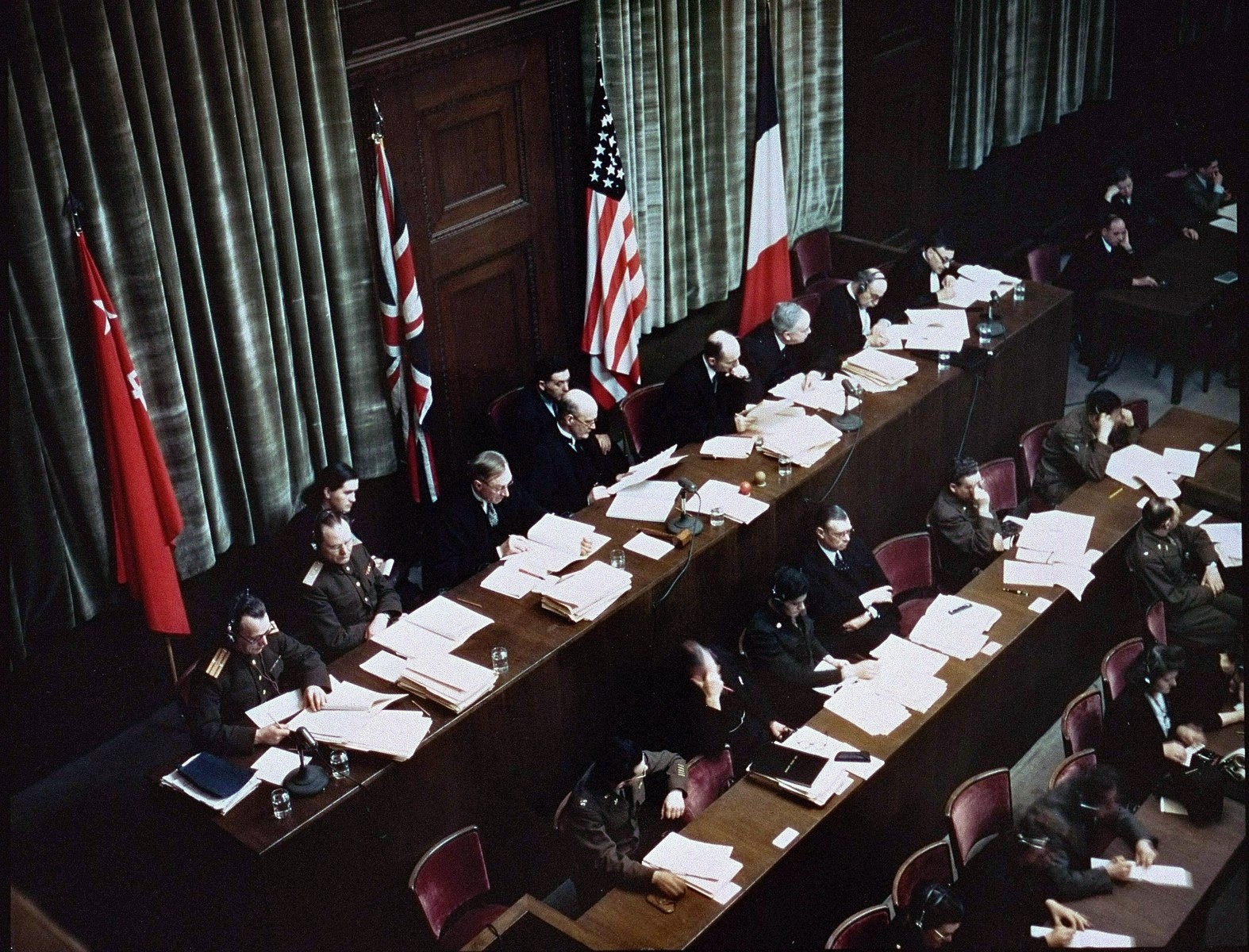
The genesis of the Nuremberg Trials lies in the scale of atrocities committed by Nazi Germany during World War II. As the war drew to a close in 1945, Allied powers—primarily the United States, United Kingdom, Soviet Union, and France—grappled with how to address the systematic persecution and murder of millions. Early proposals ranged from summary executions to show trials. Ultimately, the London Agreement designated Nuremberg as the venue, partly due to its symbolic significance as a former center of Nazi propaganda. This agreement marked a pivotal moment in the evolution of international law.
⚙️ How It Works
The International Military Tribunal (IMT) operated under established legal principles. Proceedings involved presenting evidence, including captured Nazi documents and witness testimony, to prove the guilt of the accused. The prosecution teams, composed of legal experts from each Allied nation, built cases against the defendants, who were represented by defense counsel. The trials were conducted with a degree of due process, allowing defendants to present their cases, though the legitimacy of trying individuals for actions that may have been legal under domestic law at the time remained a point of contention.
📊 Key Facts & Numbers
The trials generated over 30,000 pages of testimony and evidence. Beyond the IMT, subsequent trials were conducted by the U.S. military. These proceedings covered a vast array of offenses, including the Holocaust, forced labor, and medical experiments, underscoring the pervasive nature of Nazi criminality.
👥 Key People & Organizations
Key figures instrumental in the Nuremberg Trials include the chief prosecutors: Robert H. Jackson for the United States, Sir Hartley Shawcross for the United Kingdom, Auguste Champetier de Ribes for France, and Roman Rudenko for the Soviet Union. Jackson, in particular, delivered a powerful opening statement that framed the trials as a crucial step in establishing global justice. The defendants represented high echelons of the Nazi regime, including figures like Hermann Göring, Rudolf Hess, and Joachim von Ribbentrop. The United Nations played a crucial role in the aftermath, with the International Law Commission codifying the principles of the Nuremberg trials into international law, influencing the establishment of the International Criminal Court (ICC).
🌍 Cultural Impact & Influence
The Nuremberg Trials reshaped the global legal and ethical landscape. They established concepts of accountability for international crimes, moving beyond state-centric responsibility. The trials' documentation and legal reasoning have become foundational texts for international criminal law, informing subsequent tribunals like those for Yugoslavia and Rwanda. The phrase "crimes against humanity" entered common parlance, serving as a reminder of the imperative to prevent and punish mass atrocities, influencing works of literature, film, and historical analysis, such as the United States Holocaust Memorial Museum's extensive archives.
⚡ Current State & Latest Developments
While the original IMT concluded in the 1940s, the legacy of Nuremberg continues to evolve. The International Criminal Court embodies the spirit and legal principles of Nuremberg, prosecuting individuals for genocide, war crimes, and crimes against humanity. Contemporary discussions often reference Nuremberg when addressing new conflicts and atrocities, such as those in Syria or Ukraine. Legal scholars and human rights organizations continue to analyze the trials' proceedings, seeking to refine international justice mechanisms and ensure accountability for those who commit the worst crimes.
🤔 Controversies & Debates
The Nuremberg Trials were not without significant controversy. A primary critique centers on the principle of ex post facto law, as some charges were based on legal definitions established after the alleged actions occurred. The Soviet Union's participation also raised questions, given its own documented human rights abuses and territorial expansions. Furthermore, the acquittals of some defendants, like Hjalmar Schacht and Hans Fritzsche, sparked debate about the effectiveness and fairness of the proceedings. Skeptics argue that the trials were politically motivated, serving as victor's justice rather than impartial legal proceedings.
🔮 Future Outlook & Predictions
The future of international justice, heavily indebted to the Nuremberg model, remains a dynamic field. As new forms of conflict and atrocity emerge, the principles established at Nuremberg will continue to be tested and adapted. The ongoing work of the International Criminal Court and other hybrid tribunals suggests a persistent global commitment to holding individuals accountable. Future developments may involve addressing challenges like state sovereignty, the enforcement of international judgments, and the prosecution of new categories of crimes, such as ecocide.
💡 Practical Applications
The practical applications of the Nuremberg Trials are most evident in the field of international criminal law. The trials provided a blueprint for establishing international tribunals, defining core international crimes, and developing procedures for prosecuting them. This has influenced the creation of the International Criminal Court (ICC), the International Criminal Tribunal for the former Yugoslavia (ICTY), and the International Criminal Tribunal for Rwanda (ICTR). The legal principles articulated at Nuremberg are now cornerstones of international human rights law and are incorporated into the domestic legal systems of many nations.
Key Facts
- Category
- history
- Type
- event