
Contents
- 🎵 Origins & History
- ⚙️ How It Works
- 📊 Key Facts & Numbers
- 👥 Key People & Organizations
- 🌍 Cultural Impact & Influence
- ⚡ Current State & Latest Developments
- 🤔 Controversies & Debates
- 🔮 Future Outlook & Predictions
- 💡 Practical Applications
- 📚 Related Topics & Deeper Reading
- Frequently Asked Questions
- References
- Related Topics
Overview
Natural disaster management is a critical, multi-faceted discipline focused on minimizing the impact of hazardous natural events on human populations and infrastructure. It encompasses a continuous cycle of activities, from understanding the risks posed by phenomena like earthquakes and tropical cyclones to developing robust preparedness plans, executing swift and effective emergency responses, and facilitating long-term recovery and rebuilding efforts. The field draws on expertise from geology, meteorology, engineering, sociology, and public administration, aiming to build resilience within communities. Effective management often involves significant investment in early warning systems, land-use planning, and public education, as evidenced by the varying impacts of similar-magnitude events across different regions, such as the devastating 2010 Haiti earthquake versus the more managed impact of the 2011 Tōhoku earthquake and tsunami.
🎵 Origins & History
The formal study and practice of natural disaster management, while rooted in ancient human efforts to survive and rebuild after catastrophes, gained significant traction in the mid-20th century. Early efforts were often reactive, focusing on immediate relief after events like the 1906 San Francisco earthquake or the 1923 Great Kantō earthquake. The establishment of agencies like the Federal Emergency Management Agency in the United States (1979) and the United Nations Office for Disaster Risk Reduction (UNDRR) in 1999 marked a shift towards more proactive, systematic approaches. Precursors include the development of civil defense strategies during the Cold War and early meteorological forecasting capabilities. The increasing frequency and intensity of extreme weather events, exacerbated by climate change, have further accelerated the evolution of this field, pushing for integrated, multi-hazard strategies.
⚙️ How It Works
Natural disaster management operates through a continuous cycle comprising four key phases: mitigation, preparedness, response, and recovery. Mitigation involves actions taken to reduce the likelihood or impact of disasters, such as building seismic retrofits for structures or implementing flood control systems like the Delta Works in the Netherlands. Preparedness includes developing emergency plans, conducting drills (e.g., the Great California ShakeOut), and establishing early warning systems for events like volcanic eruptions or tsunamis. Response is the immediate action taken during and after a disaster, involving search and rescue, emergency medical services, and the distribution of aid. Recovery focuses on restoring communities to their pre-disaster state or better, encompassing infrastructure repair, economic revitalization, and psychological support, as seen in post-Hurricane Katrina rebuilding efforts.
📊 Key Facts & Numbers
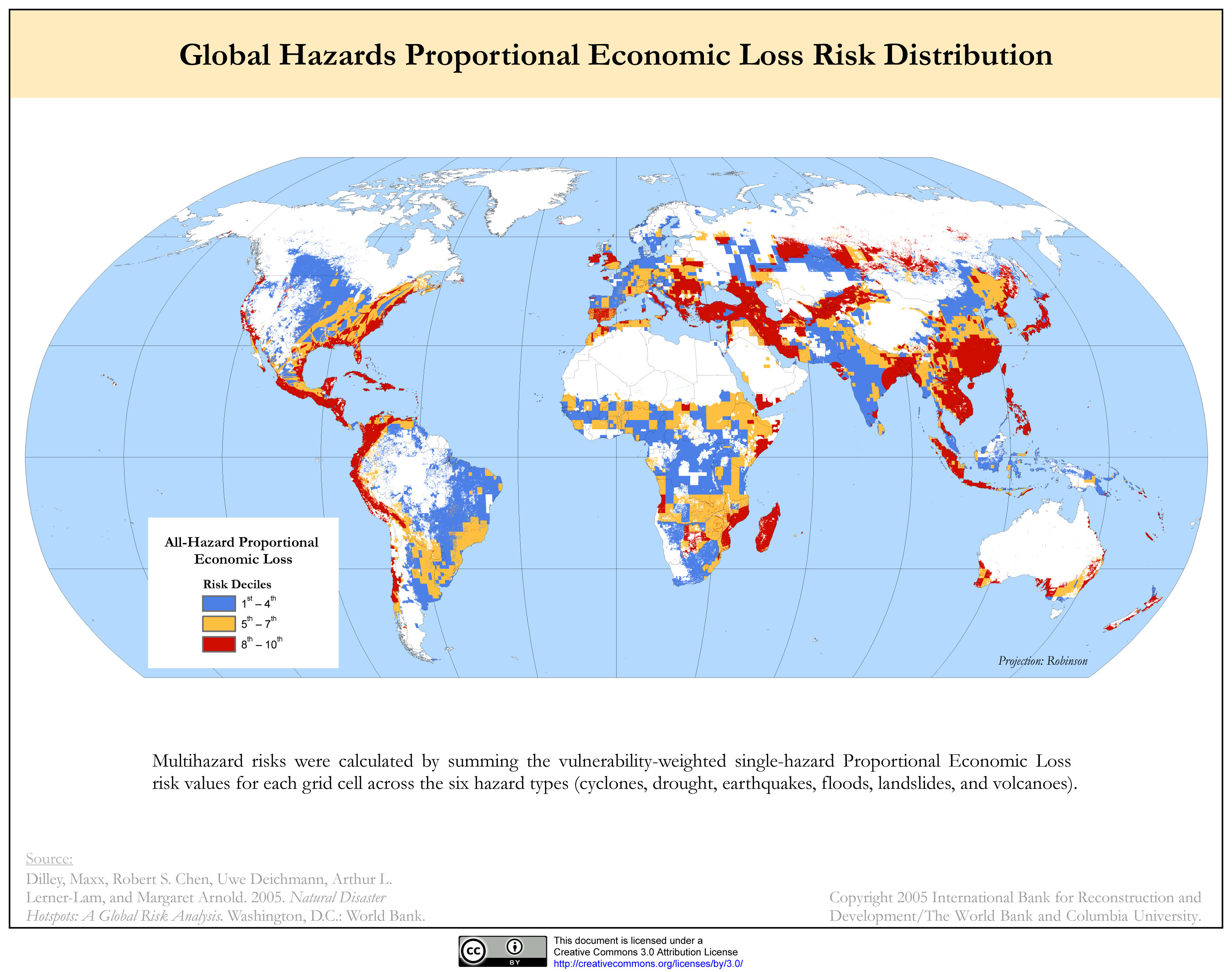
Globally, natural disasters caused an estimated $2.3 trillion in economic losses between 1998 and 2017, according to the United Nations Office for Disaster Risk Reduction. In 2023 alone, insured losses from natural catastrophes reached $50 billion, according to Swiss Re. The World Bank estimates that for every $1 invested in disaster risk reduction, $4 to $7 are saved in disaster damages. Over 70% of disaster-related deaths in the last decade occurred in Asia, highlighting regional vulnerabilities. The number of people affected by disasters has also risen, with over 4 billion people impacted by extreme weather events between 2000 and 2019, according to the Centre for Research on the Epidemiology of Disasters.
👥 Key People & Organizations
Key figures in natural disaster management include Kofi Annan, who championed the establishment of the United Nations Office for Disaster Risk Reduction and the Hyogo Framework for Action. Organizations like the International Federation of Red Cross and Red Crescent Societies (IFRC) and national agencies such as FEMA in the U.S. and the Japan Meteorological Agency (JMA) play pivotal roles. Prominent researchers like Ian Burton and Robert Kates have been instrumental in shaping the understanding of natural hazards and human adjustment to them. The National Academies of Sciences, Engineering, and Medicine also provide critical guidance and research.
🌍 Cultural Impact & Influence
The cultural resonance of natural disasters is profound, shaping art, literature, and societal narratives for millennia, from ancient myths of floods to modern disaster films. The way societies respond to and recover from these events often defines their collective identity and resilience. For instance, the meticulous rebuilding and advanced preparedness following the 1995 Great Hanshin earthquake in Kobe, Japan, became a symbol of national resolve. Conversely, perceived failures in disaster management, such as aspects of the response to Hurricane Maria in Puerto Rico, can lead to widespread public outcry and political consequences, influencing public trust in governance and emergency services.
⚡ Current State & Latest Developments
Current developments in natural disaster management are heavily influenced by advancements in artificial intelligence and big data analytics for predictive modeling and real-time situational awareness. The integration of GIS technology and remote sensing via satellites allows for more precise mapping of hazard zones and damage assessment. There's a growing emphasis on community-based disaster risk reduction (CBDRR) and the role of social media in disseminating information and coordinating aid during crises. Furthermore, the increasing recognition of climate change as a threat multiplier is driving a focus on building climate-resilient infrastructure and integrating disaster management with climate adaptation strategies, as highlighted in the Paris Agreement.
🤔 Controversies & Debates
A significant controversy revolves around the very term 'natural disaster,' with many scholars arguing it's a misnomer. They contend that disasters are not purely 'natural' but are exacerbated by human factors like poor urban planning, inadequate infrastructure, and social inequality, which create vulnerability. The debate centers on whether focusing on the 'natural' aspect deflects responsibility from these human-induced vulnerabilities. Another point of contention is the equitable distribution of resources and aid, with critics often pointing to disparities in response and recovery efforts between affluent and marginalized communities, or between different nations, following major events like the 2004 Indian Ocean tsunami.
🔮 Future Outlook & Predictions
The future of natural disaster management will likely see a greater reliance on sophisticated predictive analytics powered by machine learning and IoT devices for hyper-local, real-time risk assessment and early warnings. Expect enhanced integration of drone technology for rapid damage assessment and delivery of essential supplies in inaccessible areas. The concept of 'building back better' will become more ingrained, focusing on creating more resilient infrastructure and communities that can withstand future shocks, potentially incorporating nature-based solutions like mangrove restoration for coastal defense. International cooperation and data-sharing frameworks will become even more crucial as global interconnectedness means disasters in one region can have far-reaching economic and social impacts.
💡 Practical Applications
Practical applications of natural disaster management are widespread. Urban planners use hazard maps and risk assessments to guide development away from high-risk zones, influencing zoning laws and building codes. Engineers design structures, from earthquake-resistant buildings to flood barriers, to withstand specific natural forces. Public health officials develop mass casualty incident plans and disease surveillance protocols for post-disaster scenarios. Educational institutions incorporate disaster preparedness into curricula, and businesses develop continuity plans to ensure operational resilience. Emergency services, including fire departments and paramedic services, train extensively for rapid deployment.
Key Facts
- Year
- mid-20th century (formalization)
- Origin
- Global
- Category
- science
- Type
- concept
Frequently Asked Questions
What are the main phases of natural disaster management?
Natural disaster management is typically divided into four phases: mitigation, preparedness, response, and recovery. Mitigation involves reducing the impact of potential disasters through measures like building codes and land-use planning. Preparedness includes developing plans, training personnel, and establishing early warning systems. Response is the immediate action taken during and after an event, focusing on saving lives and providing essential services. Recovery is the long-term process of rebuilding communities and restoring normalcy, often aiming to 'build back better' than before the disaster struck.
Why is the term 'natural disaster' controversial?
The term 'natural disaster' is controversial because many experts argue it oversimplifies complex events, implying they are solely the product of nature. Critics, such as scholars like Ian Burton, contend that the severity of a disaster is often amplified by human factors like poverty, inadequate infrastructure, poor urban planning, and environmental degradation, which create societal vulnerability. They propose that focusing on the 'natural' aspect can deflect responsibility from these human-induced vulnerabilities and lead to less effective mitigation strategies. The debate highlights the interconnectedness of natural hazards and societal conditions.
How has climate change impacted natural disaster management?
Climate change has significantly impacted natural disaster management by increasing the frequency and intensity of many extreme weather events. This includes more powerful hurricanes, more severe droughts, increased wildfire risk, and more extreme rainfall leading to floods. Consequently, disaster management strategies must now increasingly incorporate climate adaptation and resilience measures. This involves not only preparing for more extreme events but also considering long-term shifts in hazard patterns, necessitating updated risk assessments, infrastructure design, and land-use policies to cope with a changing climate.
What role do early warning systems play?
Early warning systems are a cornerstone of effective natural disaster management, providing crucial lead time for communities to prepare and evacuate. Systems for phenomena like tsunamis, tropical cyclones, and volcanic eruptions can save thousands of lives by allowing timely evacuation and protective measures. For instance, the Indian Ocean Tsunami Warning and Mitigation System, established after the devastating 2004 tsunami, has significantly improved regional preparedness. The effectiveness of these systems relies not only on accurate forecasting but also on robust communication channels to reach vulnerable populations and public education on how to respond to warnings.
How can communities become more resilient to natural disasters?
Community resilience to natural disasters is built through a combination of physical, social, and economic measures. Physically, this involves strengthening infrastructure, implementing effective land-use planning to avoid high-risk areas, and utilizing nature-based solutions like mangrove restoration for coastal protection. Socially, it means fostering strong community networks, promoting disaster education and preparedness drills, and ensuring clear communication channels. Economically, resilience can be enhanced through diversified local economies, accessible insurance, and robust recovery funds. The Sendai Framework for Disaster Risk Reduction emphasizes multi-stakeholder engagement in building this comprehensive resilience.
What are the practical steps for preparing a household for a disaster?
Preparing a household for a disaster involves several practical steps. First, develop a family emergency plan that outlines evacuation routes, meeting points, and communication strategies, especially if separated. Second, assemble an emergency supply kit containing essentials like water (one gallon per person per day for several days), non-perishable food, a first-aid kit, medications, a flashlight, batteries, a multi-tool, and sanitation items. Third, stay informed about local risks and potential hazards by monitoring official alerts from sources like NOAA or local emergency management agencies. Finally, secure your home by identifying potential hazards like unsecured heavy objects or weak structural points, and consider retrofitting where necessary.
What are the future trends in disaster management technology?
Future trends in disaster management technology are leaning heavily towards advanced predictive analytics and real-time data integration. Expect increased use of AI and machine learning for more accurate forecasting and risk assessment, potentially down to neighborhood levels. Drones will play a larger role in rapid damage assessment, search and rescue, and even delivering critical supplies to isolated areas. The Internet of Things (IoT) will enable more sophisticated sensor networks for monitoring environmental conditions and infrastructure integrity. Furthermore, advancements in communication technologies, including satellite and mesh networks, will aim to ensure connectivity even when traditional infrastructure fails.