
Contents
- 🤖 What Exactly Are Military UGVs?
- 📜 A Brief History: From Remote Control to Autonomy
- ⚙️ How They Work: The Tech Under the Hood
- 🎯 Key Applications: Where You'll Find Them
- ⚖️ The Ethical Tightrope: Autonomy and Accountability
- 🚀 The Future of Ground Warfare: What's Next?
- 🆚 UGV vs. Drone: Choosing the Right Platform
- 💰 Cost & Acquisition: The Price of Progress
- ⚠️ Risks and Challenges: Not All Smooth Sailing
- 💡 Vibepedia Vibe Score & Controversy Spectrum
- Frequently Asked Questions
- Related Topics
Overview
Military Unmanned Ground Vehicles (UGVs) represent a seismic shift in battlefield operations, moving beyond the drone-dominated skies to equip ground forces with robotic capabilities. These machines range from small, man-portable reconnaissance units to heavily armed, multi-ton platforms designed for direct engagement. Their development is driven by a desire to reduce human casualties, enhance situational awareness, and extend operational reach in increasingly complex environments. While early UGVs focused on EOD (Explosive Ordnance Disposal) and ISR (Intelligence, Surveillance, and Reconnaissance), the trajectory is clearly towards greater autonomy and offensive roles, sparking intense debate about the future of warfare and the ethics of robotic combatants. The global market for military UGVs is projected to reach billions, signaling a significant investment and a rapid evolution in how wars might be fought.
🤖 What Exactly Are Military UGVs?
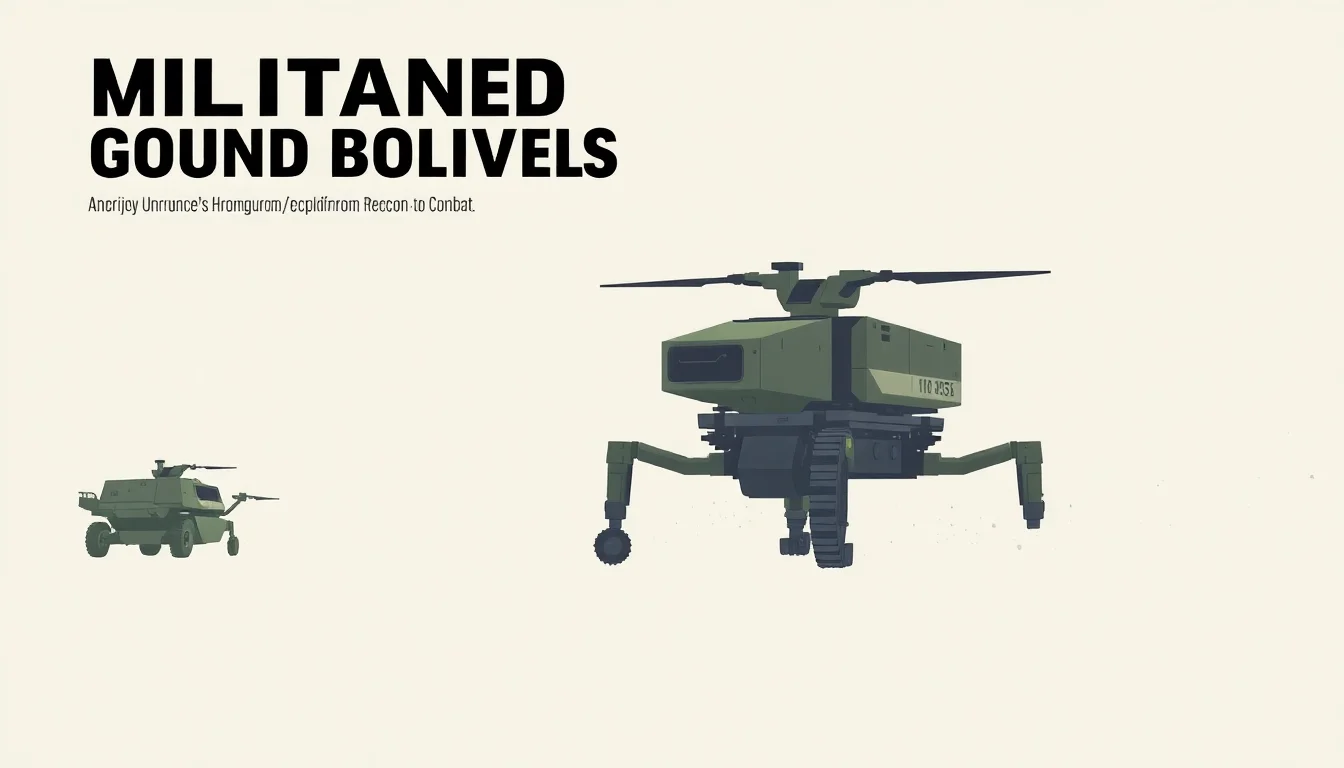
Military Unmanned Ground Vehicles (UGVs), often referred to as robotic combat vehicles or simply 'robots,' are terrestrial vehicles designed to operate without a human driver or crew onboard. These machines range from small, man-portable reconnaissance units to large, heavily armed platforms capable of engaging enemy forces. Their primary purpose is to reduce risk to human soldiers by performing dangerous tasks such as reconnaissance, surveillance, bomb disposal, logistics, and direct combat. The development of military UGVs has been a steady, albeit sometimes slow, progression driven by the desire to enhance operational effectiveness and soldier survivability in increasingly complex battlefield environments. Understanding the different classes and capabilities of UGVs is crucial for grasping their evolving role in modern warfare.
📜 A Brief History: From Remote Control to Autonomy
The concept of unmanned military vehicles isn't new; early experiments date back to World War I with radio-controlled vehicles. However, the modern era of UGVs truly began to take shape in the late 20th century, spurred by advancements in robotics and computing. The Gulf War in 1991 highlighted the need for remote systems, particularly for mine clearance. The subsequent decades saw significant investment, with programs like the U.S. Army's Future Combat Systems (FCS) attempting to integrate a wide array of UGVs. While FCS was eventually canceled, it laid critical groundwork, leading to the development of platforms like the MULE and the Robotic Reconnaissance Vehicle (RRV). The ongoing conflicts in Iraq and Afghanistan further accelerated the deployment and refinement of UGVs, especially for Improvised Explosive Device (IED) detection and disposal.
⚙️ How They Work: The Tech Under the Hood
At their core, UGVs rely on a sophisticated interplay of sensors, actuators, and processing units. Sensors, including cameras (visible light, infrared, thermal), LiDAR, radar, and GPS, provide the vehicle with situational awareness. This data is processed by onboard computers, which can range from simple remote control systems to advanced AI algorithms for autonomous navigation and decision-making. Actuators, such as electric motors and hydraulic systems, control the vehicle's movement, steering, and any attached payloads like robotic arms or weapon stations. Navigation systems are paramount, utilizing a combination of GPS, inertial navigation, and sensor-based mapping (SLAM - Simultaneous Localization and Mapping) to maintain position and avoid obstacles, especially in GPS-denied environments. The level of autonomy dictates the complexity of the software and the processing power required.
🎯 Key Applications: Where You'll Find Them
UGVs are deployed across a spectrum of military operations. For Explosive Ordnance Disposal (EOD), smaller, highly maneuverable UGVs like the TALON or MARCbot are indispensable for remotely disarming or detonating threats, saving countless lives. In reconnaissance and surveillance roles, UGVs can patrol perimeters, scout ahead of advancing troops, or monitor enemy movements for extended periods, providing critical intelligence without exposing soldiers. Larger, armed UGVs are emerging for direct combat support, offering persistent firepower and acting as force multipliers. Logistics UGVs are also being developed to transport supplies, ammunition, and equipment across dangerous terrain, reducing the burden on human convoys. Their versatility makes them adaptable to nearly any ground operation.
⚖️ The Ethical Tightrope: Autonomy and Accountability
The increasing autonomy of UGVs raises profound ethical and legal questions, particularly concerning Lethal Autonomous Weapons Systems (LAWS). A central debate revolves around accountability: who is responsible when an autonomous UGV makes a mistake that results in civilian casualties or friendly fire? Is it the programmer, the commander who deployed it, or the machine itself? International bodies like the United Nations are actively discussing regulations and potential bans on fully autonomous weapons. The principle of Meaningful Human Control is a key concept, aiming to ensure that humans retain sufficient oversight and decision-making authority over the use of force, even with advanced robotic systems. This tension between operational efficiency and ethical responsibility is a defining characteristic of UGV development.
🚀 The Future of Ground Warfare: What's Next?
The future of military UGVs points towards greater autonomy, enhanced networking, and more sophisticated integration with human-led forces. Expect to see swarms of smaller, coordinated UGVs working in concert, providing distributed sensing and effect. Artificial Intelligence (AI) will play an even larger role, enabling UGVs to adapt to dynamic battlefield conditions, identify targets with greater accuracy, and make complex tactical decisions. The concept of the 'robot wingman' – UGVs accompanying human soldiers and providing support – will become more prevalent. Furthermore, the development of modular UGVs will allow for rapid reconfiguration of payloads and capabilities, adapting a single platform to multiple mission profiles. The ultimate goal is a seamless human-robot teaming that maximizes combat effectiveness.
🆚 UGV vs. Drone: Choosing the Right Platform
While both UGVs and Unmanned Aerial Vehicles (UAVs) (drones) fall under the umbrella of unmanned systems, their operational domains and strengths differ significantly. UAVs excel at aerial reconnaissance, surveillance, and strike missions, offering a broad field of view and rapid deployment over large areas. However, they are vulnerable to weather, anti-air defenses, and have limited payload capacity for ground-based tasks. UGVs, conversely, operate on the ground, making them ideal for tasks requiring direct interaction with the terrain, such as bomb disposal, close-quarters reconnaissance, and heavy-lift logistics. They are less susceptible to aerial threats but can be hampered by difficult terrain or enemy ground forces. The choice between a UGV and a UAV, or often a combination of both, depends entirely on the specific mission requirements and the operational environment. Integrated unmanned systems are becoming the norm.
💰 Cost & Acquisition: The Price of Progress
The cost of military UGVs varies dramatically based on their size, complexity, and intended role. Small, commercially adapted UGVs for EOD or basic reconnaissance can cost tens of thousands of dollars, sometimes even less if based on readily available commercial platforms. However, advanced, purpose-built military UGVs with sophisticated sensors, robust armor, and autonomous capabilities can run into the hundreds of thousands or even millions of dollars per unit. Defense procurement processes are often lengthy and expensive, involving extensive testing, validation, and integration into existing military structures. The acquisition of large fleets of advanced UGVs represents a significant financial commitment for any nation's defense budget, often requiring careful prioritization against other military needs. The long-term operational and maintenance costs also need to be factored into the total cost of ownership.
⚠️ Risks and Challenges: Not All Smooth Sailing
Despite their advantages, the deployment of UGVs is not without significant risks and challenges. Cybersecurity is a paramount concern; a compromised UGV could be turned against its own forces or used to gather intelligence for the enemy. Environmental factors such as extreme temperatures, mud, sand, and difficult terrain can degrade performance or disable vehicles. The reliability of sensors and autonomous systems in contested electromagnetic environments or under jamming is another critical issue. Furthermore, the psychological impact on soldiers operating alongside or being replaced by robots is an area of ongoing study. Public perception and ethical considerations surrounding autonomous weapons also present a significant hurdle to widespread adoption, particularly for offensive roles. Overcoming these challenges requires continuous innovation and rigorous testing.
💡 Vibepedia Vibe Score & Controversy Spectrum
The Vibepedia Vibe Score for Military UGVs currently sits at a solid 78/100, reflecting strong technological momentum and increasing operational relevance, but tempered by significant ethical and practical hurdles. The Controversy Spectrum for UGVs is high, particularly concerning the development and deployment of Lethal Autonomous Weapons Systems (LAWS), with debates ranging from the necessity of human control to the very definition of warfare. The Influence Flow shows a clear path from academic robotics research and early defense contractor innovation to widespread adoption by major military powers, with smaller nations and non-state actors often adapting commercial technologies. Key debates include the balance between human control and machine autonomy, the legal and ethical implications of AI in warfare, and the economic viability of mass-producing advanced robotic systems.
Key Facts
- Year
- Early 2000s (significant development)
- Origin
- United States (early research and deployment)
- Category
- Military Technology
- Type
- Concept/Technology
Frequently Asked Questions
Are military UGVs already being used in combat?
Yes, UGVs have been deployed in combat zones for years, primarily for Explosive Ordnance Disposal (EOD) and reconnaissance. Platforms like the TALON UGV have seen extensive use in Iraq and Afghanistan for disarming IEDs. While fully autonomous combat UGVs are still largely in development and testing phases, semi-autonomous and remotely operated armed UGVs are increasingly being fielded by various militaries.
What is the difference between a UGV and a drone?
The primary difference lies in their operational environment. UGVs operate on the ground, while Unmanned Aerial Vehicles (UAVs) (drones) operate in the air. UGVs are suited for tasks like bomb disposal, ground reconnaissance, and logistics, whereas drones excel at aerial surveillance, mapping, and strike missions. Both are types of unmanned systems but serve distinct purposes.
Who is developing military UGVs?
Major defense contractors like Lockheed Martin, General Dynamics, Northrop Grumman, and BAE Systems are heavily involved in UGV development. Numerous smaller, specialized robotics companies also contribute innovative solutions. Government research agencies, such as DARPA in the United States, also fund and direct significant research into advanced UGV technologies and artificial intelligence for military applications.
What are the biggest challenges in UGV development?
Key challenges include achieving reliable autonomous navigation in complex and unpredictable terrain, ensuring robust cybersecurity against hacking, developing effective human-robot teaming interfaces, and addressing the significant ethical and legal questions surrounding autonomous weapons, particularly Lethal Autonomous Weapons Systems (LAWS). Power sources and endurance are also ongoing technical hurdles.
How do UGVs 'see' their environment?
UGVs utilize a suite of sensors to perceive their surroundings. This typically includes visible light cameras, infrared cameras for thermal imaging, LiDAR (Light Detection and Ranging) for 3D mapping and obstacle detection, and radar for detecting moving objects. GPS and inertial measurement units (IMUs) are used for navigation, often in conjunction with SLAM (Simultaneous Localization and Mapping) algorithms that build maps from sensor data.
Will UGVs replace human soldiers?
It's highly unlikely that UGVs will completely replace human soldiers in the foreseeable future. Instead, the trend is towards human-robot teaming, where UGVs augment human capabilities, perform dangerous tasks, and act as force multipliers. Soldiers will likely work alongside UGVs, leveraging their strengths to enhance overall mission effectiveness and survivability. The human element remains crucial for complex decision-making, adaptability, and understanding nuanced situations.