
Contents
- 🔋 Introduction to Lithium Ion Batteries
- 💡 History and Development of Li-ion Batteries
- 📈 Energy Density and Efficiency
- 🔍 How Li-ion Batteries Work
- 📊 Market Demand and Production Capacity
- 🚀 Advancements and Future Prospects
- 🔋 Applications of Li-ion Batteries
- 💻 Challenges and Limitations
- 🌎 Environmental Impact and Sustainability
- 📊 Economic Impact and Cost Analysis
- 🔜 Conclusion and Future Outlook
- Frequently Asked Questions
- Related Topics
Overview
Lithium ion batteries, pioneered by John Goodenough, Akira Yoshino, and M. Stanley Whittingham in the 1980s, have become the backbone of modern portable electronics, electric vehicles, and renewable energy systems. With a global market projected to reach $129.3 billion by 2027, Li-ion batteries have sparked intense debates over their environmental impact, with concerns over lithium mining, battery waste, and thermal runaway. Despite these challenges, researchers like Yi Cui and Jeff Dahn are pushing the boundaries of Li-ion technology, exploring new chemistries and designs that could increase energy density by up to 30% and reduce production costs by 50%. As the world transitions to a low-carbon economy, the future of Li-ion batteries will be shaped by innovations in solid-state electrolytes, sodium-ion batteries, and closed-loop recycling. With a vibe score of 8.2, Li-ion batteries are poised to remain a crucial component of the global energy landscape. However, as the demand for lithium continues to rise, the industry must address the social and environmental consequences of large-scale mining operations, which have been linked to water pollution, land degradation, and human rights abuses in countries like Chile and Australia.
🔋 Introduction to Lithium Ion Batteries
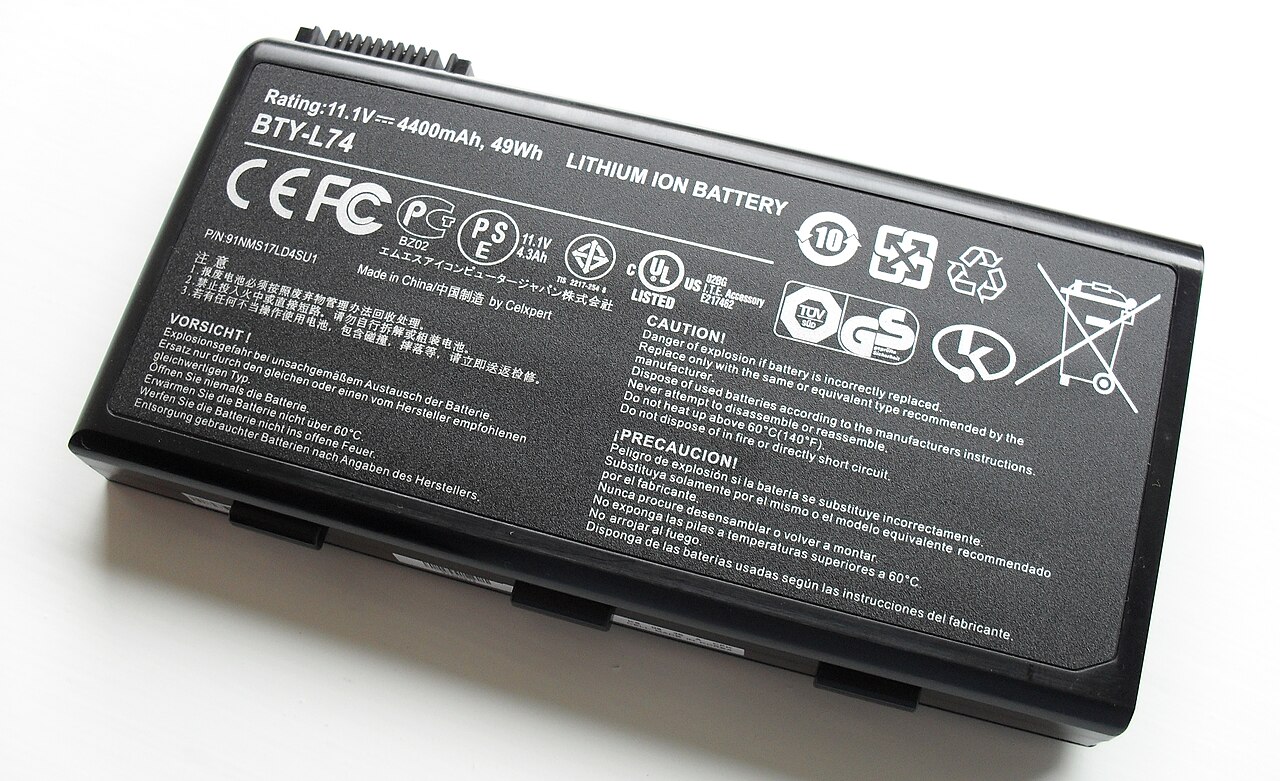
Lithium-ion batteries, also known as Li-ion batteries, have become the powerhouse of modern technology, powering everything from Smartphones to Electric Vehicles. With their high specific energy, energy density, and energy efficiency, they have revolutionized the way we live and work. The development of Li-ion batteries is attributed to the work of John Goodenough, Akira Yoshino, and M. Stanley Whittingham, who were awarded the Nobel Prize in Chemistry in 2019 for their contributions to the development of Li-ion batteries. The first Li-ion batteries were sold in 1991, and since then, their volumetric energy density has increased threefold while their cost has dropped tenfold. Today, Li-ion batteries are used in a wide range of applications, including Laptops, Tablets, and Wearable Devices.
💡 History and Development of Li-ion Batteries
The history of Li-ion batteries dates back to the 1970s, when M. Stanley Whittingham first discovered the concept of intercalation, which is the reversible insertion of ions into a solid material. This discovery led to the development of the first Li-ion batteries, which were first sold in 1991 by Sony. Since then, Li-ion batteries have undergone significant improvements, with advancements in materials, design, and manufacturing. The development of Li-ion batteries has been driven by the need for more efficient and sustainable energy storage solutions, and has been influenced by the work of researchers such as John Goodenough and Akira Yoshino. Today, Li-ion batteries are used in a wide range of applications, including Electric Vehicles, Renewable Energy Systems, and Energy Storage Systems.
📈 Energy Density and Efficiency
One of the key advantages of Li-ion batteries is their high energy density and efficiency. Li-ion batteries have a higher specific energy and energy density than other types of rechargeable batteries, making them ideal for applications where space and weight are limited. The energy density of Li-ion batteries has increased significantly over the years, with some batteries achieving energy densities of up to 300 Wh/kg. This has been driven by advancements in materials and design, such as the use of Graphene and Nanomaterials. The high energy density and efficiency of Li-ion batteries make them ideal for applications such as Portable Electronics and Electric Vehicles.
🔍 How Li-ion Batteries Work
So, how do Li-ion batteries work? Li-ion batteries use the reversible intercalation of Li+ ions into electronically conducting solids to store energy. The battery consists of a positive electrode (cathode), a negative electrode (anode), and an electrolyte. When the battery is charged, Li+ ions are inserted into the cathode, and when the battery is discharged, the Li+ ions are released from the cathode and inserted into the anode. This process is reversible, allowing the battery to be charged and discharged multiple times. The use of Solid State Electrolytes and Nanomaterials has improved the performance and safety of Li-ion batteries. Li-ion batteries are also used in a wide range of applications, including Medical Devices and Industrial Equipment.
📊 Market Demand and Production Capacity
The market demand for Li-ion batteries has been increasing rapidly, driven by the growing demand for Electric Vehicles, Renewable Energy Systems, and Energy Storage Systems. In late 2024, global demand passed 1 terawatt-hour per year, while production capacity was more than twice that. The high demand for Li-ion batteries has driven the development of new manufacturing technologies and the establishment of new production facilities. Companies such as Tesla, LG Chem, and Panasonic are leading the way in Li-ion battery production, with a focus on improving efficiency, reducing costs, and increasing production capacity. The use of Artificial Intelligence and Machine Learning is also being explored to improve the performance and safety of Li-ion batteries.
🚀 Advancements and Future Prospects
Advancements in Li-ion battery technology are ongoing, with researchers exploring new materials, designs, and manufacturing techniques. One of the key areas of research is the development of Solid State Batteries, which promise to improve safety, efficiency, and performance. Other areas of research include the use of Graphene and Nanomaterials to improve energy density and efficiency. The development of new manufacturing technologies, such as 3D Printing, is also expected to improve production efficiency and reduce costs. Companies such as Google and Amazon are also investing in Li-ion battery research and development, with a focus on improving the performance and safety of Li-ion batteries. The use of Blockchain technology is also being explored to improve the supply chain management of Li-ion batteries.
🔋 Applications of Li-ion Batteries
Li-ion batteries have a wide range of applications, from Portable Electronics to Electric Vehicles. They are used in Laptops, Tablets, and Wearable Devices, as well as in Medical Devices and Industrial Equipment. Li-ion batteries are also used in Renewable Energy Systems and Energy Storage Systems, where they play a critical role in storing excess energy generated by Solar Panels and Wind Turbines. The use of Li-ion batteries in Electric Vehicles is expected to drive growth in the demand for Li-ion batteries, with many countries investing in the development of Electric Vehicle Charging Infrastructure.
💻 Challenges and Limitations
Despite the many advantages of Li-ion batteries, there are also some challenges and limitations. One of the key challenges is the high cost of production, which can make Li-ion batteries more expensive than other types of batteries. Another challenge is the limited availability of Lithium and other key materials, which can impact production capacity. The use of Cobalt in Li-ion batteries has also raised concerns about the environmental and social impact of mining. Researchers are exploring alternative materials and designs to address these challenges, such as the use of Lithium Iron Phosphate and Sodium Ion Batteries. The development of Recycling Technologies for Li-ion batteries is also expected to improve the sustainability of Li-ion batteries.
🌎 Environmental Impact and Sustainability
The environmental impact of Li-ion batteries is a topic of ongoing debate. While Li-ion batteries have the potential to reduce greenhouse gas emissions by enabling the widespread adoption of Electric Vehicles and Renewable Energy Systems, they also have a significant environmental impact. The mining of Lithium and other key materials can have negative environmental and social impacts, and the disposal of Li-ion batteries can also pose environmental risks. Researchers are exploring ways to reduce the environmental impact of Li-ion batteries, such as the use of Recycling Technologies and the development of more sustainable materials. The use of Life Cycle Assessment is also being used to evaluate the environmental impact of Li-ion batteries.
📊 Economic Impact and Cost Analysis
The economic impact of Li-ion batteries is significant, with the global market for Li-ion batteries expected to reach $100 billion by 2025. The high demand for Li-ion batteries has driven the development of new manufacturing technologies and the establishment of new production facilities. Companies such as Tesla and LG Chem are leading the way in Li-ion battery production, with a focus on improving efficiency, reducing costs, and increasing production capacity. The use of Artificial Intelligence and Machine Learning is also being explored to improve the performance and safety of Li-ion batteries. The development of Electric Vehicle Charging Infrastructure is also expected to drive growth in the demand for Li-ion batteries.
🔜 Conclusion and Future Outlook
In conclusion, Li-ion batteries have revolutionized the way we live and work, powering everything from Smartphones to Electric Vehicles. With their high energy density and efficiency, Li-ion batteries have become the powerhouse of modern technology. However, there are also challenges and limitations to be addressed, such as the high cost of production and the limited availability of key materials. As researchers continue to explore new materials, designs, and manufacturing techniques, we can expect to see even more innovative applications of Li-ion batteries in the future. The use of Blockchain technology is also being explored to improve the supply chain management of Li-ion batteries. As the demand for Li-ion batteries continues to grow, it is likely that we will see significant advancements in Li-ion battery technology in the coming years.
Key Facts
- Year
- 1985
- Origin
- United States
- Category
- Energy and Technology
- Type
- Technology
Frequently Asked Questions
What is the average lifespan of a Li-ion battery?
The average lifespan of a Li-ion battery is around 5-7 years, depending on the type of battery and how it is used. However, some Li-ion batteries can last up to 10 years or more with proper care and maintenance. The lifespan of a Li-ion battery can be affected by factors such as the depth of discharge, charging cycles, and operating temperature. Researchers are exploring ways to improve the lifespan of Li-ion batteries, such as the use of Solid State Electrolytes and Nanomaterials.
Can Li-ion batteries be recycled?
Yes, Li-ion batteries can be recycled. In fact, recycling Li-ion batteries is becoming increasingly important as the demand for Li-ion batteries continues to grow. Recycling Li-ion batteries can help to reduce the environmental impact of mining and processing raw materials, and can also help to conserve natural resources. Companies such as Tesla and LG Chem are investing in Li-ion battery recycling technologies, with a focus on improving the efficiency and sustainability of the recycling process. The use of Recycling Technologies is also being explored to improve the sustainability of Li-ion batteries.
What are the advantages of Li-ion batteries over other types of batteries?
Li-ion batteries have several advantages over other types of batteries, including higher energy density, longer lifespan, and faster charging times. Li-ion batteries are also more efficient and have a lower self-discharge rate than other types of batteries. Additionally, Li-ion batteries are more environmentally friendly than other types of batteries, as they do not contain toxic materials such as lead or mercury. The use of Lithium Iron Phosphate and Sodium Ion Batteries is also being explored as alternative materials for Li-ion batteries.
Can Li-ion batteries be used in extreme temperatures?
Li-ion batteries can be used in a wide range of temperatures, but their performance and lifespan can be affected by extreme temperatures. High temperatures can cause Li-ion batteries to degrade faster, while low temperatures can reduce their performance and capacity. However, some Li-ion batteries are designed to operate in extreme temperatures, such as those used in Electric Vehicles and Aerospace applications. The use of Thermal Management Systems is also being explored to improve the performance and safety of Li-ion batteries in extreme temperatures.
What is the cost of Li-ion batteries?
The cost of Li-ion batteries can vary widely, depending on the type and size of the battery, as well as the manufacturer and supplier. However, the cost of Li-ion batteries has been decreasing in recent years, making them more competitive with other types of batteries. The cost of Li-ion batteries is expected to continue to decrease as the demand for Li-ion batteries grows and new manufacturing technologies are developed. The use of Economies of Scale is also being explored to reduce the cost of Li-ion batteries.
Can Li-ion batteries be used in renewable energy systems?
Yes, Li-ion batteries can be used in Renewable Energy Systems to store excess energy generated by Solar Panels and Wind Turbines. Li-ion batteries are well-suited for renewable energy systems because of their high energy density, long lifespan, and fast charging times. The use of Li-ion batteries in renewable energy systems can help to reduce greenhouse gas emissions and improve energy efficiency. The development of Energy Storage Systems is also expected to drive growth in the demand for Li-ion batteries.
What are the safety concerns associated with Li-ion batteries?
Li-ion batteries can pose safety risks if they are not designed, manufactured, or used properly. Some of the safety concerns associated with Li-ion batteries include overheating, explosion, and fire. However, most Li-ion batteries are designed with safety features such as thermal management systems and protective circuits to prevent these risks. The use of Solid State Electrolytes and Nanomaterials is also being explored to improve the safety of Li-ion batteries.