
Contents
Overview
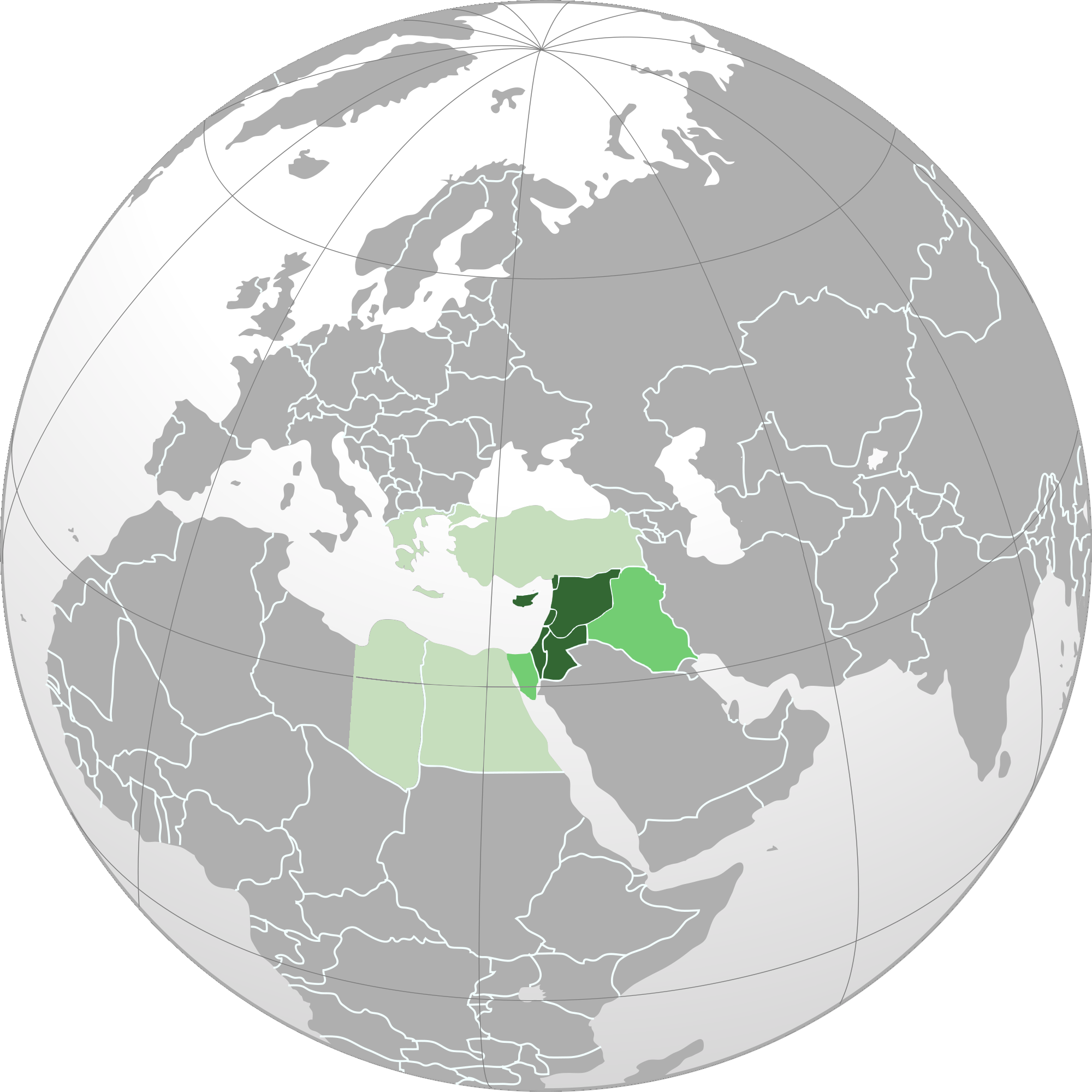
The Levant is a historical and geographical region in Western Asia, situated along the eastern Mediterranean coast. Its definition has shifted over time, but it most commonly encompasses modern-day Syria, Lebanon, Jordan, Palestine, Israel, and parts of southern Turkey and northwestern Saudi Arabia. This area has been a crucial nexus for trade, migration, and cultural exchange for millennia, bridging Europe, Africa, and Asia. Its strategic location has made it a cradle of civilization, witnessing the rise and fall of numerous empires and the birth of major religions, including Judaism, Christianity, and Islam. Today, the term 'Levant' often evokes a sense of shared history and cultural heritage, even amidst complex modern political realities.
🎵 Origins & History
The concept of the Levant emerged to describe the maritime trade routes of Italian city-states like Venice and Genoa in the Eastern Mediterranean. Archaeological evidence points to early human settlements dating back to the Paleolithic era. The region's unique position has historically facilitated the movement of peoples, ideas, and goods, earning it the moniker 'crossroads of the world.' The region's topography is diverse, featuring coastal plains, fertile river valleys like the Jordan Valley, mountainous terrains, and arid desert fringes.
⚙️ Geographical Definition
Defining the precise boundaries of the Levant is a fluid exercise, often dependent on the context—historical, geographical, or cultural. In its narrowest, archaeological sense, the Levant refers to the land bordering the Levantine Sea in Western Asia. A broader historical interpretation of the Levant extends its reach to include Cyprus and even parts of eastern Libya (Cyrenaica) and Greece.
📊 Key Facts & Numbers
The Levant's historical depth is staggering. The region has witnessed the rise and fall of at least 15 major empires. Today, the combined GDP of the core Levantine countries (Syria, Lebanon, Jordan, Israel, Palestine) is approximately $250 billion USD annually, though this figure is subject to significant fluctuation due to regional instability.
👥 Key People & Organizations
While the Levant is a region rather than a singular entity, its history is shaped by countless influential figures and organizations. Ancient rulers like Nebuchadnezzar II of Babylon and Cyrus the Great of Persia left indelible marks. The Phoenicians established colonies across the Mediterranean, including Carthage. Later, figures like Saladin, the founder of the Ayyubid dynasty, played pivotal roles in the Crusades. Modern political architects like Mustafa Kemal Atatürk and David Ben-Gurion shaped the contemporary nation-states. Organizations like the United Nations have played a significant role in post-WWI mandates and ongoing peace efforts, while entities like the Arab League attempt to foster regional cooperation.
🌍 Cultural Impact & Influence
The cultural output of the Levant is immense and deeply influential. Its position as a crossroads has resulted in a rich tapestry of languages, cuisines, music, and architectural styles. Levantine cuisine is characterized by ingredients like olive oil, chickpeas, tahini, and a variety of herbs and spices. Dishes like hummus, falafel, and shawarma have gained global popularity. Musical traditions include ancient lyres and modern dabke folk dance. Architectural legacies range from the monumental Roman ruins at Baalbek and Jerash to the intricate Islamic geometric patterns found in mosques and madrasas across the region. The region's profound spiritual significance has also shaped global art, literature, and philosophy for millennia.
⚡ Current State & Latest Developments
The Levant in the 2020s is a region defined by both enduring historical connections and complex contemporary challenges. While the modern nation-states of Syria, Lebanon, Jordan, Israel, and Palestine have distinct political identities, cultural and economic ties persist, albeit strained by conflict and political division. Despite this, efforts towards economic cooperation continue, particularly through initiatives like the Eastern Mediterranean Gas Forum, established in 2020, aiming to foster energy cooperation among countries like Egypt, Israel, Jordan, Palestine, Cyprus, Greece, France, and Italy. Tourism remains a vital sector for countries like Jordan and Lebanon, though it is highly sensitive to security conditions. The region is also a focal point for ongoing geopolitical tensions and diplomatic efforts, particularly concerning the Israeli-Palestinian conflict and the broader regional power dynamics involving Iran, Saudi Arabia, and Turkey.
🤔 Controversies & Debates
The very definition and application of the term 'Levant' can be contentious. Historically, the term was largely imposed by European powers, and its usage can sometimes obscure the distinct national identities and histories of the peoples within the region. The political boundaries drawn by colonial powers, particularly after the collapse of the Ottoman Empire following World War I under the Sykes-Picot Agreement, have led to ongoing territorial disputes and ethnic tensions, most notably the Israeli-Palestinian conflict. The term 'Levantine' itself has sometimes been used in a somewhat exoticizing or orientalist manner in Western discourse, reducing a complex region to a set of stereotypes. Furthermore, the inclusion or exclusion of certain territories (like Cyprus or parts of Turkey and Saudi Arabia) in contemporary definitions of the Levant is a subject of ongoing academic and political debate.
🔮 Future Outlook & Predictions
The future of the Levant is intrinsically linked to the resolution of its persistent conflicts and the management of its diverse resources. Experts predict continued geopolitical maneuvering as regional and global powers vie for influence, particularly concerning energy resources in the Eastern Mediterranean. Economic recovery and development will be paramount, wit
Key Facts
- Category
- culture
- Type
- topic