
Contents
Overview
The story of Korsakoff syndrome begins in the late 19th century with Sergei Korsakoff, a pioneering Russian neuropsychiatrist. In 1887, he first described a distinct syndrome in patients suffering from chronic alcoholism, characterized by severe memory disturbances and the peculiar phenomenon of confabulation. Korsakoff meticulously documented these symptoms, differentiating them from other known neurological conditions of the era. His work laid the foundation for understanding the link between alcoholism and specific brain damage, particularly affecting memory functions. Prior to Korsakoff's detailed observations, similar memory impairments associated with malnutrition and alcoholism were noted but not systematically defined as a distinct syndrome. The subsequent identification of thiamine deficiency as the primary etiological agent, particularly by researchers like August Wernicke who described the related encephalopathy, solidified the understanding of this devastating condition.
⚙️ How It Works
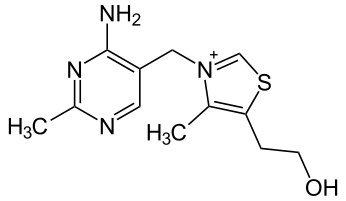
At its core, Korsakoff syndrome is a result of thiamine (vitamin B1) deficiency damaging specific neural pathways in the brain. Thiamine is crucial for carbohydrate metabolism and the functioning of neurons, particularly in areas vital for memory formation and retrieval, such as the mammillary bodies of the hypothalamus, the anterior thalamic nuclei, and parts of the cingulate cortex. When thiamine levels plummet, these regions suffer cellular damage and neuronal death, leading to anterograde amnesia (inability to form new memories) and retrograde amnesia (loss of past memories). Confabulation, the creation of false memories to fill gaps, is thought to arise from a disruption in the brain's ability to distinguish between real and imagined events, often coupled with impaired executive functions. The damage is typically bilateral, affecting both hemispheres of the brain, which contributes to the severity and pervasiveness of the memory deficits. Without prompt thiamine replacement, this damage can become permanent.
📊 Key Facts & Numbers
Korsakoff syndrome affects a significant population, with estimates suggesting it occurs in approximately 1-2% of all patients admitted to psychiatric hospitals, and a much higher percentage, up to 10%, among those with chronic alcoholism. Studies indicate that severe thiamine deficiency can lead to Korsakoff syndrome in up to 80-90% of individuals with prolonged, heavy alcohol use. The economic burden is substantial; treating complications and providing long-term care for individuals with KS can cost billions annually worldwide. For instance, a significant portion of individuals diagnosed with KS require institutional care, with estimates suggesting over 25% are institutionalized long-term. The progression of the syndrome can be rapid; untreated, severe thiamine deficiency can lead to Wernicke encephalopathy within days, and if not addressed, can progress to Korsakoff syndrome within weeks or months. The prevalence of alcohol use disorder globally, estimated to affect over 100 million people, underscores the potential scale of this public health issue.
👥 Key People & Organizations
The understanding and treatment of Korsakoff syndrome owe much to the contributions of several key figures and organizations. Sergei Korsakoff, the Russian neuropsychiatrist, is credited with the initial detailed description of the syndrome in 1887, providing the eponymous name. August Wernicke, a German neurologist, described the acute encephalopathic form of thiamine deficiency, leading to the combined diagnosis of Wernicke–Korsakoff syndrome. Modern research continues to be advanced by institutions like the National Institute on Alcohol Abuse and Alcoholism (NIAAA) within the National Institutes of Health (NIH), which funds extensive research into the neurological effects of alcohol. Neurologists and psychiatrists specializing in addiction medicine and neurodegenerative disorders, such as those at Johns Hopkins Medicine and Mayo Clinic, are at the forefront of diagnosis and management. Patient advocacy groups, though less prominent than for some other neurological conditions, play a vital role in raising awareness and supporting affected individuals and their families.
🌍 Cultural Impact & Influence
Korsakoff syndrome, while a specific neurological condition, has permeated cultural narratives, often as a stark representation of the devastating consequences of alcoholism. Its portrayal in literature and film frequently highlights the dramatic memory loss and confabulation, sometimes sensationalized for dramatic effect. For example, the character Leonard Shelby in the film Memento exhibits symptoms akin to anterograde amnesia, a key feature of KS, though his condition is depicted as a result of head trauma rather than thiamine deficiency. The syndrome serves as a cautionary tale, underscoring the destructive potential of substance abuse on cognitive function and personal identity. Its existence has also influenced diagnostic approaches in neurology and psychiatry, prompting greater attention to nutritional status in patients with neurological symptoms, especially those with a history of heavy drinking or disordered eating. The term 'Korsakoff' itself has become shorthand in some circles for profound memory loss.
⚡ Current State & Latest Developments
Current research into Korsakoff syndrome is focused on understanding the precise mechanisms of neuronal damage and exploring novel therapeutic interventions. Advances in neuroimaging techniques, such as Magnetic Resonance Imaging (MRI) and Positron Emission Tomography (PET), allow for more detailed visualization of the affected brain structures, including the mammillary bodies and thalamus, in living patients. Efforts are underway to develop more effective treatments beyond simple thiamine supplementation, exploring neuroprotective agents and strategies to promote neural repair. For instance, studies are investigating the role of neurotrophic factors and stem cell therapy in potentially reversing some of the damage. Furthermore, there's a growing emphasis on early detection and intervention, particularly in at-risk populations, to prevent the progression to irreversible memory loss. The development of standardized diagnostic criteria and assessment tools remains an ongoing effort within the neurological community.
🤔 Controversies & Debates
A central debate surrounding Korsakoff syndrome revolves around the extent of its reversibility and the optimal treatment protocols. While it's widely accepted that prompt thiamine administration can halt the progression of the syndrome and lead to some recovery, the degree of memory restoration remains a point of contention. Some researchers argue that with intensive rehabilitation and continued thiamine support, significant functional recovery is possible, while others emphasize the often permanent nature of the memory deficits. Another controversy lies in the precise role of alcohol versus thiamine deficiency; while alcohol is the most common cause, the direct neurotoxic effects of alcohol itself, independent of thiamine depletion, are also considered by some to contribute to the observed cognitive impairments. The diagnostic criteria for differentiating early stages of KS from other forms of alcohol-related dementia can also be challenging, leading to potential misdiagnosis or delayed treatment.
🔮 Future Outlook & Predictions
The future outlook for Korsakoff syndrome hinges on advancements in neurobiology and treatment strategies. Researchers are actively exploring pharmacological interventions that could potentially protect neurons from thiamine-depleted environments or even promote neurogenesis in damaged areas. The development of more sensitive biomarkers for early detection, perhaps through blood tests or advanced neuroimaging, could allow for intervention before severe, irreversible damage occurs. There's also a growing interest in personalized medicine approaches, tailoring treatment based on an individual's genetic predisposition and the specific pattern of brain damage. Furthermore, improved public health initiatives aimed at reducing alcohol abuse and promoting nutritional awareness, particularly among vulnerable populations, could significantly decrease the incidence of KS. The ultimate goal is to move beyond merely halting progression to actively restoring lost cognitive function.
💡 Practical Applications
While Korsakoff syndrome itself is a c
Key Facts
- Category
- science
- Type
- topic