
Contents
Overview
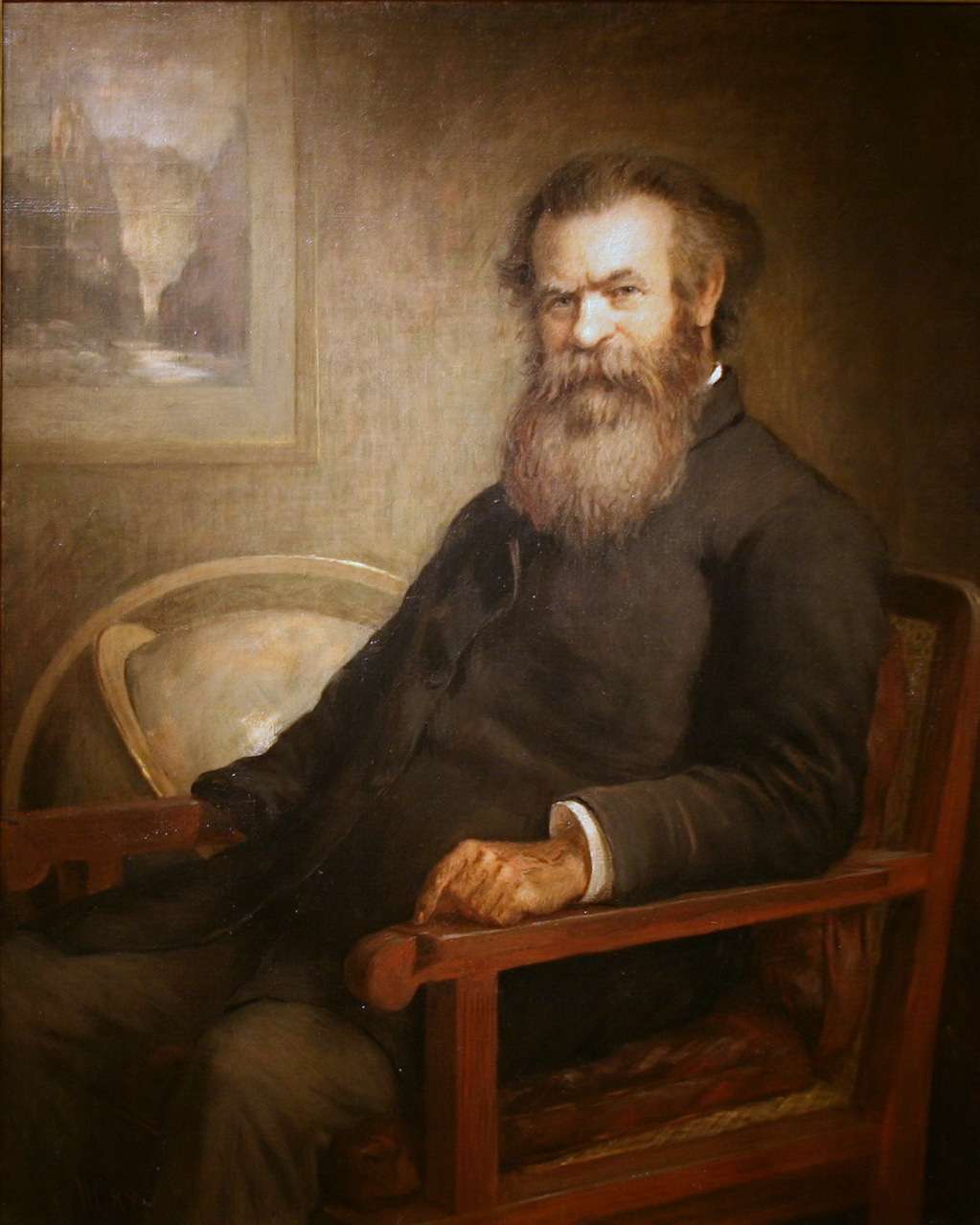
Born on March 24, 1834, in Mount Morris, New York, John Wesley Powell's early life was marked by a restless intellect and a thirst for knowledge, leading him to attend multiple institutions including Oberlin College, Illinois College, and Wheaton College. His formal education was punctuated by periods of self-study and teaching. The outbreak of the American Civil War saw Powell enlist in the Union Army, rising to the rank of Major. It was during the Battle of Shiloh that he sustained the severe injury resulting in the amputation of his right arm, a physical challenge that never diminished his adventurous spirit. Post-war, Powell, driven by a burgeoning interest in geology and the American West, secured funding for his ambitious expedition. This culminated in the monumental 1869 river journey, a three-month, 1,000-mile odyssey down the uncharted Green River and Colorado River, famously navigating the treacherous rapids of the Grand Canyon with a small crew and specially designed boats.
⚙️ How It Works
Powell's expeditions were meticulously planned scientific endeavors, not mere adventure treks. His methodology involved detailed geological mapping, charting river systems, and collecting ethnographic data on Native American tribes encountered. The boats, named the Emma Dean (after his wife), the Maid of the Canyon, the Modoc, and the It-a-nah, were engineered for durability and maneuverability on turbulent waters. His scientific approach relied on direct observation, systematic data collection, and rigorous analysis. The success of the 1869 expedition, despite significant hardships and the loss of some crew members, provided invaluable geographical and geological data, fundamentally altering perceptions of the West's topography and resources. His subsequent expeditions, including a second river trip, further expanded this knowledge base, establishing him as a leading authority on the region.
📊 Key Facts & Numbers
Powell's explorations yielded staggering statistics: his 1869 expedition covered approximately 1,000 miles of river, traversing territories previously unmapped by the U.S. government. He documented over 200 major rapids, some of which were previously unknown. His later work with the United States Geological Survey involved overseeing surveys that mapped over 2.5 million square miles of the United States, a territory roughly equivalent to 70% of the nation's landmass. The Bureau of Ethnology, under his direction, published over 100 volumes of research on Native American languages, cultures, and histories, documenting over 200 distinct tribal groups. Powell's seminal report, "Report on the Arid Region of the United States" (1878), highlighted that only 5% of the West received sufficient rainfall for agriculture, a stark contrast to the prevailing "rain follows the plow" myth, a statistic that directly challenged westward expansionist policies.
👥 Key People & Organizations
Beyond Powell himself, several key individuals and organizations shaped his career and legacy. His wife, Emma Dean, was a constant source of support, and the lead boat of his first expedition was named in her honor. His brother, Walter H. Powell, was a member of the 1869 expedition. Key figures within the Smithsonian Institution like Spencer Fullerton Baird championed Powell's work, providing institutional backing. His directorship of the United States Geological Survey involved managing a vast network of scientists, including prominent geologists like Grove Karl Gilbert and Clarence Dutton, who contributed significantly to understanding the geology of the American West. The Bureau of Ethnology fostered the work of anthropologists such as Frank Hamilton Cushing and James Mooney, who conducted groundbreaking fieldwork among Native American tribes.
🌍 Cultural Impact & Influence
Powell's influence on the American West is immeasurable, extending far beyond geographical discovery. His 1878 report on the arid lands fundamentally challenged the notion of unlimited agricultural potential, advocating for settlement policies based on water availability rather than arbitrary land divisions. This scientific perspective, though often resisted, laid the groundwork for modern water management and conservation efforts in the West. His establishment of the Bureau of Ethnology legitimized the academic study of anthropology and ethnology in the United States, supporting crucial research into Native American cultures that might otherwise have been lost. The United States Geological Survey, which he directed for 13 years, remains a cornerstone of American scientific research, providing essential data on geology, water resources, and natural hazards. His legacy is also visible in the naming of Powell Butte in Oregon and Lake Powell in Arizona, testaments to his enduring impact on the landscape and its scientific understanding.
⚡ Current State & Latest Developments
While Powell's direct involvement ended with his death, the institutions he founded and the principles he championed continue to evolve. The United States Geological Survey remains a vital federal agency, producing critical data on everything from earthquake hazards to groundwater contamination, with its work increasingly integrated with GIS technologies and remote sensing. The Smithsonian Institution continues its vast research and educational mission, with its anthropological collections and publications still serving as vital resources. Powell's ideas on arid land management are more relevant than ever in the face of climate change and increasing water scarcity in the American West, influencing ongoing debates about water rights, sustainable agriculture, and urban development in drought-prone regions. The scientific community continues to build upon his foundational work in geology and ethnography.
🤔 Controversies & Debates
Powell's advocacy for land and water management based on scientific assessment of arid conditions was a significant point of contention during his time. His proposals often clashed with the prevailing laissez-faire approach to westward expansion and the belief in limitless resources, embodied by the Homestead Act of 1862, which encouraged settlement on 160-acre plots ill-suited for the West's low rainfall. Critics argued his policies would stifle economic growth and limit opportunities for settlers. Furthermore, his ethnographic work, while pioneering, was conducted within a colonial context, and modern scholars critically examine the power dynamics and potential biases inherent in his approach to studying Native American cultures, particularly concerning his views on cultural evolution and assimilation. The very act of government-sponsored exploration and resource assessment also raised questions about federal power and its role in shaping the West.
🔮 Future Outlook & Predictions
The future of resource management in the arid West, a domain Powell sought to scientifically govern, is increasingly complex. As climate change intensifies drought conditions and strains water supplies, the principles Powell advocated—understanding carrying capacity, managing water resources judiciously, and planning settlement based on environmental realities—are likely to gain even greater prominence. Future developments may see a greater integration of Powell's geological and hydrological insights with advanced climate modeling and ecological restoration techniques. His ethnographic legacy continues to be re-examined, with ongoing efforts to incorporate Indigenous knowledge and perspectives into scientific and policy-making processes, potentially leading to more equitable and sustainable approaches to land use and cultural preservation in the regions he explored.
💡 Practical Applications
Powell's work has direct practical applications in numerous fields. His geological surveys and mapping techniques form the basis for modern resource exploration, including mining and oil extraction, and are crucial for understanding geological hazards like landslides and earthquakes. His insights into arid land hydrology and soil science inform contemporary agricultural practices in dry regions, guiding irrigation strategies and crop selection to minimize water usage. The ethnographic data collected by the Bureau of Ethnology remains invaluable for historians, linguists, and cultural anthropologists studying Native American heritage, informing repatriation efforts and cultural revitalization programs. Furtherm
Key Facts
- Category
- history
- Type
- topic