
Contents
Overview
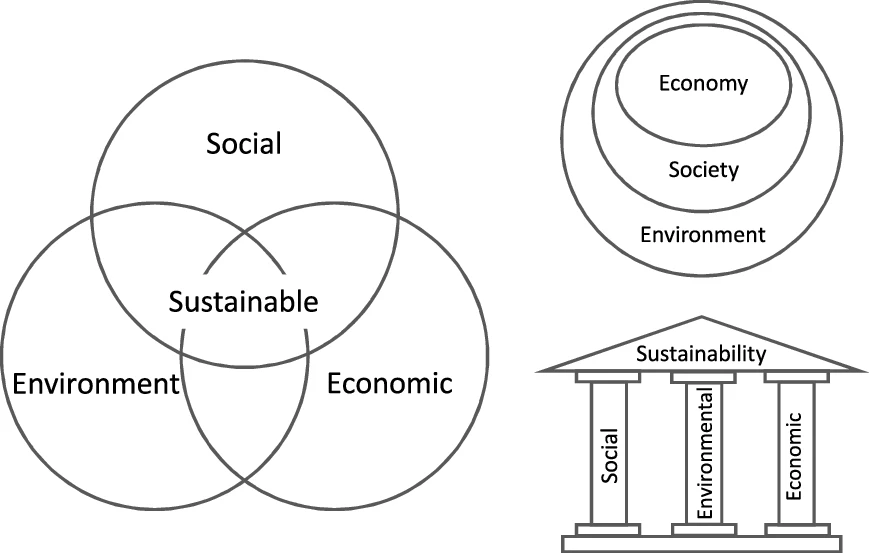
Sustainability is the critical capacity for human societies and natural systems to endure indefinitely, ensuring that present needs are met without compromising the ability of future generations to meet their own. It's a multifaceted concept, primarily encompassing environmental preservation, economic viability, and social equity – often referred to as the 'three pillars.' The urgency of sustainability has escalated due to escalating global challenges like climate change, resource depletion, and biodiversity loss, which threaten ecological stability and human well-being. Embracing sustainable practices is no longer a niche concern but a global imperative, influencing policy, business strategy, and individual choices worldwide. Its importance lies in safeguarding the planet's life-support systems, fostering resilient economies, and promoting just societies for a thriving future.
🎵 Origins & History
The concept of sustainability, while gaining mainstream traction in the late 20th century, has roots stretching back centuries. Early thinkers like Georges-Louis Leclerc, Comte de Buffon in the 18th century observed resource limitations. The modern articulation of sustainability truly began to coalesce around the environmental movements of the 1960s and 70s. The term 'sustainable development' was popularized by the United Nations' Brundtland Commission, which defined it as 'development that meets the needs of the present without compromising the ability of future generations to meet their own needs.' This report cemented the interconnectedness of environmental, economic, and social factors, moving sustainability from an ecological concern to a global policy framework.
⚙️ How It Works
At its core, sustainability operates on the principle of intergenerational equity, ensuring that the resources and environmental quality available today are not irrevocably depleted for tomorrow. This is achieved through a delicate balancing act across three interconnected dimensions: environmental, economic, and social. Environmental sustainability focuses on preserving natural capital, such as clean air, water, and biodiversity, by minimizing pollution, conserving resources, and mitigating climate change. Economic sustainability aims for long-term prosperity without depleting natural or social capital, promoting efficient resource use and innovation. Social sustainability emphasizes equity, justice, and the well-being of all people, ensuring access to education, healthcare, and opportunities, and respecting human rights. These pillars are not independent; actions in one area profoundly impact the others, necessitating integrated approaches like circular economy models and systems thinking.
📊 Key Facts & Numbers
The scale of the sustainability challenge is staggering. The 'ecological overshoot' phenomenon was first documented by the Global Footprint Network in 2006. The IPCC estimates that climate change could reduce global GDP by up to 13% by 2050 if emissions continue unchecked. The UN's Sustainable Development Goals (SDGs), adopted in 2015, represent a global commitment to address these issues, with 17 interconnected goals aiming for a better and more sustainable future for all by 2030.
👥 Key People & Organizations
Numerous individuals and organizations have been instrumental in championing sustainability. Paul Krugman, a Nobel laureate economist, has contributed to discussions on the economic feasibility of green policies. The World Economic Forum has consistently placed sustainability and climate action at the forefront of its global agenda, particularly through initiatives like the Ellen MacArthur Foundation's promotion of the circular economy. Non-governmental organizations such as Greenpeace and the World Wildlife Fund (WWF) have been pivotal in advocating for environmental protection and sustainable resource management through direct action and public campaigns. Governments worldwide, through bodies like the UN Environment Programme (UNEP), are increasingly embedding sustainability into national policies.
🌍 Cultural Impact & Influence
Sustainability has permeated global culture, influencing everything from consumer choices to corporate branding. The rise of conscious consumerism, driven by a desire for ethically sourced and environmentally friendly products, has reshaped markets. Documentaries like 'A Plastic Ocean' and 'Cowspiracy' have sparked widespread debate and behavioral change. Major corporations, under pressure from consumers and investors, are increasingly adopting ESG (Environmental, Social, and Governance) reporting and setting ambitious sustainability targets, a trend amplified by initiatives like the Science Based Targets initiative. The concept has also entered popular discourse, with terms like 'eco-friendly,' 'organic,' and 'fair trade' becoming commonplace, reflecting a growing societal awareness of our collective impact.
⚡ Current State & Latest Developments
The current state of sustainability is characterized by both accelerating progress and persistent challenges. The International Energy Agency (IEA) reported on renewable energy generation in 2023. The Global Reporting Initiative (GRI) is a framework for corporate sustainability reporting. The Intergovernmental Science-Policy Platform on Biodiversity and Ecosystem Services reports on biodiversity. The COP28 climate summit took place in late 2023.
🤔 Controversies & Debates
The debate surrounding sustainability is multifaceted and often contentious. A primary point of contention is the economic feasibility of rapid transitions to sustainable practices, with critics arguing that stringent environmental regulations can stifle economic growth and job creation. The concept of 'degrowth,' advocating for a planned reduction in economic activity in developed nations, is a particularly polarizing idea within this debate. There are also debates about the effectiveness and accountability of corporate sustainability claims, with concerns about 'greenwashing' – misleading marketing about environmental benefits. Furthermore, the equitable distribution of the costs and benefits of sustainability transitions, particularly concerning developing nations and marginalized communities, remains a significant ethical and political challenge, as highlighted in discussions around climate justice.
🔮 Future Outlook & Predictions
The future of sustainability hinges on a rapid acceleration of current trends and the implementation of more ambitious policies. Experts predict that by 2030, renewable energy could dominate electricity generation in many regions, driven by falling costs and technological advancements in energy storage. The integration of AI and big data is expected to optimize resource management and supply chains, further enhancing efficiency. However, achieving the Paris Agreement's goal of limiting global warming to 1.5°C requires immediate and drastic emissions reductions, a target that current trajectories suggest may be missed. The success of the SDGs by 2030 will also be a critical indicator of our collective ability to build a truly sustainable future, with significant investment and political will needed to bridge the remaining gaps.
💡 Practical Applications
Sustainability is not an abstract ideal but a practical necessity with tangible applications across all sectors. In agriculture, practices like regenerative agriculture and precision farming reduce water usage and chemical inputs while improving soil health. The transportation sector is rapidly shifting towards electric vehicles (EVs) and public transit, reducing reliance on fossil fuels. In the built environm
Key Facts
- Category
- philosophy
- Type
- topic