
Contents
- 🎵 Origins & History
- ⚙️ How It Works
- 📊 Key Facts & Numbers
- 👥 Key People & Organizations
- 🌍 Cultural Impact & Influence
- ⚡ Current State & Latest Developments
- 🤔 Controversies & Debates
- 🔮 Future Outlook & Predictions
- 💡 Practical Applications
- 📚 Related Topics & Deeper Reading
- Frequently Asked Questions
- References
- Related Topics
Overview
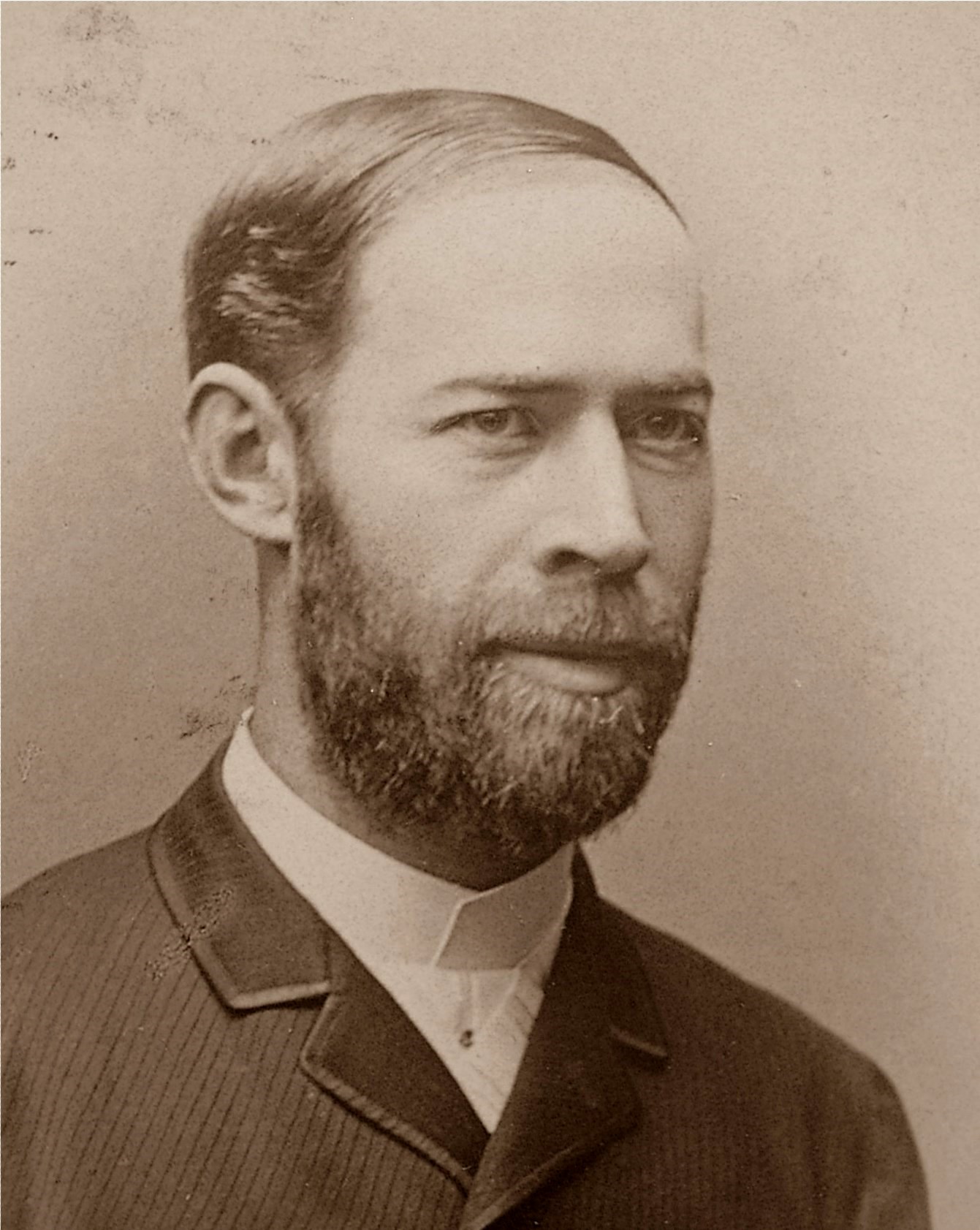
Born into a prominent Hamburg family on February 22, 1857, Heinrich Rudolf Hertz hailed from a lineage of intellectual and civic leaders. His father, Gustav Ferdinand Hertz, was a lawyer and senator, while his mother, Anna Elisabeth Hertz, instilled a strong sense of curiosity. Hertz received a robust education, attending the prestigious Gelehrtenschule des Johanneums in Hamburg before pursuing higher studies. He initially trained as an engineer, studying at the Technical University of Munich, the Technical University of Dresden, and later at the Frederick William University under the tutelage of luminaries like Hermann von Helmholtz. It was Helmholtz who encouraged Hertz to pursue experimental physics, a path that would lead him to the University of Munich and ultimately to his pivotal discoveries. His academic journey was marked by a relentless pursuit of empirical evidence, a trait that would define his most significant contributions.
⚙️ How It Works
Hertz's most celebrated experiments involved generating and detecting electromagnetic waves. He constructed a spark-gap transmitter, essentially two metal rods with a small gap between them, connected to an induction coil. When a high voltage was applied, sparks jumped across the gap, generating rapidly oscillating electric currents. These oscillating currents, he theorized, produced electromagnetic waves that propagated through space. To detect these waves, he used a simple loop of wire with a tiny gap, acting as a receiver. When the transmitter was activated, a faint spark would appear in the receiver's gap, indicating the presence of the electromagnetic waves. Hertz meticulously measured the wavelength and speed of these waves, demonstrating that they behaved identically to light waves, thus confirming Maxwell's predictions about the electromagnetic nature of light and the existence of radio waves. He even showed these waves could be reflected, refracted, and polarized, mirroring the behavior of light.
📊 Key Facts & Numbers
Heinrich Hertz's experimental work, though brief, yielded astonishing results. In his experiments, he generated electromagnetic waves with frequencies ranging from 30 MHz to 300 MHz, which he termed 'Hertzian waves.' He measured their wavelength and, by calculating their frequency, determined their speed to be approximately that of light, around 300,000 kilometers per second. This empirical validation of Maxwell's theory was a monumental achievement, occurring just 22 years after Maxwell published his seminal work. Hertz's research was published in his 1892 book, 'Electric Waves: Being Researches on the Propagation of Electric Disturbances in Insulated and Uninsulated Wires.' The unit of frequency, the hertz (Hz), was officially adopted by the International Electrotechnical Commission (IEC) in 1930 and later by the General Conference on Weights and Measures (CGPM) in 1960, honoring his foundational contributions. His work directly influenced the development of radio technology, with Guglielmo Marconi later building upon Hertz's discoveries to create practical wireless telegraphy systems.
👥 Key People & Organizations
Heinrich Hertz's scientific career was profoundly shaped by his mentors and contemporaries. Hermann von Helmholtz, his doctoral advisor at the University of Berlin, was instrumental in guiding Hertz toward experimental physics and recognizing the significance of Maxwell's theory. Another key figure was James Clerk Maxwell, whose theoretical work on electromagnetism provided the very foundation upon which Hertz's experimental validation rested. After Hertz's death, his work was further developed by scientists like Guglielmo Marconi, who successfully commercialized wireless telegraphy, and Nikola Tesla, whose contributions to AC systems and radio technology also built upon the understanding of electromagnetic waves. Hertz himself was a professor at institutions including Kiel University and the University of Bonn, where he conducted his most famous experiments.
🌍 Cultural Impact & Influence
The impact of Heinrich Hertz's work is immeasurable, forming the bedrock of modern wireless communication. His definitive proof of electromagnetic waves directly enabled the invention of radio broadcasting, a medium that reshaped global communication, entertainment, and politics throughout the 20th century. This, in turn, paved the way for subsequent technologies like television broadcasting, radar, mobile phones, and Wi-Fi. The very concept of a wireless world, once a fanciful notion, became a tangible reality thanks to Hertz's rigorous experiments. His legacy is not just in the scientific principles he uncovered but in the vast technological ecosystem that has sprung from them, fundamentally altering how humanity connects, shares information, and experiences the world. The unit 'hertz' is now a ubiquitous measure in electronics and telecommunications.
⚡ Current State & Latest Developments
While Hertz's foundational work on electromagnetic waves remains a cornerstone of physics, the technologies he enabled continue to evolve at a breakneck pace. In 2024, the world is on the cusp of the 5G and the upcoming 6G revolutions, promising even faster data speeds and new applications in areas like the Internet of Things (IoT) and autonomous systems. Research continues into higher frequency bands, such as millimeter waves, to accommodate the ever-increasing demand for wireless bandwidth. Furthermore, advancements in quantum computing and quantum communication are exploring entirely new paradigms of information transfer, though they still rely on the fundamental understanding of wave propagation that Hertz helped establish. The ongoing miniaturization and integration of wireless components into everyday objects, from smart home devices to wearable technology, are direct descendants of his pioneering research.
🤔 Controversies & Debates
The primary 'controversy' surrounding Hertz's work isn't about his findings but rather the interpretation and application of his legacy. While universally recognized for proving Maxwell's theory, there's an ongoing debate about the extent to which Hertz himself envisioned the practical applications that would follow. Some argue he saw his work as purely theoretical validation, while others point to his own musings on the potential of these waves. A more significant point of contention, though not directly about Hertz, is the historical narrative that sometimes oversimplifies the development of radio, occasionally downplaying the contributions of others like Nikola Tesla and Oliver Lodge in the early stages of wireless transmission, who also conducted significant experiments with electromagnetic waves around the same period. The debate often centers on who deserves credit for the invention of practical radio, a complex history involving multiple inventors building on Hertz's foundational work.
🔮 Future Outlook & Predictions
The future of wireless technology, built upon Hertz's discoveries, points towards an increasingly interconnected and data-rich environment. Experts predict that by 2030, the global number of connected IoT devices could exceed 29 billion, all requiring robust wireless communication infrastructure. The development of 6G is expected to integrate artificial intelligence directly into the network, enabling real-time holographic communication and advanced sensory networks. Furthermore, research into using electromagnetic waves for novel applications, such as wireless power transfer over longer distances and advanced medical imaging techniques, continues to expand. The fundamental principles Hertz uncovered will undoubtedly remain relevant, but their application will transform in ways he could scarcely have imagined, pushing the boundaries of what is technologically possible and further blurring the lines between the physical and digital worlds.
💡 Practical Applications
Heinrich Hertz's experimental proof of electromagnetic waves has direct and profound practical applications that permeate modern life. The most obvious is radio broadcasting, which relies on transmitting audio signals via radio waves to receivers in cars, homes, and portable devices. Television broadcasting similarly uses electromagnetic waves to transmit visual and audio information. Mobile phone technology depends on these waves for voice calls and data transmission across cellular networks. Wi-Fi technology enables wireless internet access in homes, offices, and public spaces. Radar systems, used in aviation, meteorology, and defense, employ radio waves to detect objects and measure their distance and speed. Even seemingly simple devices like garage door openers and wireless keyboards operate on the principles of electromagnetic wave transmission that Hertz so meticulously demonstrated.
Key Facts
- Year
- 1857-1894
- Origin
- Hamburg, Germany
- Category
- science
- Type
- person
Frequently Asked Questions
What did Heinrich Hertz discover?
Heinrich Hertz conclusively proved the existence of electromagnetic waves, a phenomenon predicted by James Clerk Maxwell's theory of electromagnetism. He demonstrated that these waves could travel through space and exhibited properties similar to light, such as reflection and refraction. His experiments validated Maxwell's unified theory and laid the essential scientific foundation for all subsequent wireless communication technologies.
Why is the unit of frequency called 'hertz'?
The unit of frequency, the hertz (Hz), is named in honor of Heinrich Hertz to recognize his pivotal role in demonstrating the existence and properties of electromagnetic waves. One hertz represents one cycle per second. This naming convention, adopted internationally, serves as a constant reminder of his foundational contributions to physics and the development of technologies that rely on wave phenomena, such as radio and Wi-Fi.
How did Hertz prove the existence of electromagnetic waves?
Hertz used a spark-gap transmitter to generate high-frequency oscillating electric currents, which produced electromagnetic waves. He then used a simple loop antenna with a small gap as a receiver; when the transmitter was active, a faint spark would jump across the receiver's gap, indicating the presence of the waves. By measuring the wavelength and frequency, he calculated their speed to be approximately the speed of light, confirming Maxwell's predictions and demonstrating properties like reflection and polarization.
What was the significance of Hertz's experiments for future technology?
Hertz's experiments were revolutionary because they provided the first empirical proof of electromagnetic waves, transforming theoretical physics into a tangible reality. This discovery was the direct precursor to technologies like radio broadcasting, television broadcasting, radar, and mobile phones. Without Hertz's validation of Maxwell's theory, the development of the entire field of wireless communication, which defines much of modern society, would have been significantly delayed or perhaps taken a completely different path.
Did Hertz invent radio?
No, Heinrich Hertz did not invent radio. He was a physicist who experimentally proved the existence of electromagnetic waves. It was inventors like Guglielmo Marconi and Nikola Tesla who later built upon Hertz's foundational discoveries to develop practical wireless telegraphy and radio transmission systems. Hertz's contribution was the crucial scientific validation that made these subsequent inventions possible.
How did Hertz's work differ from Maxwell's?
James Clerk Maxwell was a theorist who, in the 1860s, mathematically predicted the existence of electromagnetic waves and their properties, unifying electricity, magnetism, and light into a single theory. Heinrich Hertz, working in the 1880s, was an experimental physicist who designed and conducted experiments that provided the first conclusive empirical evidence for the existence of these waves, thereby validating Maxwell's theoretical framework. Maxwell provided the blueprint; Hertz built the proof.
What was Hertz's career path after proving the existence of electromagnetic waves?
After his groundbreaking experiments between 1886 and 1888, Heinrich Hertz continued his academic career, holding professorships at Kiel University and later at the University of Bonn. He published his findings in 'Electric Waves' in 1892. Tragically, his promising career was cut short by his death from blood poisoning at the young age of 36 in 1894, leaving the full realization of his discoveries to future generations of inventors and engineers.