
Contents
Overview
The theoretical groundwork for gravitational waves was laid by Albert Einstein in his 1916 general theory of relativity, which posited that accelerating masses would warp spacetime, creating ripples that propagate outward at the speed of light. Early theoretical work in the mid-20th century, notably by Peter Bergmann and John Wheeler, explored the nature and detection of these waves. However, the sheer feebleness of the expected signals meant that direct detection seemed almost impossible. Pioneers like Rainer Weiss, Kip Thorne, and Rai Weiss began conceptualizing interferometric detectors in the 1960s and 70s. Their persistent efforts, alongside those of many others at institutions like the Caltech and MIT, eventually led to the development of the Laser Interferometer Gravitational-Wave Observatory and its European counterpart, Virgo.
⚙️ How It Works
Gravitational wave detectors, primarily laser interferometers, operate by splitting a laser beam into two perpendicular paths of equal length, typically several kilometers long. These beams travel down vacuum tubes, reflect off mirrors, and recombine. If a gravitational wave passes through, it momentarily stretches one arm while compressing the other, causing a tiny phase shift in the recombined laser light. This phase shift, incredibly minute – on the order of one ten-thousandth the diameter of a proton – is detected as a change in the interference pattern. Sophisticated noise reduction techniques, including seismic isolation, vacuum systems, and advanced optics, are crucial to distinguish these faint signals from terrestrial disturbances and instrumental noise. Projects like KAGRA in Japan and LIGO India are expanding the global network for enhanced localization and triangulation of sources.
📊 Key Facts & Numbers
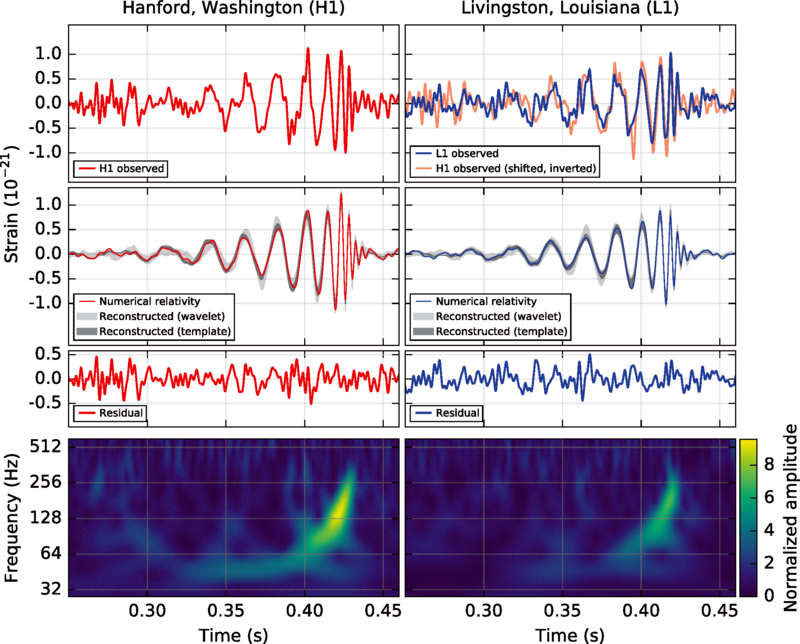
The first direct detection of gravitational waves, GW150914, occurred on September 14, 2015, originating from the merger of two stellar-mass black holes approximately 1.3 billion light-years away. This event released an estimated three solar masses of energy in the form of gravitational waves, equivalent to a peak power output of about 3.5 x 10^49 Watts, vastly exceeding the power output of all the stars in the observable universe combined. As of early 2024, LIGO and Virgo have detected over 100 gravitational wave events, including binary black hole mergers, binary neutron star mergers (like GW170817), and potential neutron star-black hole mergers. The sensitivity of these detectors has improved by over an order of magnitude since their initial operation, allowing them to probe larger volumes of the universe.
👥 Key People & Organizations
The scientific community driving gravitational wave detection is vast and collaborative. Key figures include Rainer Weiss, Kip Thorne, and Rai Weiss, who received the Nobel Prize in Physics in 2017 for their decisive contributions to the LIGO detector and the observation of gravitational waves. The LIGO Scientific Collaboration (LSC) and the Virgo Collaboration are massive international consortia comprising thousands of scientists from hundreds of institutions worldwide, including Caltech, MIT, Stanford University, and University of Pisa. Organizations like the National Science Foundation (NSF) in the US and the European Gravitational Observatory (EGO) provide critical funding and infrastructure.
🌍 Cultural Impact & Influence
The detection of gravitational waves has profoundly impacted astronomy and physics, ushering in the era of multi-messenger astronomy. The observation of GW170817, a binary neutron star merger, was simultaneously detected across the electromagnetic spectrum (from gamma rays to radio waves), providing unprecedented insights into heavy element nucleosynthesis (the 'r-process') and the expansion rate of the universe. This event alone has been cited in thousands of scientific publications. Beyond astronomy, the ability to 'hear' cosmic collisions has captured the public imagination, appearing in documentaries and popular science articles, and inspiring a new generation of physicists and engineers to explore the universe's most extreme phenomena. The philosophical implications of directly observing spacetime distortions also resonate, reinforcing our understanding of gravity and the cosmos.
⚡ Current State & Latest Developments
The current era of gravitational wave detection is characterized by increasingly frequent and diverse observations. The third observing run (O3) of LIGO and Virgo, which concluded in March 2020, yielded a rich catalog of events. Upgrades to the detectors are ongoing, aiming to further enhance sensitivity and extend the observable frequency range. The KAGRA detector in Japan joined the global network in 2020, and LIGO India is under construction, promising to significantly improve the ability to pinpoint the location of gravitational wave sources on the sky. Future detectors, such as Cosmic Explorer and the Einstein Telescope, are being designed to be significantly more sensitive, potentially detecting events from the very early universe.
🤔 Controversies & Debates
While the scientific community largely agrees on the fundamental principles and successes of gravitational wave detection, debates persist regarding the interpretation of certain signals and the optimal path for future development. Some astrophysicists argue for prioritizing the detection of specific, theoretically predicted sources, while others advocate for broader sensitivity to capture unexpected phenomena. The immense cost of building and maintaining these large-scale interferometers also sparks discussions about resource allocation within physics research. Furthermore, the precise origin of some observed black hole masses and spins remains an active area of research, with ongoing efforts to refine astrophysical models against the growing observational data. The potential for detecting primordial gravitational waves from the Big Bang is another frontier with significant theoretical and observational challenges.
🔮 Future Outlook & Predictions
The future of gravitational wave detection is exceptionally bright, promising a revolution in our understanding of the universe. Next-generation ground-based detectors like Cosmic Explorer and the Einstein Telescope are projected to achieve sensitivities that could allow detection of events from billions of light-years further away, potentially observing the universe's first black holes and neutron stars. Space-based observatories like the Laser Interferometer Space Antenna (LISA), planned for launch in the mid-2030s, will be sensitive to much lower frequencies, enabling the detection of supermassive black hole mergers, extreme mass ratio inspirals (EMRIs), and potentially gravitational waves from the early universe. These future instruments will transform gravitational wave astronomy from a nascent field into a mature, powerful tool for cosmic exploration, revealing phenomena currently beyond our wildest imagination.
💡 Practical Applications
While primarily an astronomical tool, gravitational wave detection has several indirect practical applications and technological spin-offs. The extreme precision required for interferometry has driven advancements in optics, laser technology, vacuum systems, and vibration isolation, which can find applications in fields ranging from manufacturing to metrology. The sophisticated data analysis techniques developed to extract faint signals from noisy data have parallels in fields like signal processing, machine learning, and medical imaging. Furthermore, the pursuit of understanding fundamental physics through gravitational waves can inspire educational initiatives and foster public interest in science, technology, engineering, and mathematics (STEM) fields, indirectly contributing to a more scientifically literate workfor
Key Facts
- Category
- science
- Type
- topic