
Contents
Overview
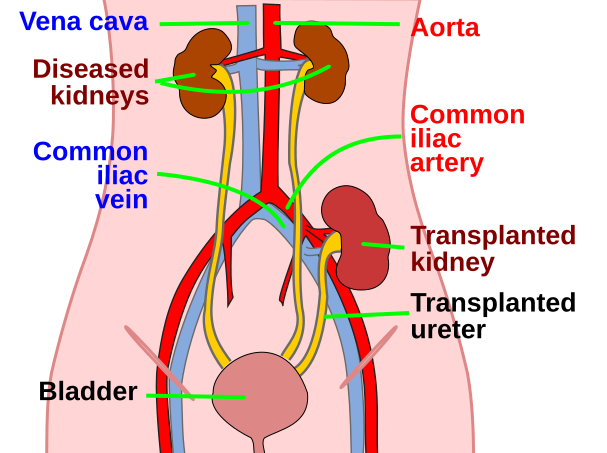
Kidney transplantation offers a life-altering solution for individuals suffering from end-stage kidney disease (ESRD), replacing failing organs with a healthy kidney from a donor. This intricate medical procedure can be sourced from either deceased donors, whose organs become available after death, or living donors, who voluntarily donate a kidney while alive. The journey to transplantation is rigorous, involving comprehensive medical evaluations, meticulous donor-recipient matching, and extensive post-operative care, all aimed at ensuring the best possible outcome for recipients.
🎵 Origins & History
The genesis of kidney transplantation as a viable medical intervention traces back to the mid-20th century. Experimental attempts, often involving animal organs or organs from unrelated donors, met with limited success due to the body's aggressive immune response. Joseph Murray developed immunosuppressive techniques using azathioprine to prevent organ rejection. The development of cyclosporine further revolutionized transplantation by providing more effective and less toxic immunosuppression, significantly improving long-term graft survival rates.
⚙️ How It Works
The process of kidney transplantation is a multi-stage journey involving both the recipient and the donor. For recipients, it begins with an evaluation by a transplant center to determine eligibility, assessing overall health, the severity of end-stage renal disease, and the absence of contraindications. Once deemed a candidate, they are placed on a national waiting list, managed by organizations like UNOS (United Network for Organ Sharing), which uses a points system based on medical urgency, compatibility, and time on dialysis. Kidney donors can be deceased or living. The critical step is crossmatching, a series of tests to ensure the donor's kidney is immunologically compatible with the recipient, minimizing the risk of rejection. Following successful transplantation, recipients must adhere to a lifelong regimen of immunosuppressant medications to prevent their immune system from attacking the new organ.
📊 Key Facts & Numbers
Globally, kidney transplantation is a critical intervention for managing ESRD, with significant numbers highlighting its scale and impact. The United States alone performed over 24,000 kidney transplants in 2021. The average waiting time for a deceased-donor kidney in the US can range from 3 to 5 years, though this varies significantly by blood type and geographic region. Living donor transplants, which can often be scheduled electively, typically offer faster access to a kidney. The 1-year graft survival rate for deceased-donor kidneys is around 85-90%, while for living-donor kidneys, it can be as high as 90-95%, demonstrating the efficacy of this life-saving procedure.
👥 Key People & Organizations
Several key individuals and organizations have shaped the landscape of kidney transplantation. Joseph Murray, a pioneer in the field, not only performed the first successful transplant but also advanced the understanding of immunosuppression. Sir Roy Calne and Jean-François Morel were instrumental in the development and clinical application of cyclosporine, a drug that dramatically improved transplant outcomes. Organizations like UNOS (United Network for Organ Sharing) in the United States and Eurotransplant in Europe manage organ allocation systems, ensuring fair distribution of scarce donor organs. The National Kidney Foundation and KDIGO (Kidney Disease: Improving Global Outcomes) are crucial in setting clinical practice guidelines, advocating for patients, and funding research. Transplant centers worldwide, such as Mayo Clinic and Johns Hopkins Medicine, are hubs of innovation and patient care.
🌍 Cultural Impact & Influence
The cultural resonance of kidney transplantation extends beyond medical journals, permeating literature, film, and public consciousness. Stories of recipients receiving the gift of life from strangers or loved ones often highlight themes of hope, resilience, and the profound impact of medical advancement. Films like 'The Doctor' (1991) and documentaries exploring organ donation have brought the complexities and emotional weight of transplantation into mainstream discourse. The concept of the 'gift of life' has fostered a greater appreciation for organ donors and their families, contributing to increased awareness and encouraging more people to register as donors. Public health campaigns by organizations like the American Red Cross and national transplant registries aim to demystify the process and combat misinformation, fostering a more informed and supportive societal attitude towards organ donation and transplantation.
⚡ Current State & Latest Developments
The field of kidney transplantation is in a constant state of evolution, driven by advancements in surgical techniques, immunosuppressive therapies, and organ preservation. Recent developments include the increasing use of xenotransplantation (transplanting organs from different species, such as pigs), with successful trials involving genetically modified pig kidneys being transplanted into brain-dead human recipients. Innovations in machine perfusion systems allow donor kidneys to be kept viable outside the body for longer periods, improving assessment and potentially extending the usability of marginal organs. Furthermore, research into gene editing technologies like CRISPR-Cas9 holds promise for engineering organs that are less likely to be rejected by the recipient's immune system. The development of personalized immunosuppression regimens, tailored to an individual's genetic makeup and immune profile, is also a significant area of focus, aiming to reduce side effects and improve long-term outcomes.
🤔 Controversies & Debates
Despite its life-saving potential, kidney transplantation is not without its controversies and ethical considerations. The scarcity of donor organs remains a persistent challenge, leading to debates about organ allocation policies, the ethics of incentivizing donation, and the potential for a black market in organs. Xenotransplantation raises ethical questions regarding animal welfare and the potential for zoonotic disease transmission. The long-term reliance on immunosuppressant drugs, while necessary, carries significant side effects, including increased risk of infections and certain cancers, prompting ongoing research into less toxic alternatives. Furthermore, disparities in access to transplantation based on socioeconomic status, race, and geographic location remain a critical concern, prompting calls for more equitable healthcare systems and donation practices.
🔮 Future Outlook & Predictions
The future of kidney transplantation points towards greater accessibility, reduced reliance on lifelong immunosuppression, and potentially an end to organ scarcity. Xenotransplantation is poised to become a more significant source of organs, with ongoing research focusing on overcoming immune barriers and ensuring long-term viability. Advances in 3D printing and stem cell therapy may lead to the creation of lab-grown kidneys, offering a limitless supply of organs tailored to individual recipients. The development of tolerance induction therapies, which aim to retrain the recipient's immune system to accept the transplanted organ without the need for immunosuppressants, represents a holy grail for transplant med
💡 Practical Applications
Kidney transplantation is a complex medical procedure that involves replacing a diseased kidney with a healthy one from a donor. This can significantly improve the quality of life for individuals with end-stage renal disease, offering them a chance to live longer and healthier lives. The process requires careful planning, precise surgical execution, and diligent post-operative care to ensure the success of the transplant and the well-being of the recipient.
Key Facts
- Category
- science
- Type
- topic