
Contents
Overview
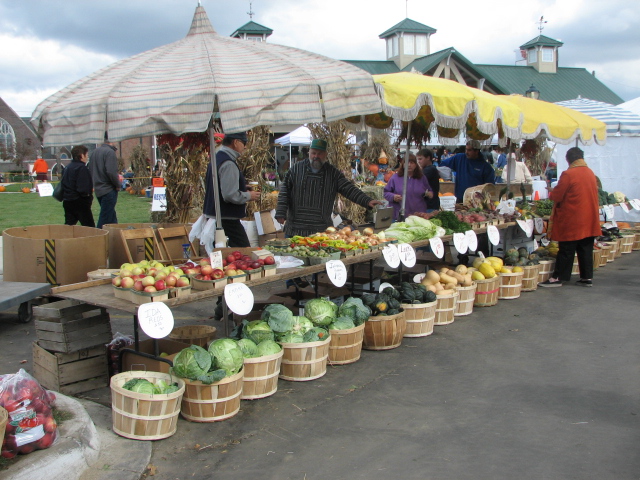
A farmers market is a physical retail marketplace where farmers sell their produce, live animals, and plants directly to consumers. These markets exist in many countries, reflecting local culture and economy, and can range from small stalls to large, multi-block events. With a focus on fresh, locally sourced products, farmers markets provide an alternative to traditional retail produce shops, often with less rigid regulations. By supporting local agriculture and promoting community interaction, farmers markets have become an essential part of many cities' food landscapes.
Origins & History
The concept of farmers markets dates back to ancient times, with evidence of such markets found in Ancient Egypt, Ancient Greece, and Ancient Rome. Today, farmers markets can be found in many countries, including Canada, Australia, and United Kingdom, with organic farmers and local food systems advocates promoting their importance.
How It Works
Farmers markets typically operate on a weekly or bi-weekly schedule, with vendors setting up stalls or stands to sell their products. These markets often feature a wide range of products, including fresh produce, meats, dairy products, and prepared foods, with food trucks and street food vendors adding to the diversity. In addition to providing a platform for local farmers to sell their products, farmers markets also serve as community hubs, with many hosting events and activities such as cooking demonstrations, live music, and face painting.
Key Facts & Numbers
The majority of farmers market vendors are small-scale farmers. Many farmers markets have their own management teams and boards, which oversee the day-to-day operations of the market and make decisions about vendor selection, market rules, and community engagement.
Key People & Organizations
Key people and organizations involved in the development and promotion of farmers markets include USDA, National Farmers Market Coalition, and Local Harvest. These organizations provide resources and support for farmers markets, including training and technical assistance, marketing and promotion, and advocacy and policy support.
Cultural Impact & Influence
Farmers markets reportedly have a cultural impact and influence on local communities, with many serving as community hubs and gathering places. They also play a critical role in promoting local food systems and supporting small-scale farmers, with community-supported agriculture programs and farm-to-table initiatives gaining popularity.
Current State & Latest Developments
The current state of farmers markets is one of growth and expansion, with many new markets opening in recent years. Many farmers markets are incorporating new technologies, such as mobile payments and digital marketing, to improve the customer experience and increase sales.
Controversies & Debates
Despite their many benefits, farmers markets are not without controversy and debate. Some critics argue that farmers markets are often gentrified, with high-end vendors and upscale produce pricing out low-income consumers. Others argue that farmers markets can be elitist, with a focus on organic produce and specialty foods that may not be accessible or affordable for all consumers.
Future Outlook & Predictions
Looking to the future, farmers markets are likely to continue to play a critical role in promoting local food systems and supporting small-scale farmers. With the growing demand for sustainable food and local produce, farmers markets are well-positioned to meet the needs of consumers who are increasingly interested in food systems and agricultural practices.
Practical Applications
Farmers markets have a wide range of practical applications, from providing fresh, locally sourced produce to supporting small-scale farmers and promoting community development. They also serve as incubators for new businesses and entrepreneurs, with many vendors using farmers markets as a launching pad for their products and services.
Key Facts
- Category
- culture
- Type
- concept