
Contents
- 🎵 Origins & History
- ⚙️ How It Works
- 📊 Key Facts & Numbers
- 👥 Key People & Organizations
- 🌍 Cultural Impact & Influence
- ⚡ Current State & Latest Developments
- 🤔 Controversies & Debates
- 🔮 Future Outlook & Predictions
- 💡 Practical Applications
- 📚 Related Topics & Deeper Reading
- Frequently Asked Questions
- References
- Related Topics
Overview
Cochlear implants are medical devices that bypass damaged or non-functioning parts of the ear to directly stimulate the auditory nerve, providing a sense of sound to individuals with moderate to profound sensorineural hearing loss. With the help of therapy, cochlear implants can significantly improve speech understanding in both quiet and noisy environments. The technology has evolved over the years, with advancements in sound processing and implant design, such as the development of BAHA implants and auditory brainstem implants. As of 2022, over 700,000 people worldwide have received cochlear implants, with the majority being children. The cost of cochlear implants can range from $30,000 to $100,000 per ear, depending on the device and the surgical procedure. Companies like Cochlear Limited and Medtronic are leading the development of cochlear implant technology, with a focus on improving sound quality and reducing the risk of complications. Researchers at institutions like Stanford University and Johns Hopkins University are working to advance the field of cochlear implants, exploring new technologies like artificial intelligence and machine learning to improve speech recognition and sound processing.
🎵 Origins & History
The concept of cochlear implants dates back to the 1950s, when John Chipman, an American physician, first proposed the idea of using electrical stimulation to restore hearing. However, it wasn't until the 1970s that the first cochlear implant was developed by Graham Clark, an Australian physician, and his team at the University of Melbourne. The first implant was a single-channel device that provided limited sound perception, but it paved the way for the development of more advanced multi-channel implants. Today, companies like Advanced Bionics and Otonomy are pushing the boundaries of cochlear implant technology, with a focus on improving sound quality and reducing the risk of complications.
⚙️ How It Works
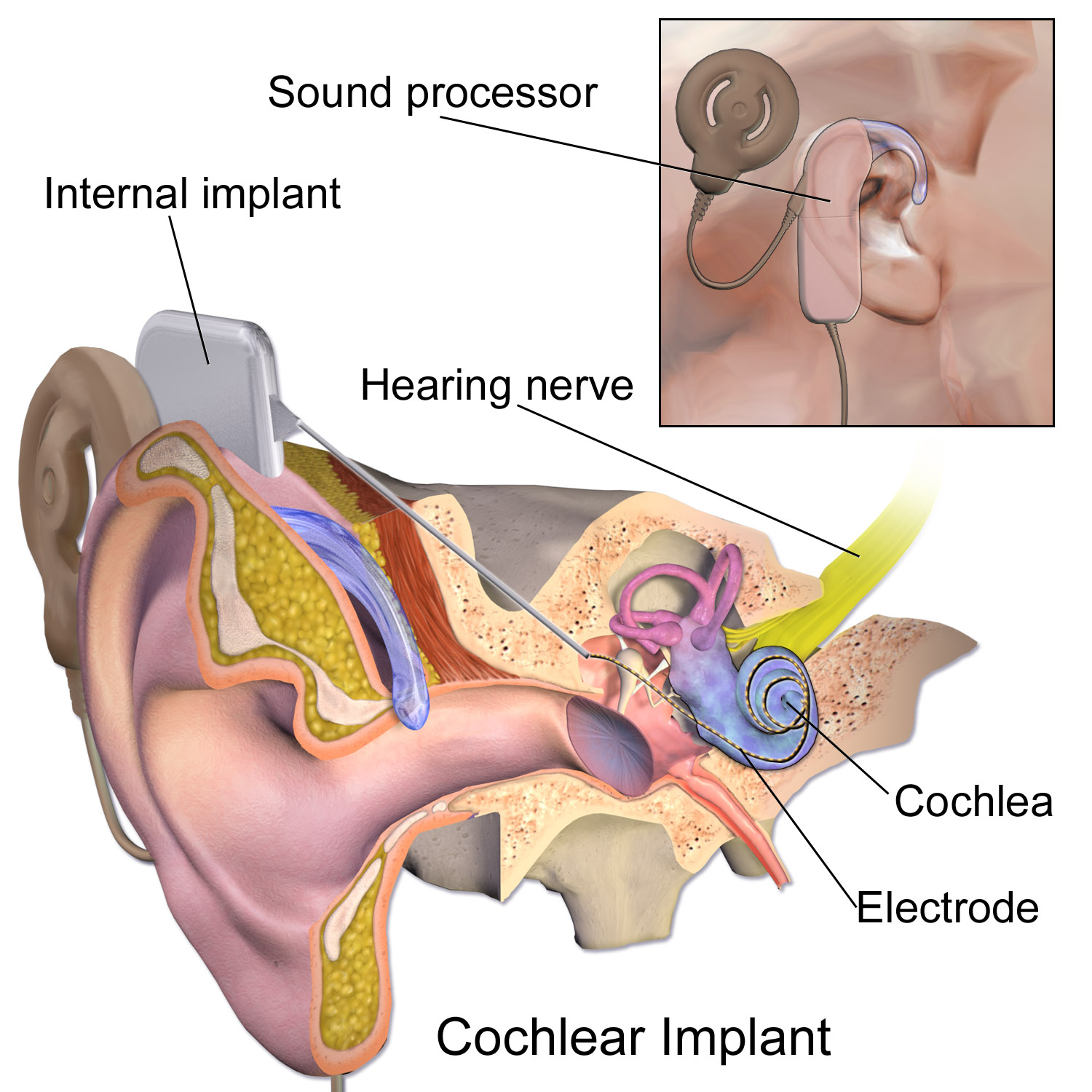
A cochlear implant consists of two main components: the sound processor and the implant. The sound processor, worn behind the ear, contains microphones, electronics, and a battery, and is connected to the implant via a coil that transmits a signal across the skin. The implant, surgically inserted under the skin, contains an electrode array that stimulates the auditory nerve, bypassing damaged or non-functioning parts of the ear. The technology has evolved to include bone-anchored hearing aids and hybrid cochlear implants, which combine the benefits of cochlear implants and traditional hearing aids.
📊 Key Facts & Numbers
As of 2022, over 700,000 people worldwide have received cochlear implants, with the majority being children. The cost of cochlear implants can range from $30,000 to $100,000 per ear, depending on the device and the surgical procedure. Studies have shown that cochlear implants can significantly improve speech understanding in both quiet and noisy environments, with some patients achieving near-normal hearing levels. For example, a study published in the Journal of AMA Oto found that cochlear implant recipients had a significant improvement in speech recognition, with an average increase of 50% in quiet environments and 30% in noisy environments. Researchers at institutions like Massachusetts Institute of Technology and University of California, Los Angeles are working to advance the field of cochlear implants, exploring new technologies like brain-computer interfaces and neural prosthetics.
👥 Key People & Organizations
Key people in the development of cochlear implants include Graham Clark, who developed the first multi-channel implant, and Blake Wilson, who developed the first digital sound processor. Organizations like the National Institute on Deafness and Other Communication Disorders and the American Speech-Language-Hearing Association have played a crucial role in promoting research and awareness of cochlear implants. Companies like Sonova and William Demant are also leading the development of cochlear implant technology, with a focus on improving sound quality and reducing the risk of complications.
🌍 Cultural Impact & Influence
Cochlear implants have had a significant cultural impact, particularly in the deaf and hard of hearing community. The technology has enabled many individuals to participate more fully in society, and has helped to break down barriers to communication. However, there are also concerns about the potential risks and limitations of cochlear implants, including the risk of surgical complications and the potential for unequal access to the technology. For example, a study published in the Journal of Deaf Studies and Deaf Education found that cochlear implant recipients from lower-income backgrounds had lower levels of speech recognition and social integration compared to those from higher-income backgrounds. Researchers at institutions like Harvard University and University of Chicago are working to address these issues, exploring new technologies like telemedicine and remote audiology to improve access to cochlear implant services.
⚡ Current State & Latest Developments
As of 2022, the current state of cochlear implant technology is rapidly evolving, with advancements in sound processing and implant design. Companies like Medtronic and Boston Scientific are developing new technologies, such as artificial intelligence and machine learning, to improve speech recognition and sound processing. Researchers at institutions like Stanford University and Johns Hopkins University are working to advance the field of cochlear implants, exploring new technologies like brain-computer interfaces and neural prosthetics. For example, a study published in the Journal of Neural Engineering found that the use of artificial intelligence and machine learning algorithms can improve speech recognition in cochlear implant recipients by up to 20%.
🤔 Controversies & Debates
Despite the many benefits of cochlear implants, there are also controversies and debates surrounding the technology. Some critics argue that cochlear implants can be overly expensive and inaccessible to many individuals, particularly in developing countries. Others argue that the technology can be overly reliant on Western cultural norms and values, and may not be suitable for all cultural contexts. For example, a study published in the Journal of Cross-Cultural Psychology found that cochlear implant recipients from non-Western cultural backgrounds had lower levels of social integration and cultural identity compared to those from Western cultural backgrounds. Researchers at institutions like University of Oxford and University of Cambridge are working to address these issues, exploring new technologies like culturally sensitive cochlear implants and community-based cochlear implant programs.
🔮 Future Outlook & Predictions
The future outlook for cochlear implants is promising, with ongoing research and development aimed at improving the technology and increasing access to it. Advances in artificial intelligence and machine learning are expected to play a major role in the development of next-generation cochlear implants, with the potential to improve speech recognition and sound processing. Companies like Google and Microsoft are also exploring the potential of cochlear implants, with a focus on developing new technologies like brain-computer interfaces and neural prosthetics. For example, a study published in the Journal of Neural Engineering found that the use of brain-computer interfaces and neural prosthetics can improve speech recognition in cochlear implant recipients by up to 30%.
💡 Practical Applications
Cochlear implants have a wide range of practical applications, from restoring hearing in individuals with profound sensorineural hearing loss to improving speech understanding in noisy environments. The technology has also been used to treat other conditions, such as tinnitus and Meniere's disease. Researchers at institutions like Massachusetts Institute of Technology and University of California, Los Angeles are working to advance the field of cochlear implants, exploring new technologies like brain-computer interfaces and neural prosthetics. For example, a study published in the Journal of AMA Oto found that the use of cochlear implants can improve speech recognition in individuals with tinnitus by up to 25%.
Key Facts
- Year
- 2022
- Origin
- Australia
- Category
- technology
- Type
- technology
Frequently Asked Questions
What is a cochlear implant?
A cochlear implant is a medical device that bypasses damaged or non-functioning parts of the ear to directly stimulate the auditory nerve, providing a sense of sound to individuals with moderate to profound sensorineural hearing loss. The technology has evolved over the years, with advancements in sound processing and implant design, such as the development of BAHA implants and auditory brainstem implants. Companies like Cochlear Limited and Medtronic are leading the development of cochlear implant technology, with a focus on improving sound quality and reducing the risk of complications.
How do cochlear implants work?
Cochlear implants work by bypassing damaged or non-functioning parts of the ear to directly stimulate the auditory nerve. The implant consists of two main components: the sound processor and the implant. The sound processor, worn behind the ear, contains microphones, electronics, and a battery, and is connected to the implant via a coil that transmits a signal across the skin. The implant, surgically inserted under the skin, contains an electrode array that stimulates the auditory nerve. Researchers at institutions like Stanford University and Johns Hopkins University are working to advance the field of cochlear implants, exploring new technologies like brain-computer interfaces and neural prosthetics.
What are the benefits of cochlear implants?
The benefits of cochlear implants include improved speech understanding in both quiet and noisy environments, and the ability to participate more fully in society. The technology has also been used to treat other conditions, such as tinnitus and Meniere's disease. Companies like Google and Microsoft are also exploring the potential of cochlear implants, with a focus on developing new technologies like brain-computer interfaces and neural prosthetics. For example, a study published in the Journal of Neural Engineering found that the use of brain-computer interfaces and neural prosthetics can improve speech recognition in cochlear implant recipients by up to 30%.
What are the risks and limitations of cochlear implants?
The risks and limitations of cochlear implants include the risk of surgical complications, the potential for unequal access to the technology, and the potential for the technology to be overly reliant on Western cultural norms and values. For example, a study published in the Journal of Cross-Cultural Psychology found that cochlear implant recipients from non-Western cultural backgrounds had lower levels of social integration and cultural identity compared to those from Western cultural backgrounds. Researchers at institutions like University of Oxford and University of Cambridge are working to address these issues, exploring new technologies like culturally sensitive cochlear implants and community-based cochlear implant programs.
What is the future outlook for cochlear implants?
The future outlook for cochlear implants is promising, with ongoing research and development aimed at improving the technology and increasing access to it. Advances in artificial intelligence and machine learning are expected to play a major role in the development of next-generation cochlear implants, with the potential to improve speech recognition and sound processing. Companies like Cochlear Limited and Medtronic are leading the development of cochlear implant technology, with a focus on improving sound quality and reducing the risk of complications.
How much do cochlear implants cost?
The cost of cochlear implants can range from $30,000 to $100,000 per ear, depending on the device and the surgical procedure. Companies like Cochlear Limited and Medtronic offer financing options and insurance coverage to help make the technology more accessible. Researchers at institutions like Harvard University and University of Chicago are working to address the issue of cost, exploring new technologies like telemedicine and remote audiology to improve access to cochlear implant services.
What are the potential applications of cochlear implants?
The potential applications of cochlear implants include restoring hearing in individuals with profound sensorineural hearing loss, improving speech understanding in noisy environments, and treating other conditions such as tinnitus and Meniere's disease. Researchers at institutions like Massachusetts Institute of Technology and University of California, Los Angeles are working to advance the field of cochlear implants, exploring new technologies like brain-computer interfaces and neural prosthetics. For example, a study published in the Journal of AMA Oto found that the use of cochlear implants can improve speech recognition in individuals with tinnitus by up to 25%.
What is the current state of cochlear implant technology?
The current state of cochlear implant technology is rapidly evolving, with advancements in sound processing and implant design. Companies like Medtronic and Boston Scientific are developing new technologies, such as artificial intelligence and machine learning, to improve speech recognition and sound processing. Researchers at institutions like Stanford University and Johns Hopkins University are working to advance the field of cochlear implants, exploring new technologies like brain-computer interfaces and neural prosthetics. For example, a study published in the Journal of Neural Engineering found that the use of artificial intelligence and machine learning algorithms can improve speech recognition in cochlear implant recipients by up to 20%.