
Contents
Overview
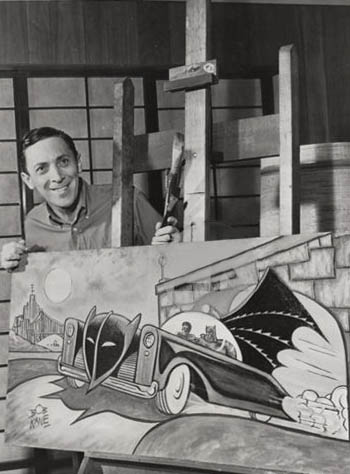
Born Robert Kahn on October 24, 1915, in New York City, Bob Kane's artistic journey began in an era where the comic book industry was still finding its footing. He attended the prestigious Cooper Union and Grand Central School of Art, honing his skills alongside future industry titans. Kane began his professional career in the late 1930s, working for various comic book publishers before landing a pivotal role at National Comics Publications (later DC Comics). Editor Vin Sullivan pressured Kane for a new superhero, and it was during this period that Kane conceived of the character who would become Batman.
⚙️ How It Works
Kane's artistic process, particularly in the early days of Batman, involved a collaborative dynamic that was often opaque. While he was the primary penciller and often the credited writer, the actual creation of Batman's visual identity and narrative elements was a shared endeavor. Kane's role often involved translating ideas into a visual medium, developing character designs, and scripting stories, though the extent of his sole creative input on many early tales is widely questioned. He employed a distinctive art style characterized by dynamic poses and dramatic shadows, which became synonymous with the early Batman comics and helped define the Detective Comics universe. His work ethic was prolific, churning out numerous pages per week to meet the insatiable demand for new comic book content during the Golden Age of Comic Books.
📊 Key Facts & Numbers
Bob Kane's career produced a vast body of work for DC Comics, including characters like The Joker, Catwoman, and Robin. Kane's career spanned over six decades. Jerry Robinson claimed to have contributed to Batman's visual design and created The Joker. Don Sears worked on early Batman stories. Kane was a member of the National Cartoonists Society, an organization that supported artists in the industry. His long-standing relationship with DC Comics defined his career, though he also did freelance work for other publishers like Quality Comics and Better Publications early on.
👥 Key People & Organizations
The central figures in Bob Kane's professional life are undoubtedly Bill Finger, his uncredited collaborator, and Vin Sullivan, the editor who commissioned Batman. Finger's pivotal role in shaping Batman's iconic look and persona, from the cowl and cape to the character's tragic backstory, is now widely recognized, though it came too late for him to receive official credit during his lifetime. Other key figures include Jerry Robinson, who claimed to have contributed to Batman's visual design and created The Joker, and Don Sears, another artist who worked on early Batman stories. Kane himself was a member of the National Cartoonists Society, an organization that supported artists in the industry. His long-standing relationship with DC Comics defined his career, though he also did freelance work for other publishers like Quality Comics and Better Publications early on.
🌍 Cultural Impact & Influence
Bob Kane's most profound cultural impact stems from his co-creation of Batman, a character who has transcended the comic book page to become a global icon. Batman's enduring appeal lies in his complex duality as a dark vigilante driven by tragedy, a concept heavily shaped by Bill Finger but visually realized through Kane's early artwork. The character's influence can be seen across countless media, including blockbuster films like The Dark Knight Trilogy, animated series such as Batman: The Animated Series, and video games like the Batman: Arkham series. Kane's name, though often debated, became synonymous with superhero creation, inspiring generations of artists and writers. The very concept of the masked superhero, the dark avenger, and the gothic cityscape of Gotham City owe a significant debt to the foundational work produced by Kane and his collaborators.
⚡ Current State & Latest Developments
In the years following Bob Kane's death in 1998, the narrative surrounding his legacy has continued to evolve, largely driven by ongoing efforts to credit Bill Finger and other unacknowledged contributors. Kane's estate continues to manage the rights associated with his contributions, and his name remains on Batman-related contracts and credits, a point of ongoing discussion. While no new artistic works are being produced by Kane himself, his visual style and character designs continue to be referenced and reinterpreted by artists working on Batman properties worldwide. The legal and ethical debates surrounding creator credit in the comic book industry, heavily influenced by the Kane-Finger dynamic, remain a live issue.
🤔 Controversies & Debates
The most persistent controversy surrounding Bob Kane is the extent of his sole authorship versus the contributions of Bill Finger and others. For decades, Kane held exclusive credit for Batman, a situation that led to significant financial and legal disputes, particularly after Finger's death. Critics argue that Kane leveraged his contractual agreements to claim credit for ideas and designs largely developed by Finger, leading to a historical injustice. This debate highlights a broader issue within the comic book industry regarding creator rights and fair attribution, a tension that has resurfaced with other foundational characters. Furthermore, questions persist about Kane's sole authorship of other early DC characters, such as The Joker and Catwoman, with Jerry Robinson and others claiming significant creative input.
🔮 Future Outlook & Predictions
The future of Bob Kane's legacy will likely continue to be shaped by the ongoing dialogue surrounding creator attribution in the comic book industry. As historical research uncovers more about the collaborative nature of early comic book creation, the narrative around Kane may further shift to emphasize his role as a visual interpreter and businessman rather than a singular visionary. The legal framework for creator rights, influenced by cases like the one involving Kane and Finger, will continue to evolve, potentially leading to more equitable recognition for uncredited artists and writers. While Kane's name may remain on official credits for Batman, the public and critical understanding of his contributions will likely be increasingly nuanced, acknowledging the vital input of collaborators like Bill Finger. The enduring power of Batman itself ensures that discussions about its origins, including Kane's role, will persist.
💡 Practical Applications
Bob Kane's primary practical application lies in the realm of character creation and visual design for the comic book medium. His work on Batman established a template for the dark, brooding superhero, influencing countless characters that followed in the superhero genre. The visual language he developed—the dramatic shadows, the dynamic action poses, the iconic costume designs—became foundational elements that artists still draw upon today. Beyond Batman, his contributions to characters like The Joker and Catwoman provided archetypes for villainous and femme fatale figures in popular culture. His career also serves as a case study in the business and legal aspects of comic book creation, particularly concerning contracts, credit, and intellectual property.
Key Facts
- Category
- culture
- Type
- topic