
Contents
- 🎵 Origins & History
- ⚙️ How It Works
- 📊 Key Facts & Numbers
- 👥 Key People & Organizations
- 🌍 Cultural Impact & Influence
- ⚡ Current State & Latest Developments
- 🤔 Controversies & Debates
- 🔮 Future Outlook & Predictions
- 💡 Practical Applications
- 📚 Related Topics & Deeper Reading
- Frequently Asked Questions
- References
- Related Topics
Overview
The evolutionary journey of bees traces back to herbivorous wasps that began to forage on pollen, a shift that occurred approximately 120 million years ago during the Cretaceous period, coinciding with the diversification of flowering plants. Early bees likely resembled wasps in their predatory behavior but gradually adapted to a vegetarian diet, driven by the abundant and nutrient-rich pollen produced by angiosperms. Fossil evidence, such as the discovery of stingless bees in Cretaceous amber dating back 100 million years, points to the ancient origins of these vital insects. Over millennia, bees diversified into thousands of species, developing intricate relationships with specific plant families, a co-evolutionary dance that has shaped both insect and plant life on Earth. The genus Apis, encompassing honey bees, emerged much later, with fossil evidence suggesting their origins in South or Southeast Asia.
⚙️ How It Works
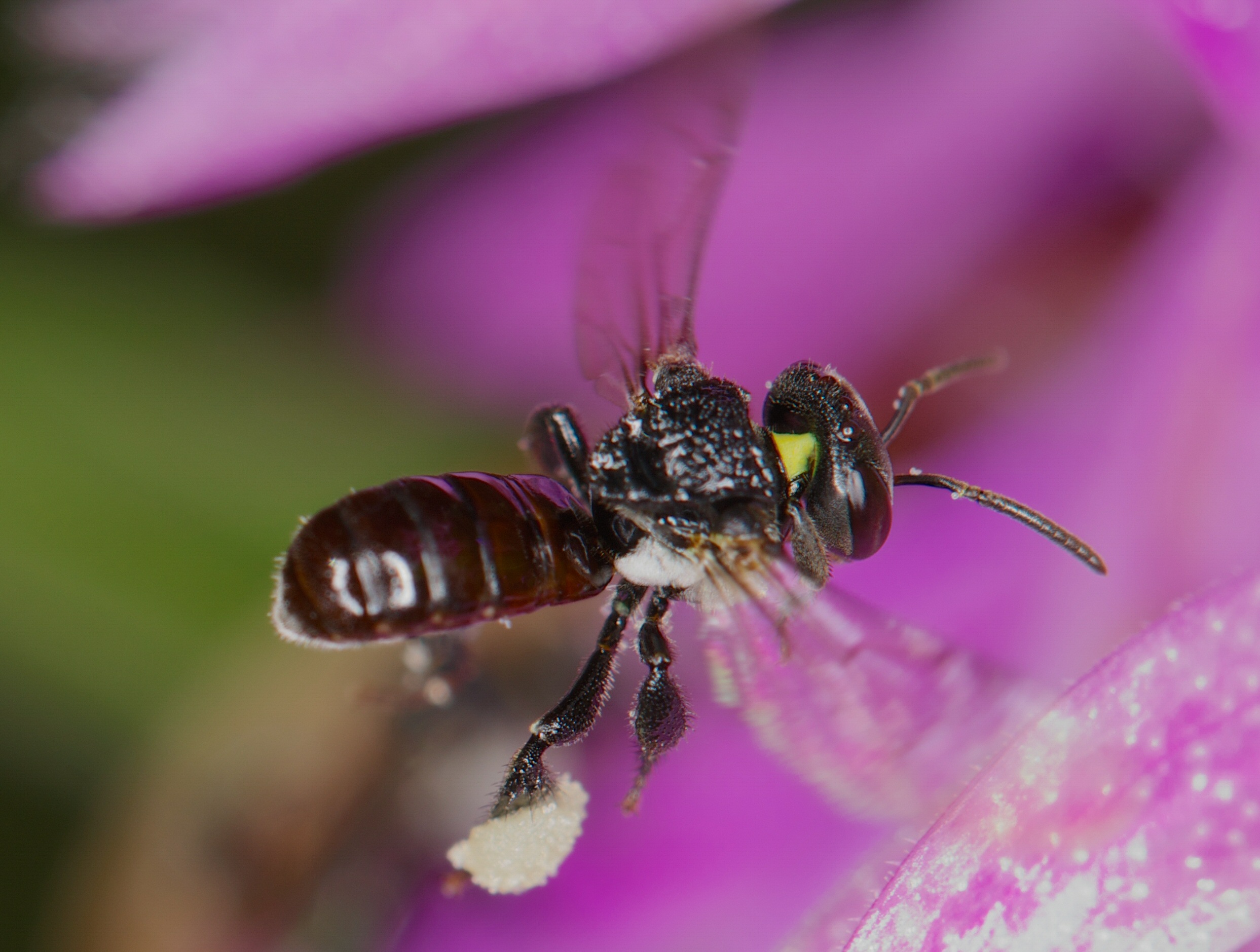
Bees function as highly specialized herbivores, with their life cycle and morphology intricately adapted for pollen and nectar collection. Nectar, a sugary liquid produced by flowers, serves as their primary source of carbohydrates for energy, fueling their flight and metabolic processes. Pollen, rich in protein, lipids, and vitamins, is collected primarily to nourish developing larvae. Bees possess specialized structures for this task: pollen baskets (corbiculae) on the hind legs of many species, hairy bodies that trap pollen grains, and proboscises adapted for sipping nectar. Social bees, like honey bees, organize into complex colonies with distinct roles for queens, workers, and drones, facilitating efficient foraging and nest maintenance. Solitary bees, on the other hand, build individual nests, often in the ground or in hollow stems, and provision each cell with a mixture of pollen and nectar for their offspring.
📊 Key Facts & Numbers
Globally, bees are responsible for pollinating approximately 75% of the world's flowering plants and about 35% of the world's food crops. This translates to an estimated annual economic value of over $235 billion for global crop production, with the United States alone benefiting by more than $15 billion annually from bee pollination. There are over 20,000 known species of bees, with social species like honey bees and bumblebees forming colonies that can contain tens of thousands of individuals. Conversely, over 90% of bee species are solitary. The European honey bee (Apis mellifera) is the most widely managed pollinator, with an estimated 2.6 million managed honey bee colonies in the United States as of 2022. Sadly, wild bee populations have seen significant declines, with some species experiencing losses of over 50% in recent decades.
👥 Key People & Organizations
Key figures in bee research include Charles Darwin, whose observations on the interconnectedness of plants and pollinators laid foundational groundwork for understanding bee ecology. Karl von Frisch, a Nobel laureate, deciphered the complex 'waggle dance' of honey bees, revealing their sophisticated communication system. More recently, Marla Spivak, a MacArthur Fellow, has been a leading advocate for bee conservation and research into sustainable beekeeping practices. Organizations like the Xerces Society for Invertebrate Conservation play a crucial role in advocating for pollinator protection through habitat restoration and policy change. The Food and Agriculture Organization of the United Nations (FAO) also highlights the critical role of bees in food security and biodiversity.
🌍 Cultural Impact & Influence
The cultural resonance of bees is profound, appearing in mythology, art, and literature across civilizations. Ancient Egyptians revered bees, associating them with royalty and the sun god Ra. In Greek mythology, the nymph Melissa was transformed into a bee, and the Melians were a mythical race of bee-people. The hexagonal structure of the honeycomb, a marvel of natural engineering, has inspired architects and designers for centuries, symbolizing efficiency, community, and natural order. The phrase 'busy as a bee' is a testament to their perceived industriousness, a trait often admired and emulated. The iconic image of a bee has been adopted by numerous brands and organizations, signifying natural products, diligence, and environmental consciousness. The decline of bee populations has also spurred a surge in public awareness and conservation efforts, making bees a potent symbol of ecological fragility.
⚡ Current State & Latest Developments
The current state of bee populations is a matter of urgent global concern, marked by widespread declines in both managed and wild species. Factors contributing to this crisis include habitat loss due to intensive agriculture and urbanization, widespread pesticide use (particularly neonicotinoids), the spread of parasites and diseases like the Varroa mite, and the impacts of climate change on flowering patterns and bee phenology. In response, there's a growing movement towards sustainable agriculture, including the establishment of pollinator-friendly habitats, reduced pesticide application, and the promotion of diverse native bee species. Research into bee health and resilience is intensifying, with scientists exploring genetic resistance to diseases and the development of bee-friendly farming practices. The global food supply is increasingly recognized as being directly dependent on these efforts.
🤔 Controversies & Debates
The most significant controversy surrounding bees centers on the causes and extent of pollinator decline. While pesticide use, particularly neonicotinoids, is widely implicated, the agrochemical industry often disputes the severity of their impact, pointing to other factors like habitat loss and disease. The debate over colony collapse disorder (CCD), a phenomenon characterized by the sudden disappearance of worker bees from a hive, has also been contentious, with various theories proposed, from viral infections to electromagnetic radiation. Furthermore, the practice of migratory beekeeping, while economically vital for crop pollination, raises questions about the stress it places on honey bee colonies and the potential for disease transmission between different regions and wild bee populations. The role of genetically modified crops and their associated herbicide use in impacting bee forage is another area of ongoing discussion.
🔮 Future Outlook & Predictions
The future outlook for bees is precarious, heavily dependent on the success of global conservation initiatives. Projections suggest that without significant intervention, further declines in bee populations could lead to substantial disruptions in agricultural yields and natural ecosystems. However, there is a growing optimism fueled by increased public awareness and policy shifts. The development of bee-resistant crops, advancements in understanding bee genetics for disease resistance, and the expansion of pollinator-friendly landscapes in urban and rural areas offer potential pathways to recovery. Experts predict a greater emphasis on supporting diverse native bee species, moving beyond a sole reliance on honey bees, and integrating pollinator health into broader climate change mitigation strategies. The next decade will be critical in determining the long-term trajectory of bee populations and their vital ecological services.
💡 Practical Applications
Bees are indispensable to modern agriculture, directly contributing to the production of fruits, vegetables, nuts, and seeds. Their pollination services are essential for crops like almonds, apples, blueberries, and avocados, among many others. Beyond agriculture, bees are vital for maintaining the health and diversity of natural ecosystems, ensuring the reproduction of wild plants that form the base of many food webs. In apiculture, bees are cultivated for honey, beeswax, propolis, and royal jelly, products with various culinary, medicinal, and industrial applications. Research into bee behavior and communication, particularly the 'waggle dance' of honey bees, has also provided insights into animal communication and complex signaling systems, influencing fields like robotics and artificial intelligence.
Key Facts
- Year
- approx. 120 million years ago (origins)
- Origin
- Global
- Category
- nature
- Type
- topic
Frequently Asked Questions
Why are bees so important for the environment?
Bees are crucial for the environment primarily because they are highly effective pollinators. As they forage for nectar and pollen, they transfer pollen between flowers, enabling plants to reproduce. This process is vital for maintaining biodiversity, as it allows flowering plants, including many trees and shrubs, to produce seeds and fruits. These plants, in turn, provide food and habitat for countless other animal species, forming the base of many food webs. Without bees, many ecosystems would collapse due to a lack of plant reproduction and the subsequent loss of food sources for wildlife.
What is the difference between honey bees and bumblebees?
While both are social bees and important pollinators, honey bees (genus Apis) are typically smaller, have smoother bodies, and live in perennial colonies that can last for years, often housing tens of thousands of individuals in complex hives. They are managed by humans for honey and beeswax production. Bumblebees (genus Bombus) are larger, fuzzier, and live in smaller, annual colonies, usually with only a few hundred individuals, often nesting underground. Bumblebees are more efficient pollinators in cooler temperatures and lower light conditions than honey bees and are less prone to certain diseases that affect honey bees.
What are the main threats causing bee populations to decline?
The decline in bee populations is a complex issue driven by multiple synergistic factors. Widespread habitat loss and fragmentation, particularly due to intensive agriculture and urbanization, reduce the availability of diverse floral resources and nesting sites. The extensive use of pesticides, especially neonicotinoids, can directly kill bees or impair their navigation, immune systems, and reproductive capabilities. Parasites and diseases, such as the Varroa destructor mite and various viruses, weaken colonies and increase mortality rates. Climate change also plays a role by altering flowering times, creating mismatches between bee emergence and food availability, and increasing the frequency of extreme weather events.
How can I help protect bees in my local area?
You can significantly help protect bees by creating pollinator-friendly habitats. Plant a variety of native flowers that bloom at different times of the year to provide a continuous food source. Reduce or eliminate the use of pesticides in your garden, opting for organic or integrated pest management strategies instead. Provide nesting sites for solitary bees by leaving some areas of bare ground undisturbed or by installing bee hotels. Support local beekeepers and organizations dedicated to pollinator conservation. Even small actions, like providing a shallow dish of water with pebbles for bees to land on, can make a difference.
Are all bees social insects?
No, not all bees are social insects. In fact, the vast majority of bee species, over 90%, are solitary. Social bees, like honey bees and bumblebees, live in colonies with a queen and worker castes, exhibiting cooperative brood care. Solitary bees, on the other hand, live and work independently. Each female solitary bee is responsible for building her own nest, foraging for food, and laying eggs. Examples of solitary bees include mason bees, leafcutter bees, and sweat bees. While they don't form colonies, they are equally important pollinators.
What is the economic impact of bee pollination?
The economic impact of bee pollination is immense and critical for global agriculture. It is estimated that bees are responsible for pollinating approximately 75% of the world's flowering plants and about one-third of the food humans consume. The annual economic value of bee pollination services for global crop production is estimated to be between $235 billion and $577 billion. In the United States alone, bee pollination contributes over $15 billion to crop yields annually. Without bees, the production of many fruits, vegetables, nuts, and seeds would drastically decrease, leading to significant economic losses and potential food shortages.
What is Colony Collapse Disorder (CCD)?
Colony Collapse Disorder (CCD) was a phenomenon observed primarily in managed honey bee colonies in the mid-2000s, characterized by the sudden and unexplained disappearance of the majority of worker bees from a hive, leaving behind a queen, plenty of food, and a few attendant bees. While the exact cause of CCD remains debated, it is believed to be a result of multiple interacting stressors, including parasitic mites (like Varroa destructor), viruses, pesticide exposure, poor nutrition, and habitat loss. Although the incidence of CCD has decreased in recent years, the underlying factors contributing to bee health decline persist, and the term is often used more broadly to describe severe colony losses.