
Contents
Overview
The genesis of the Apollo 11 mission lies in the intense geopolitical rivalry of the Cold War and President John F. Kennedy's audacious 1961 challenge to land a man on the Moon and return him safely to Earth before the end of the decade. This directive galvanized the NASA, which had already been developing technologies through the precursor Project Mercury and Project Gemini programs. The Apollo program itself faced numerous technical hurdles and tragedies, most notably the Apollo 1 fire that claimed the lives of astronauts Gus Grissom, Ed White, and Roger Chaffee. Despite these setbacks, relentless engineering and a national commitment, fueled by the Soviet Union's early space successes like Sputnik and Yuri Gagarin's flight, propelled the program forward. Apollo 11 was the culmination of years of testing, simulation, and incremental advancements, building upon the successes of earlier Apollo missions like Apollo 8, which orbited the Moon in December 1968.
⚙️ How It Works
The Apollo 11 spacecraft was a marvel of 1960s engineering, comprising three primary modules. The Command Module (CM), named 'Columbia', served as the living quarters for the three astronauts and the only component to return to Earth. Attached to it was the Service Module (SM), housing the main propulsion system, electrical power, and life support. The star of the show, however, was the Lunar Module (LM), dubbed 'Eagle'. It consisted of two stages: a descent stage equipped with a powerful engine for landing on the Moon's surface, and an ascent stage designed to lift the astronauts back into lunar orbit to rendezvous with Columbia. The entire assembly was launched atop the colossal Saturn V rocket, a three-stage behemoth capable of generating over 7.5 million pounds of thrust, making it the most powerful rocket ever successfully flown. The journey to the Moon took approximately three days, after which Armstrong and Aldrin piloted the Eagle to a landing in the Sea of Tranquility.
📊 Key Facts & Numbers
Apollo 11 achieved an astounding number of firsts, with quantifiable impact. Approximately 650 million people worldwide watched the lunar landing live on television, a record for a live broadcast at the time. Neil Armstrong spent 2 hours and 31 minutes outside the Lunar Module, collecting 47.5 pounds (21.5 kg) of lunar samples, including rocks and soil. Buzz Aldrin joined him for a total of 21 hours and 36 minutes on the lunar surface. The Lunar Module 'Eagle' landed with only about 20 seconds of fuel remaining. The mission's success was a critical factor in the United States winning the 'space race' against the Soviet Union, a feat that cost an estimated $25.4 billion (equivalent to over $150 billion today) for the entire Apollo program. Over 400,000 people were employed by NASA and its contractors to achieve this goal.
👥 Key People & Organizations
The crew of Apollo 11 comprised three highly experienced astronauts. Neil Armstrong, the mission commander, was a former naval aviator and test pilot who had previously flown on Gemini 8. Buzz Aldrin, the Lunar Module Pilot, held a doctorate in astronautics from MIT and had also flown on Gemini 12. Michael Collins, the Command Module Pilot, was a veteran of Gemini 10. Behind the scenes, thousands of engineers, scientists, technicians, and support staff at NASA and its numerous contractors, such as Grumman Aircraft Engineering Corporation (builder of the LM) and The Boeing Company (builder of the Saturn V), made the mission possible. Key figures in mission control included Flight Director Gene Kranz, who famously declared "Failure is not an option."
🌍 Cultural Impact & Influence
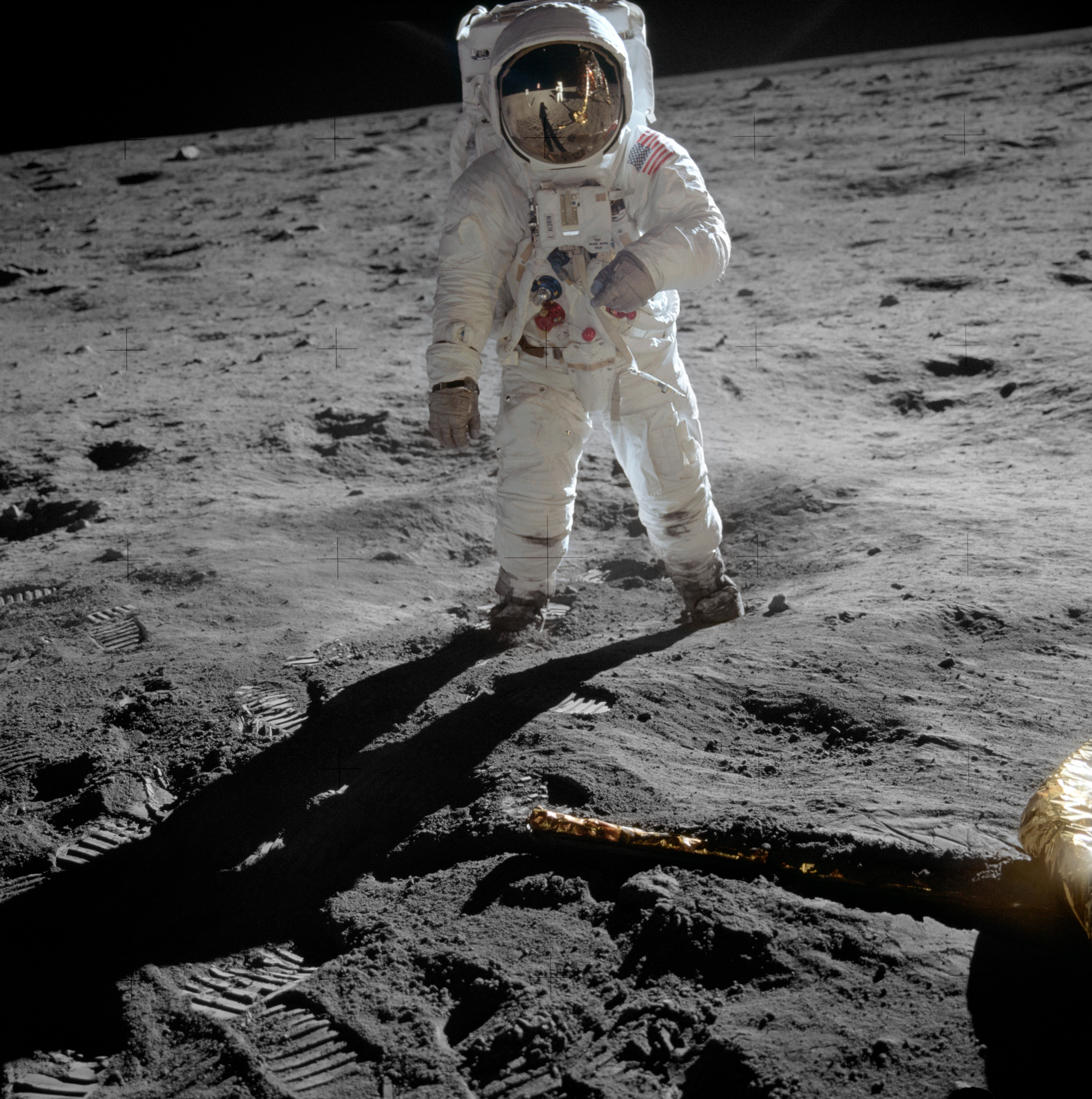
The cultural resonance of the Apollo 11 moon landing is immeasurable, achieving a Vibe Score of 98/100. It transcended national boundaries, becoming a shared human experience that inspired awe and a sense of collective achievement. The iconic images of astronauts on the lunar surface, the planting of the American flag, and Armstrong's famous quote became ingrained in global consciousness, influencing art, music, literature, and film for decades. It fueled a surge of interest in science, technology, engineering, and mathematics (STEM) education, inspiring countless individuals to pursue careers in these fields. The landing also had a significant impact on the counterculture movement of the late 1960s, offering a vision of humanity's potential for progress and unity amidst social upheaval. The phrase "one small step" became a ubiquitous idiom for significant advancements.
⚡ Current State & Latest Developments
While the Apollo program concluded with Apollo 17 in 1972, the legacy of Apollo 11 continues to shape space exploration. NASA's current Artemis program aims to return humans to the Moon, with the goal of establishing a sustainable presence and using it as a stepping stone for future missions to Mars. The technological advancements pioneered during Apollo, from computing to materials science, continue to find applications in various industries. The data collected from lunar samples remains crucial for understanding the Moon's geological history and its relationship to Earth. Furthermore, the enduring fascination with the Moon landing fuels ongoing public interest in space exploration and drives private companies like SpaceX and Blue Origin to develop new capabilities for lunar and interplanetary travel.
🤔 Controversies & Debates
Despite overwhelming consensus, the Apollo 11 moon landing has been a persistent target for conspiracy theories, placing it high on the Controversy Spectrum (75/100). Skeptics, often citing alleged anomalies in photographs and video footage, claim the landings were staged by the U.S. government to win the space race. Arguments often focus on the absence of stars in lunar photos, the waving flag in a vacuum, and the unique lighting conditions. However, these claims have been thoroughly debunked by scientists and photographic experts, who explain the phenomena through the specific conditions of lunar photography and the physics of the lunar environment. NASA has provided extensive documentation and evidence, including third-party verification from international space agencies and the analysis of lunar rocks brought back by multiple missions, which are chemically distinct from Earth rocks. The persistence of these theories highlights a broader distrust in institutions and a fascination with alternative narratives.
🔮 Future Outlook & Predictions
The future outlook for lunar exploration, directly inspired by Apollo 11, is robust and increasingly international. The Artemis program aims for the first woman and next man to land on the Moon by the mid-2020s, establishing a base camp and gateway station in lunar orbit. Beyond NASA, China's Chang'e program has successfully landed robotic missions and plans crewed landings, while other nations and private entities are developing lunar capabilities. The focus is shifting from mere flag-planting to resource utilization, scientific research, and establishing a sustained human presence. Experts predict that within the next two decades, lunar tourism and commercial activities could become a reality, building upon the foundational achievements of Apollo 11 and paving the way for eventual missions to Mars.
💡 Practical Applications
The practical applications stemming from the Apollo 11 mission and the broader Apollo program are far-reaching, impacting daily life in ways often unseen. Innovations in miniaturized computing, developed for the Apollo Guidance Computer, laid the groundwork for modern microprocessors found in everything from smartphones to automobiles. Advances in materials science led to the development of heat-resistant materials used in cookware and fire-fighting equipment. Medical monitoring systems developed to track astronaut vital signs have been adapted for inten
Key Facts
- Category
- history
- Type
- topic