
Contents
- 🐝 What is American Foulbrood (AFB)?
- 📍 Global Impact & Distribution
- 🦠 The Culprit: Paenibacillus larvae
- 📉 Economic Devastation
- 🔥 Eradication Strategies: The Burning Question
- 🔬 Diagnosis: Spotting the Signs
- 🛡️ Prevention: Your First Line of Defense
- ⚖️ Legal & Regulatory Landscape
- 💡 AFB vs. European Foulbrood (EFB)
- 📈 The Future of AFB Management
- 📚 Further Reading & Resources
- Frequently Asked Questions
- Related Topics
Overview
American Foulbrood (AFB) is a highly contagious and destructive bacterial disease affecting honeybee larvae, caused by the spore-forming bacterium Paenibacillus larvae. Its spores are incredibly resilient, capable of surviving for decades in beekeeping equipment and the environment, making eradication a significant challenge. Infected larvae initially appear milky white, then turn yellowish-brown and develop a characteristic 'ropy' texture before collapsing into a dark, sunken scale. AFB is considered one of the most serious threats to beekeeping globally, leading to rapid colony collapse and substantial economic losses for beekeepers. Management and prevention strategies are critical for maintaining healthy bee populations.
🐝 What is American Foulbrood (AFB)?
American Foulbrood (AFB) isn't just another bee ailment; it's the apex predator of honey bee brood diseases. Caused by the resilient spore-forming bacterium Paenibacillus larvae, AFB targets the developing larvae, turning healthy brood into a putrid, ropy mess. This disease is notorious for its rapid spread and devastating impact, making it a primary concern for beekeepers worldwide. Understanding AFB is crucial for maintaining healthy apiaries and ensuring the survival of vital pollinator populations. Its presence can lead to the complete collapse of a colony, a grim reality for many in the apiculture community.
📍 Global Impact & Distribution
AFB has achieved a truly global footprint, a testament to the mobility of infected bees, equipment, and even migratory beekeeping practices. While its origins are debated, its presence is confirmed across North America, Europe, Australia, and parts of Asia and Africa. This widespread distribution means that vigilance is required everywhere, not just in historically affected regions. The disease doesn't respect borders, making international cooperation and standardized control measures essential for its containment. Its ubiquity underscores the need for robust biosecurity protocols in every apiary.
🦠 The Culprit: Paenibacillus larvae
The pathogen behind AFB, Paenibacillus larvae, is a master of survival. Its spores can remain viable in dried bee remains and beekeeping equipment for decades, potentially 70 years or more. This incredible longevity means that even seemingly clean equipment can harbor the infectious agent. When young larvae ingest these spores, the bacteria germinate in their gut, leading to a fatal infection. The spore stage is the key to AFB's persistence, making eradication a formidable challenge. Understanding this lifecycle is fundamental to effective disease management.
📉 Economic Devastation
The economic toll of American Foulbrood is staggering. Beyond the loss of individual colonies, AFB can cripple commercial beekeeping operations, impacting honey production, pollination services, and queen rearing. In the United States, losses due to AFB have been estimated in the millions of dollars annually. The cost of treatment, replacement colonies, and lost productivity adds up quickly. For small-scale beekeepers, a single outbreak can be financially ruinous, forcing them out of business. This economic pressure often drives the debate on eradication methods.
🔥 Eradication Strategies: The Burning Question
When it comes to AFB, the most universally accepted and often mandated eradication strategy is the destruction of infected colonies, typically by burning. This drastic measure is considered the only foolproof way to eliminate the bacteria and its highly resistant spores, preventing further spread. While controversial and emotionally difficult for beekeepers, the efficacy of burning is well-documented. Alternative treatments exist, but their success rates are often lower, and they carry a higher risk of recurrence. The debate often centers on the balance between economic viability and absolute disease control.
🔬 Diagnosis: Spotting the Signs
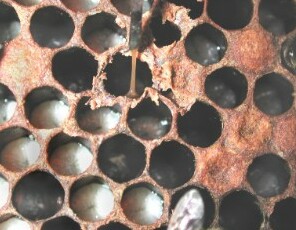
Accurate diagnosis is the first step in combating AFB. Early detection is critical to limiting its spread. Symptoms typically appear in the larval stage, with infected larvae losing their healthy white color, becoming yellowish-brown, and developing a characteristic 'ropy' texture when probed. A sunken, perforated brood pattern is another tell-tale sign. The smell of an infected hive is often described as a 'glue-pot' or 'varnish-like' odor. Experienced beekeepers and apiary inspectors are trained to identify these subtle but critical indicators. Misdiagnosis can be as dangerous as the disease itself.
🛡️ Prevention: Your First Line of Defense
Prevention is always better than cure, especially with a pathogen as tenacious as Paenibacillus larvae. Strict apiary hygiene is paramount. This includes regularly cleaning and disinfecting equipment, especially when moving it between apiaries or sharing it. Sourcing bees and equipment from reputable suppliers with known disease-free histories is essential. Beekeepers should also practice good colony management, ensuring strong, healthy colonies that are less susceptible to disease. Regular inspections, even in the absence of visible symptoms, are a cornerstone of proactive disease management.
⚖️ Legal & Regulatory Landscape
The legal and regulatory landscape surrounding AFB varies significantly by region and country. In many areas, AFB is a reportable disease, meaning beekeepers are legally obligated to report suspected outbreaks to state or provincial apiary inspectors. These inspectors often have the authority to order the destruction of infected colonies and may impose quarantine measures. Understanding these regulations is vital to avoid penalties and ensure compliance with public health and agricultural directives. Navigating these rules can be complex, but ignorance is not a defense.
💡 AFB vs. European Foulbrood (EFB)
It's crucial to distinguish American Foulbrood (AFB) from European Foulbrood (EFB). While both affect honey bee brood, they are caused by different pathogens: AFB by Paenibacillus larvae and EFB by Streptococcus plutonii (often in conjunction with other bacteria). EFB symptoms are generally less severe, with larvae appearing yellow or brown and often twisted in their cells, but they don't typically exhibit the ropy texture of AFB. EFB is often treatable with antibiotics and improved colony nutrition, whereas AFB's spore stage makes it far more destructive and difficult to manage. Understanding these differences is key to correct diagnosis and treatment.
📈 The Future of AFB Management
The future of AFB management likely lies in a multi-pronged approach, moving beyond solely relying on destruction. Research into more effective and less destructive treatments, such as bacteriophages or novel antimicrobial compounds, is ongoing. Genetic selection for bees with increased resistance to AFB is also a promising avenue. However, the inherent resilience of Paenibacillus larvae spores means that vigilance and strict biosecurity will remain critical. The ongoing challenge is to find sustainable methods that protect bee health without crippling beekeeping operations. The balance between eradication and management is a perpetual tension.
📚 Further Reading & Resources
For beekeepers seeking to deepen their understanding of American Foulbrood, several excellent resources are available. The Bee Informed Partnership offers a wealth of information and diagnostic tools. University extension services, particularly those with strong apiculture programs like Penn State Extension or University of Minnesota Extension, provide detailed guides and research updates. National beekeeping associations, such as the American Beekeeping Federation, are also invaluable sources for regulatory information and best practices. Consulting with local apiary inspectors is always recommended for region-specific guidance.
Key Facts
- Year
- First described in 1900s (though likely present earlier)
- Origin
- North America
- Category
- Apiculture / Disease
- Type
- Disease
Frequently Asked Questions
How quickly does American Foulbrood spread?
AFB can spread with alarming speed, both within a single hive and between apiaries. Nurse bees feeding infected larvae can quickly transmit spores to other colonies through robbing, drifting bees, or contaminated equipment. The movement of infected bees or equipment is the primary driver of long-distance spread. A single infected hive can become a source of widespread infection if not contained promptly. This rapid transmission is why immediate action is critical upon diagnosis.
Can AFB be treated without burning the colony?
While burning is the most effective and often mandated method, some jurisdictions permit antibiotic treatments (like oxytetracycline) for AFB. However, these treatments do not eliminate the spores, only suppress the active infection. The risk of recurrence is high, and the spores remain a persistent threat. Many experts and regulatory bodies still advocate for burning as the only guaranteed method to eradicate the disease completely and prevent future outbreaks. The debate over antibiotic use continues.
What are the signs of AFB in a hive?
Key signs include sunken and perforated brood cappings, larvae that lose their white color and turn yellowish-brown, and a characteristic 'ropy' or 'sticky' texture when a twig is inserted into the dead larva and slowly withdrawn. An unusual, pungent odor, often described as 'glue-pot' or 'varnish-like,' is also common. The adult bees may also show signs of distress or reduced colony strength. Early detection is crucial for effective management.
How can I prevent AFB from entering my apiary?
The best prevention is strict biosecurity. Source bees and equipment only from reputable, disease-free suppliers. Avoid sharing equipment between apiaries without thorough disinfection. Regularly inspect your hives for any signs of disease, even if you haven't seen it before. Maintain strong, healthy colonies through good nutrition and management practices, as they are generally more resilient. Quarantine new bees or equipment before introducing them to your established apiaries.
Are there any resistant bee breeds to AFB?
While there isn't a single 'AFB-proof' bee breed, some strains and lines of honey bees have demonstrated higher levels of hygienic behavior or genetic resistance to AFB. These bees may be better at detecting and removing diseased larvae from the brood nest, thus slowing or preventing the spread of the pathogen. Research is ongoing to identify and breed for these traits, but it's not a substitute for good management and biosecurity practices.
What is the role of apiary inspectors regarding AFB?
Apiary inspectors are crucial in managing and eradicating AFB. They are trained to identify the disease, assess its severity, and enforce regulatory requirements. This often involves ordering the destruction of infected colonies, implementing quarantines, and educating beekeepers on prevention and control measures. Their work is vital for protecting the broader beekeeping community from the spread of this devastating disease.