
Contents
- 🎵 Origins & Early Innovations
- ⚙️ The Assembly Line Revolution
- 📊 Production Peaks and Valleys
- 👥 Titans of the Industry
- 🌍 Cultural and Societal Transformation
- ⚡ The Shifting Landscape
- 🤔 Debates on American Exceptionalism
- 🔮 The Road Ahead
- 💡 Practical Applications of Automotive Design
- 📚 Further Exploration
- References
Overview
The American automotive industry, born in the late 19th century, rapidly ascended to become the world's largest, pioneering mass production and creating a car-centric culture. Driven by innovation, vast domestic demand, and figures like Henry Ford, the U.S. dominated global vehicle manufacturing for decades. While facing increasing competition from Germany, Japan, and South Korea in the latter half of the 20th century, American automakers continue to shape the industry, navigating shifts towards electrification and autonomy. Annually, American manufacturers produce around 10 million vehicles, a testament to its enduring, albeit evolving, industrial might.
🎵 Origins & Early Innovations
The genesis of the American automotive industry can be traced to the late 19th century, a period buzzing with experimental horseless carriages. Pioneers like Charles King and the Duryea brothers were among the first to demonstrate functional automobiles on American soil. King's Quadricycle, built in 1895, and the Duryea Motor Wagon Company's 1893 creation marked early milestones. Unlike European counterparts, which often focused on luxury or bespoke engineering, American innovators quickly recognized the potential for a broader market, laying the groundwork for a distinctly American approach to vehicle manufacturing.
⚙️ The Assembly Line Revolution
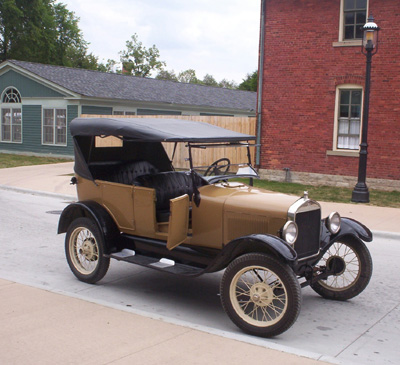
The true inflection point arrived with Henry Ford and his revolutionary Ford Motor Company. In 1913, Ford perfected the moving assembly line for automobile production at his Highland Park plant. This innovation slashed production time for a Model T from over 12 hours to just 93 minutes, dramatically reducing costs. The $5 workday, introduced by Ford in 1914, not only boosted worker morale and productivity but also created a consumer base capable of affording the very cars they built, fundamentally altering industrial labor and consumer economics.
📊 Production Peaks and Valleys
The 20th century saw American automotive production soar, with annual output frequently exceeding 10 million units. However, this trajectory wasn't linear. The Great Depression and World War II significantly impacted production, with factories pivoting to war efforts. More recently, the 2008 financial crisis led to a sharp decline, with only 5.7 million automobiles manufactured in 2009. The COVID-19 pandemic in 2020 caused another dip to 8.8 million units, highlighting the industry's vulnerability to global economic and health crises. Despite these fluctuations, the U.S. remains a global powerhouse, ranking second in worldwide production volume by 2023.
👥 Titans of the Industry
Beyond Henry Ford, titans like Alfred P. Sloan of General Motors and Walter Chrysler shaped the industry's competitive landscape. Sloan, in particular, introduced the concept of planned obsolescence and brand segmentation with Chevrolet, Buick, Cadillac, and Pontiac, offering a tiered product line to capture a wider market. Chrysler Corporation, founded by Walter Chrysler in 1925, became the third major player in the 'Big Three' alongside Ford and GM, each vying for market share through design, engineering, and marketing prowess.
🌍 Cultural and Societal Transformation
The automobile's proliferation in America didn't just change how people traveled; it reshaped the nation's very fabric. The rise of the automobile fueled suburbanization, created the interstate highway system, and birthed iconic cultural touchstones like the drive-in movie theater and the roadside diner. Car culture became deeply ingrained, influencing fashion, music, and art, and solidifying the car as a symbol of freedom, status, and the American dream. This deep cultural integration is reflected in the enduring popularity of classic American cars and the ongoing fascination with automotive design.
⚡ The Shifting Landscape
In recent decades, the dominance of American automakers has been challenged by formidable international competitors. Japanese manufacturers like Toyota and Honda gained significant market share by emphasizing reliability and fuel efficiency, particularly during the oil crises of the 1970s. German engineering from Volkswagen and BMW, and later South Korean brands like Hyundai, further diversified the market. Today, the industry faces a seismic shift towards electric vehicles and autonomous driving, with American companies like Tesla emerging as key innovators, forcing traditional players like Ford and GM to accelerate their own electrification strategies.
🤔 Debates on American Exceptionalism
A persistent debate revolves around whether American automotive exceptionalism has waned. Critics point to declining market share for the 'Big Three' and reliance on foreign platforms or technologies as evidence of a loss of competitive edge. Conversely, proponents highlight ongoing innovation in areas like advanced driver-assistance systems (ADAS), the sheer scale of domestic production, and the resurgence of American EV startups. The ongoing transition to electric powertrains and software-defined vehicles is seen by some as a chance for American industry to reclaim leadership, while others view it as a further challenge to its traditional manufacturing strengths.
🔮 The Road Ahead
The future of American automotive history is being written by the rapid advancements in electric vehicles, artificial intelligence for autonomous systems, and the integration of connectivity. Companies are investing billions in battery technology, charging infrastructure, and software development. The rise of ride-sharing services and mobility-as-a-service (MaaS) platforms also presents a potential paradigm shift away from individual car ownership. The winners in this new era will likely be those who can adapt quickly to technological change, meet evolving consumer demands for sustainability, and navigate complex global supply chains.
💡 Practical Applications of Automotive Design
The principles of American automotive engineering and manufacturing have had far-reaching practical applications beyond personal transportation. Concepts like mass production and interchangeable parts, pioneered by companies like Remington Arms and later perfected by Henry Ford, influenced countless other industries, from appliances to electronics. The development of robust suspension systems, efficient engines, and advanced safety features in American cars has also informed the design of heavy machinery, agricultural equipment, and even aerospace technology, demonstrating the pervasive impact of automotive innovation.
📚 Further Exploration
To truly grasp the sweep of American automotive history, one must delve into the stories of its key figures and the evolution of its iconic brands. Understanding the impact of Harley Earl on automotive design, the rise of muscle cars in the 1960s, and the ongoing narrative of Detroit as the 'Motor City' provides crucial context. Further reading on the development of specific technologies like the automatic transmission or the impact of labor unions like the United Auto Workers (UAW) offers deeper insights into this dynamic and transformative industry.
Key Facts
- Category
- history
- Type
- topic